Chan Ta-Chien, Hu Tsuey-Hwa, Hwang Jing-Shiang
Research Center for Humanities and Social Sciences, Academia Sinica, 128 Academia Road, Section 2, 115, Nankang, Taipei, Taiwan.
Institute of Statistical Science, Academia Sinica, 128 Academia Road, Section 2, 115, Nankang, Taipei, Taiwan.
Int J Health Geogr. 2015 Jan 31;14:9. doi: 10.1186/1476-072X-14-9.
Instead of traditional statistical models for large spatial areas and weekly or monthly temporal units, what public health workers urgently need is a timely risk prediction method for small areas. This risk prediction would provide information for early warning, target surveillance and intervention.
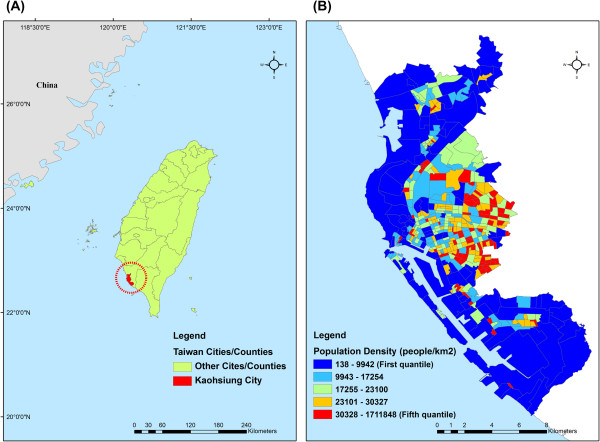
Daily dengue cases in the 457 urban villages of Kaohsiung City, Taiwan from 2009 to 2012 were used for model development and evaluation. There were in total 2,997 confirmed dengue cases during this period. A logistic regression model was fitted to the daily incidents occurring in the villages for the past 30 days. The fitted model was then used to predict the incidence probabilities of dengue outbreak for the villages the next day. A percentile of the 457*30 fitted incidence probabilities was chosen to determine a cut-point for issuing the alerts. The covariates included three different levels of spatial effect, and with four lag time periods. The population density and the meteorological conditions were also included for the prediction.
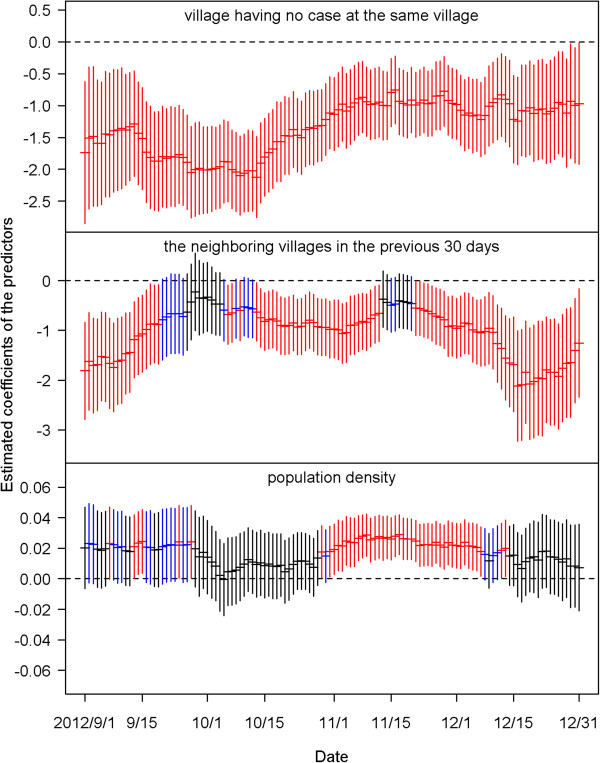
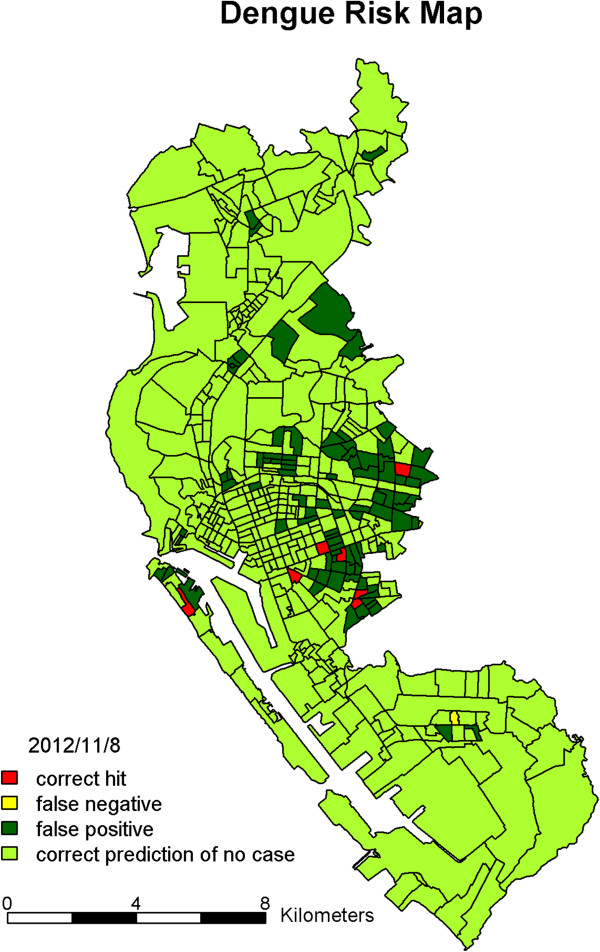
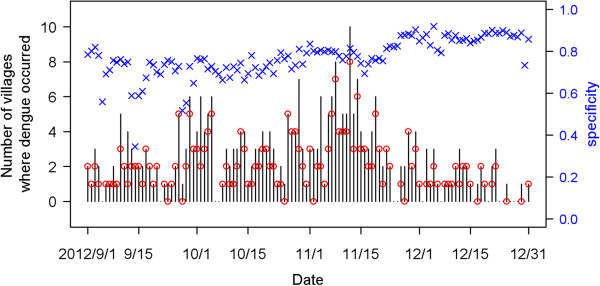
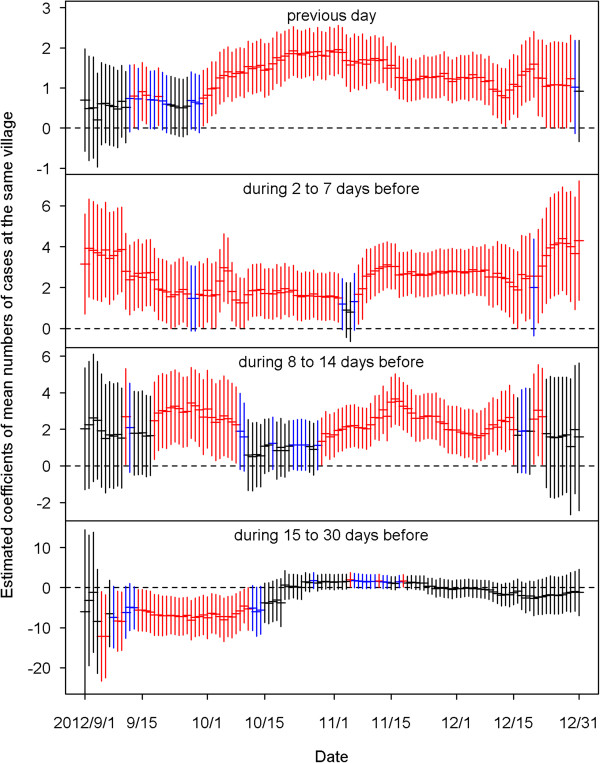
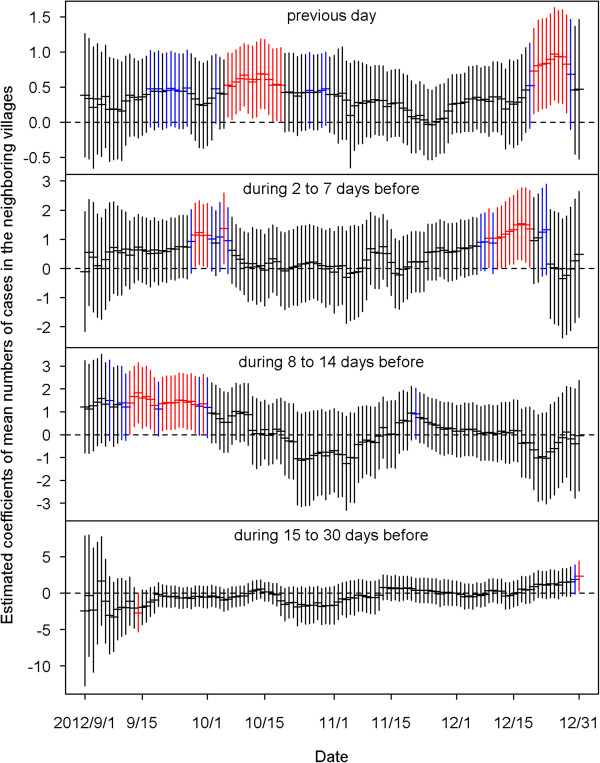
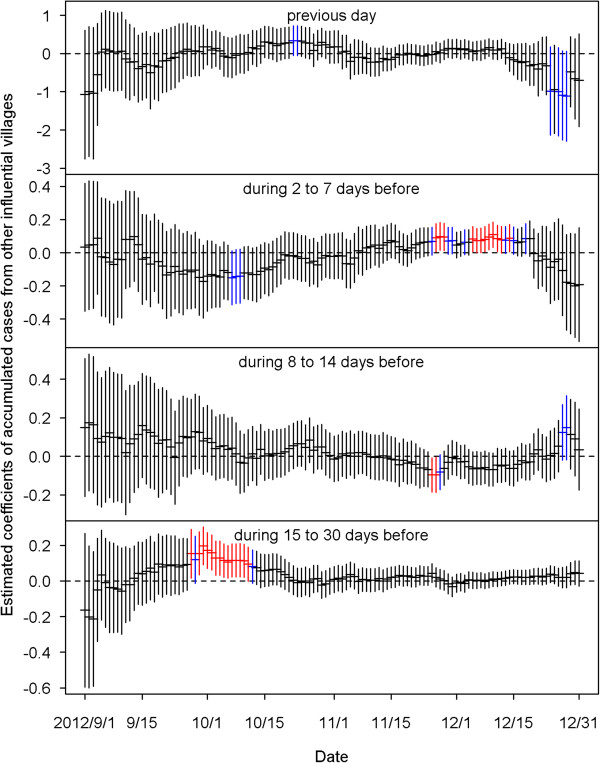
The performance of the prediction models was evaluated on 122 consecutive days from September 1 to December 31, 2012. With the 80th percentile threshold, the median sensitivity was 83% and the median false positive rate was 23%. We found that most of the coefficients of the predictors of having cases at the same village in the previous 14 days were positive and significant for the 122 daily updated models. The estimated coefficients of population density were significant during the peak of the epidemic in 2012.
The proposed method can provide near real-time dengue risk prediction for a small area. This can serve as a useful decision making tool for front-line public health workers to control dengue epidemics. The precision of the spatial and temporal units can be easily adjusted to different settings for different cities.
公共卫生工作者迫切需要的不是用于大面积空间和每周或每月时间单位的传统统计模型,而是针对小区域的及时风险预测方法。这种风险预测将为早期预警、目标监测和干预提供信息。
使用2009年至2012年台湾高雄市457个城中村的每日登革热病例进行模型开发和评估。在此期间共有2997例确诊登革热病例。对过去30天内各村发生的每日事件拟合逻辑回归模型。然后使用拟合模型预测各村次日登革热暴发的发病概率。选择457×30个拟合发病概率的百分位数来确定发布警报的切点。协变量包括三个不同水平的空间效应以及四个滞后时间段。预测还纳入了人口密度和气象条件。
在2012年9月1日至12月31日连续122天对预测模型的性能进行了评估。以第80百分位数为阈值,中位灵敏度为83%,中位假阳性率为23%。我们发现,对于122个每日更新的模型,前14天在同一村庄有病例的预测因子的大多数系数为正且显著。2012年疫情高峰期人口密度的估计系数显著。
所提出的方法可为小区域提供近乎实时的登革热风险预测。这可作为一线公共卫生工作者控制登革热疫情有用的决策工具。空间和时间单位的精度可轻松调整以适应不同城市的不同情况。