University of Wisconsin-Milwaukee, College of Nursing, Milwaukee, WI.
University of Wisconsin-Milwaukee, College of Nursing, Milwaukee, WI.
Nurs Outlook. 2015 Jan-Feb;63(1):30-40. doi: 10.1016/j.outlook.2014.12.013. Epub 2014 Dec 17.
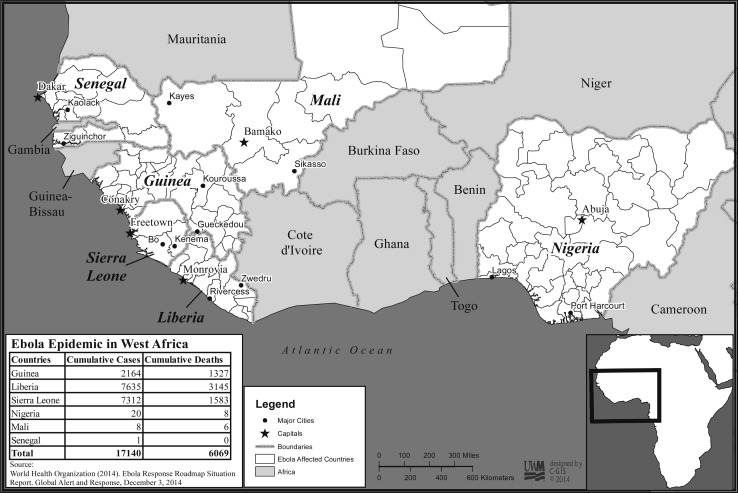
The ongoing Ebola epidemic in West Africa has drawn attention to global health inequalities, in particular the inadequacies of health care systems in sub-Saharan African countries for appropriately managing and containing infectious diseases. The purpose of this article is to examine the sociopolitical and economic conditions that created the environment for the Ebola epidemic to occur, identify challenges to and opportunities for the prevention and control of Ebola and future outbreaks, and discuss policy recommendations and priority areas for addressing the Ebola epidemic and future outbreaks in West Africa. Articles in peer-reviewed journals on health system reforms in developing countries and periodicals of international organizations were used to gather the overview reported in this article. We identify individual, structural, and community challenges that must be addressed in an effort to reduce the spread of Ebola in West Africa. The Ebola epidemic in West Africa underscores the need for the overhaul and transformation of African health care systems to build the capacity in these countries to address infectious diseases. Public-private partnerships for investment in developing countries' health care systems that involve the international community are critical in addressing the current Ebola epidemic and future outbreaks.
目前西非的埃博拉疫情引起了人们对全球卫生不平等现象的关注,特别是撒哈拉以南非洲国家的卫生保健系统在妥善管理和控制传染病方面的不足。本文旨在探讨造成埃博拉疫情发生的社会政治和经济条件,分析埃博拉疫情防控所面临的挑战和机遇,以及探讨应对西非埃博拉疫情和未来疫情爆发的政策建议和优先领域。本文综合了来自发展中国家卫生系统改革的同行评议期刊文章和国际组织期刊,以综述的形式报告。我们确定了在努力减少埃博拉病毒在西非传播的过程中必须解决的个人、结构和社区挑战。西非的埃博拉疫情凸显了彻底改革和转变非洲卫生保健系统的必要性,以建立这些国家应对传染病的能力。涉及国际社会的公私伙伴关系对于投资发展中国家的卫生保健系统,应对当前的埃博拉疫情和未来的疫情爆发至关重要。