Vélez Paula, Izquierdo Irene, Rosa Isaac, García Ángel
1] Center for Research in Molecular Medicine and Chronic Diseases (CIMUS), Universidade de Santiago de Compostela, Santiago de Compostela, Spain [2] Instituto de Investigación Sanitaria (IDIS), Santiago de Compostela, Spain [3] Departament of Pharmacology, Faculty of Pharmacy, Universidade de Santiago de Compostela, Santiago de Compostela, Spain.
Sci Rep. 2015 Feb 3;5:8198. doi: 10.1038/srep08198.
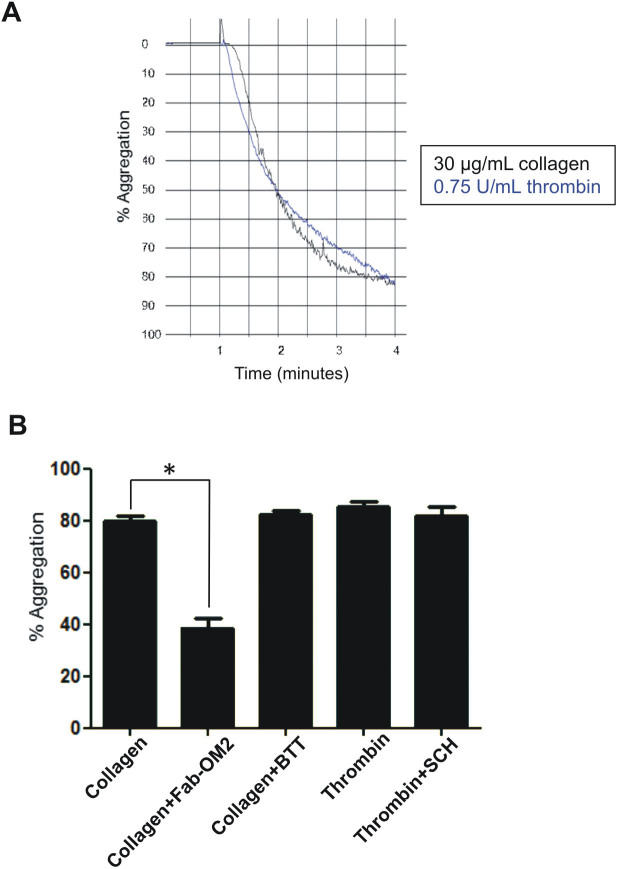
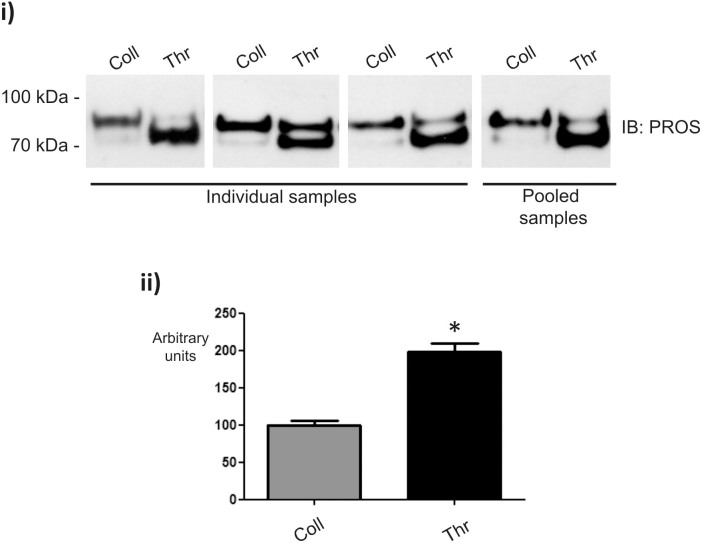
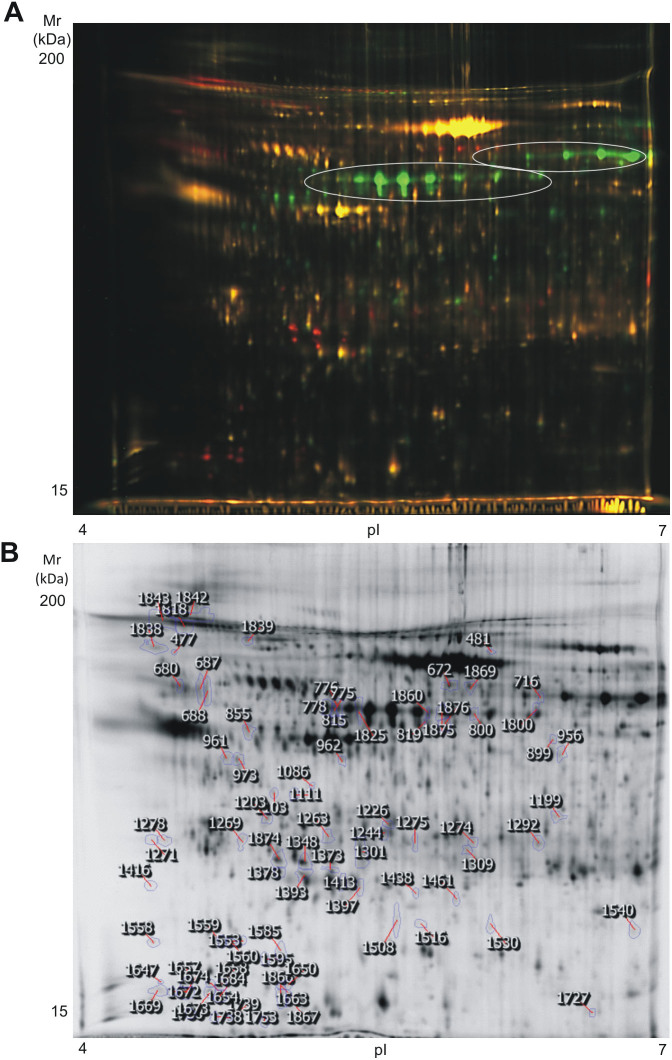
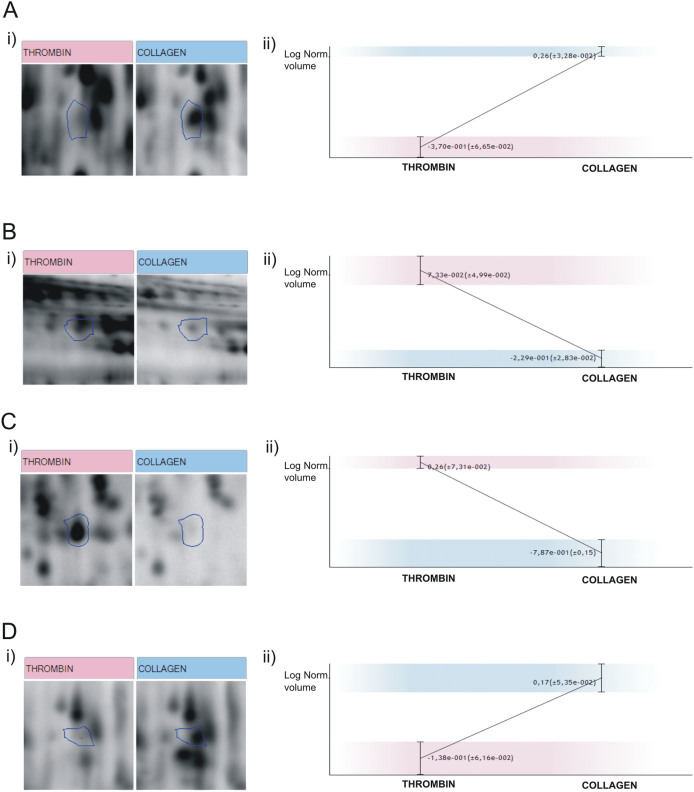
Upon stimulation, platelets release a high number of proteins (the releasate). There are clear indications that these proteins are involved in the pathogenesis of several diseases, such as atherosclerosis. In the present study we compared the platelet releasate following platelet activation with two major endogenous agonists: thrombin and collagen. Proteome analysis was based on 2D-DIGE and LC-MS/MS. Firstly, we showed the primary role of thrombin and collagen receptors in platelet secretion by these agonists; moreover, we demonstrated that GPVI is the primary responsible for collagen-induced platelet activation/aggregation. Proteomic analysis allowed the detection of 122 protein spots differentially regulated between both conditions. After excluding fibrinogen spots, down-regulated in the releasate of thrombin-activated platelets, 84 differences remained. From those, we successfully identified 42, corresponding to 37 open-reading frames. Many of the differences identified correspond to post-translational modifications, primarily, proteolysis induced by thrombin. Among others, we show vitamin K-dependent protein S, an anticoagulant plasma protein, is up-regulated in thrombin samples. Our results could have pathological implications given that platelets might be playing a differential role in various diseases and biological processes through the secretion of different subsets of granule proteins and microvesicles following a predominant activation of certain receptors.
受到刺激后,血小板会释放大量蛋白质(释放物)。有明确迹象表明,这些蛋白质参与了多种疾病的发病机制,如动脉粥样硬化。在本研究中,我们比较了血小板在两种主要内源性激动剂(凝血酶和胶原蛋白)作用下的释放物。蛋白质组分析基于二维差异凝胶电泳(2D-DIGE)和液相色谱-串联质谱(LC-MS/MS)。首先,我们展示了凝血酶和胶原蛋白受体在这些激动剂诱导的血小板分泌中的主要作用;此外,我们证明了糖蛋白VI(GPVI)是胶原蛋白诱导血小板活化/聚集的主要原因。蛋白质组分析检测到两种条件下有122个蛋白点存在差异调节。在排除凝血酶激活的血小板释放物中下调的纤维蛋白原斑点后,仍有84个差异。其中,我们成功鉴定出42个,对应37个开放阅读框。鉴定出的许多差异对应于翻译后修饰,主要是凝血酶诱导的蛋白水解。除此之外,我们发现维生素K依赖蛋白S(一种抗凝血浆蛋白)在凝血酶样本中上调。鉴于血小板可能通过在某些受体主要激活后分泌不同的颗粒蛋白和微泡亚群,在各种疾病和生物过程中发挥不同作用,我们的结果可能具有病理学意义。