Salces-Ortiz Judit, González Carmen, Martínez Marta, Mayoral Tomás, Calvo Jorge H, Serrano M Magdalena
INIA, Carretera de La Coruña Km. 7,5. 280040, Madrid, Spain.
Laboratorio Central de Veterinaria, MAGRAMA, Ctra. M-106 km1.4 28110, Madrid, Spain.
BMC Evol Biol. 2015 Feb 4;15:7. doi: 10.1186/s12862-015-0280-x.
Climatic factors play an important role in determining species distributions and phenotypic variation of populations over geographic space. Since domestic sheep is managed under low intensive systems animals could have retained some genome adaptive footprints. The gene encoding the Hsp90α has been extensively studied in sheep and some polymorphisms located at its promoter have been associates with differences in the transcription rate of the gene depending on climatic conditions. In this work the relationships among the distribution and frequencies of 11 polymorphisms of the ovine HSP90AA1 gene promoter in 31 sheep breeds and the climatic and geographic variables prevailing in their regions of origin have been studied. Also the promoter sequence has been characterized in 9 species of the Caprinae subfamily.
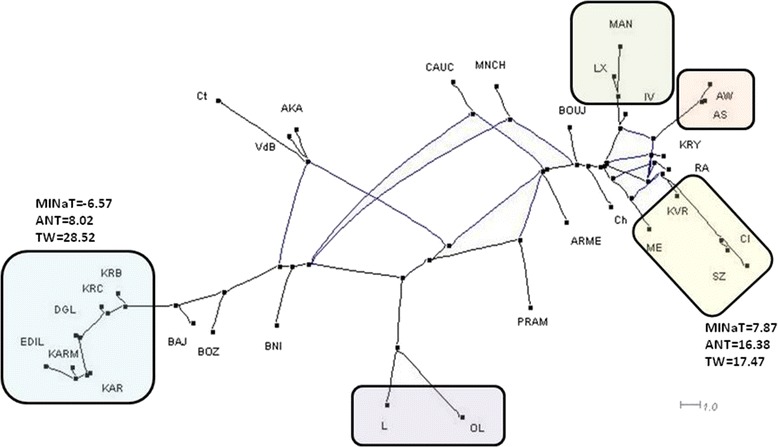
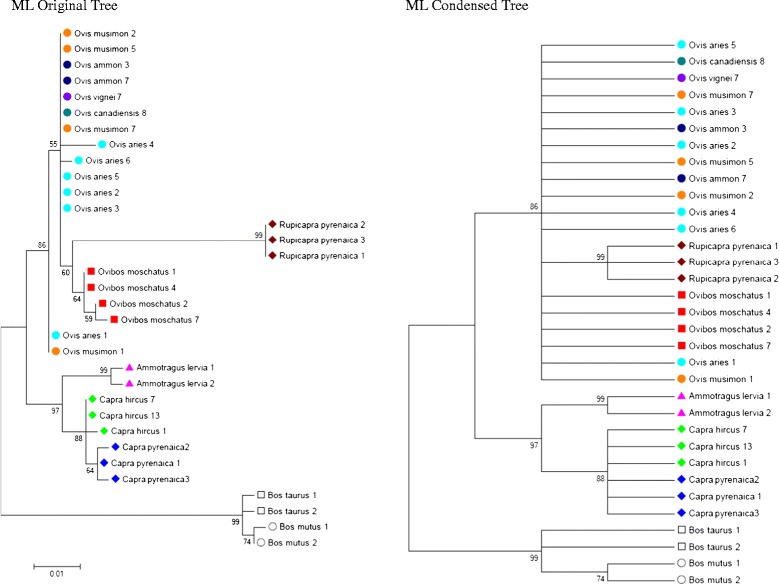
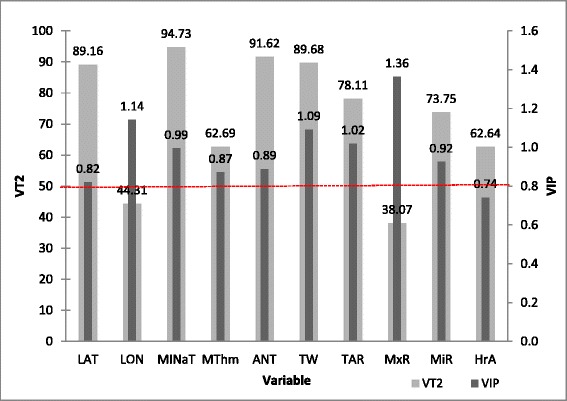
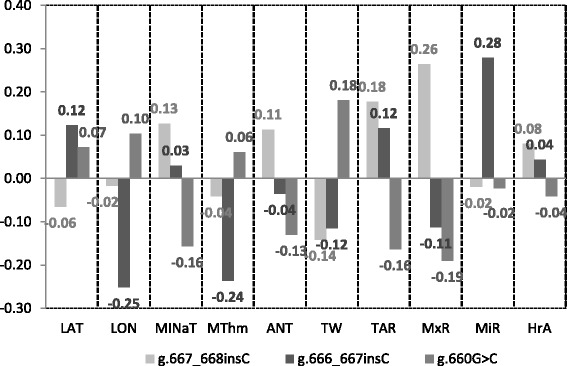
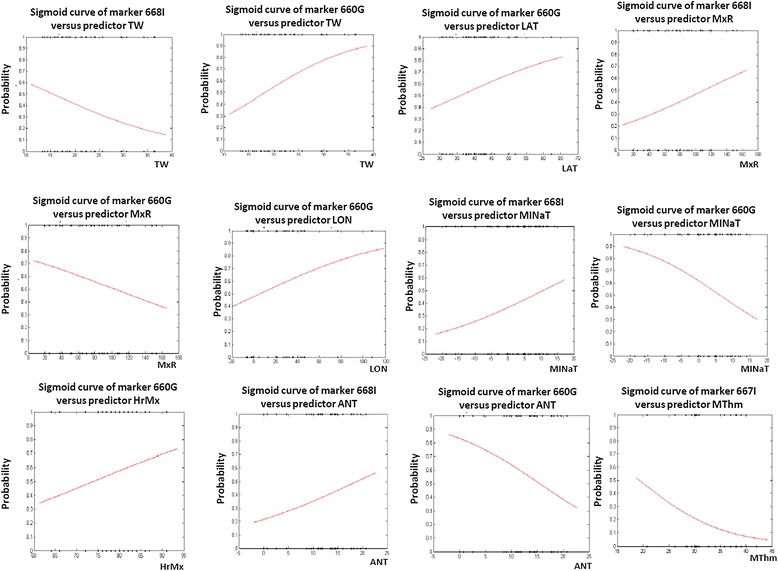
Correlations among several climatic variables and allele frequencies of the polymorphisms of the HSP90AA1 gene promoter linked with differences in the transcription activity of the gene under heat stress conditions have been assessed. A group of breeds reared in semi dry climates have high frequencies of the insertion allele of the g.667-668insC associated with the heat stress response. Other group of breeds native to semi arid conditions showed very low frequencies of this same allele. However, in some cases, this previous correlation has not been achieved, revealing the high levels of gene flow among populations occurred following domestication. The Bayesian Test of Beaumont and Balding identified two outlier loci, the g.522A > G and g.703_704del(2)A candidates to balancing and directional selection, respectively. Polymorphisms detected in O. aries are also present in several species of the Caprinae subfamily being C. hircus, O. musimon and O. moschatus those sharing the highest number of them with O. aries.
Despite domestication, sheep breeds showed some genetic footprints related to climatic variables. Adaptation of breeds to heat climates can suppose a selective advantage to cope with global warming caused by climatic change. Polymorphisms of the HSP90AA1 gene detected in the Ovis aries species are also present in wild species from the Caprinae subfamily, indicating a great antiquity of these mutations and its importance in the adaptation of species to past climatic conditions existing in its native environments.
气候因素在决定物种分布和种群在地理空间上的表型变异方面起着重要作用。由于家养绵羊是在低强度系统下管理的,动物可能保留了一些基因组适应性印记。编码Hsp90α的基因在绵羊中已得到广泛研究,其启动子上的一些多态性与该基因转录率的差异有关,具体取决于气候条件。在这项研究中,我们研究了31个绵羊品种中绵羊HSP90AA1基因启动子的11个多态性的分布和频率与它们原产地的气候和地理变量之间的关系。此外,还对山羊亚科9个物种的启动子序列进行了特征分析。
评估了与热应激条件下基因转录活性差异相关的HSP90AA1基因启动子多态性的几个气候变量与等位基因频率之间的相关性。一组在半干旱气候下饲养的品种中,与热应激反应相关的g.667 - 668insC插入等位基因频率较高。另一组原产于半干旱条件的品种中,该等位基因频率非常低。然而,在某些情况下,这种先前的相关性并未实现,这揭示了驯化后种群间高水平的基因流动。Beaumont和Balding的贝叶斯检验确定了两个异常位点,g.522A > G和g.703_704del(2)A分别是平衡选择和定向选择的候选位点。在绵羊中检测到的多态性也存在于山羊亚科的几个物种中,其中山羊、摩弗伦羊和墨西哥野羊与绵羊共享的多态性数量最多。
尽管经过驯化,绵羊品种仍显示出一些与气候变量相关的遗传印记。品种对炎热气候的适应可能是应对气候变化导致的全球变暖的一种选择优势。在绵羊物种中检测到的HSP90AA1基因多态性也存在于山羊亚科的野生物种中,这表明这些突变具有悠久的历史,并且在物种适应其原生环境中过去的气候条件方面具有重要意义。