Kaykov Atanas, Nurse Paul
The Rockefeller University, New York, New York 10065, USA;
The Rockefeller University, New York, New York 10065, USA; The Francis Crick Institute, Lincoln's Inn Fields Laboratories, London WC2A 3LY, United Kingdom.
Genome Res. 2015 Mar;25(3):391-401. doi: 10.1101/gr.180372.114. Epub 2015 Feb 3.
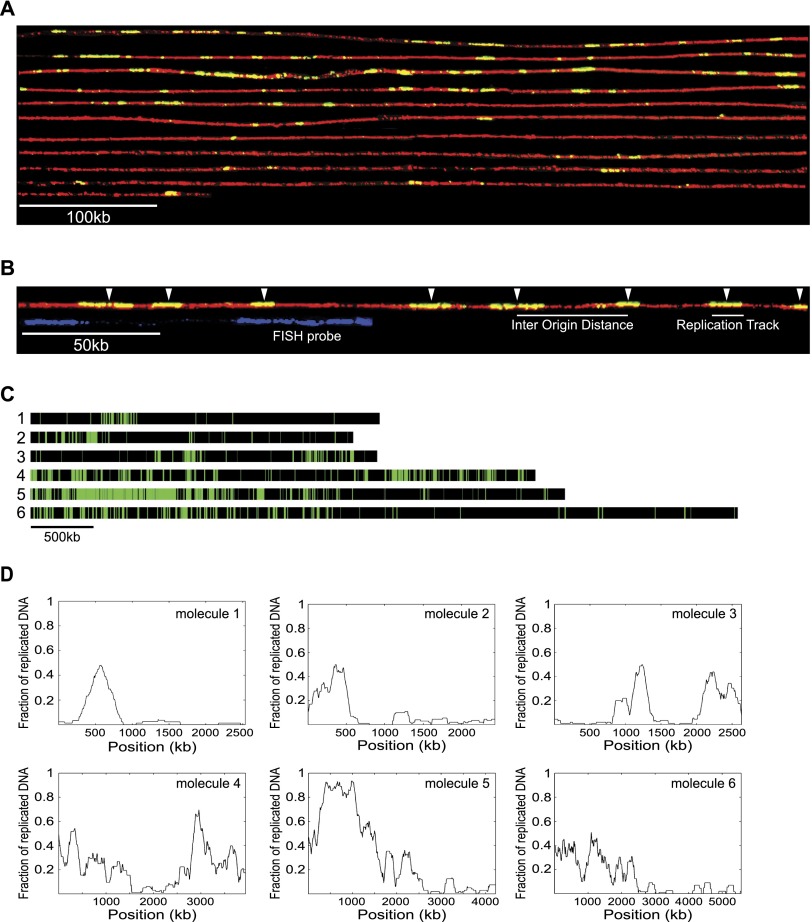
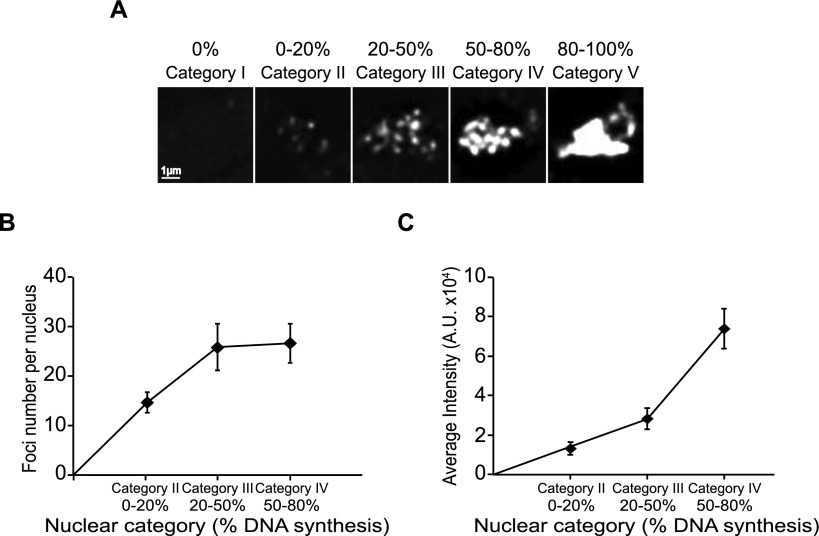
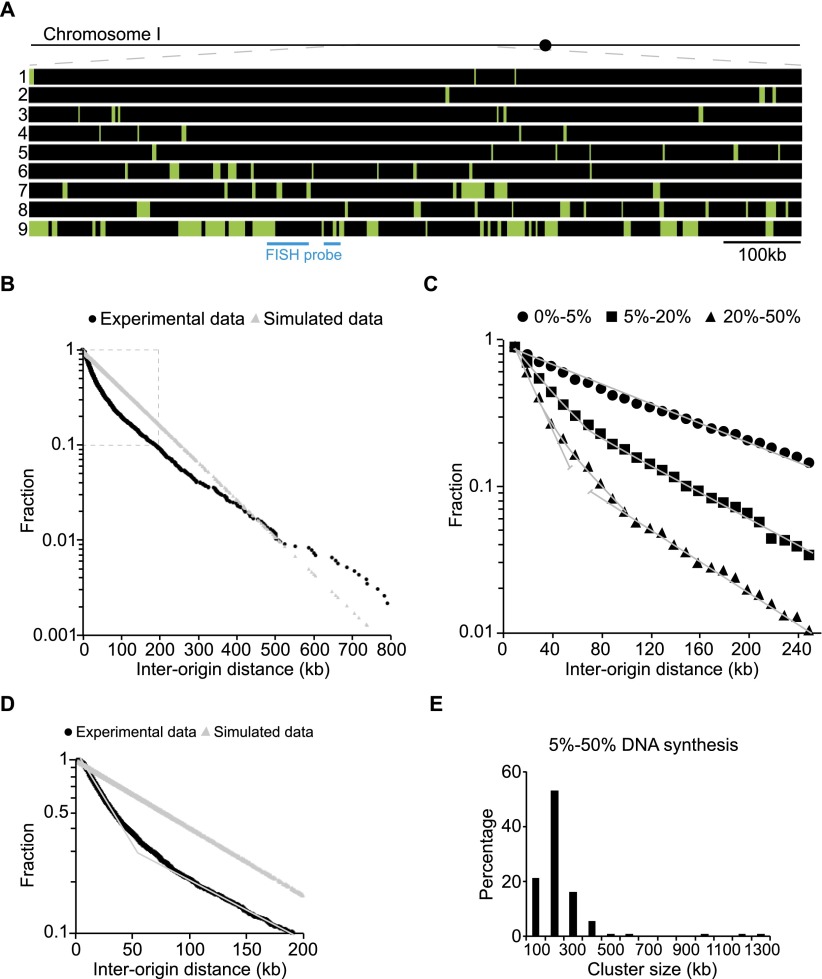
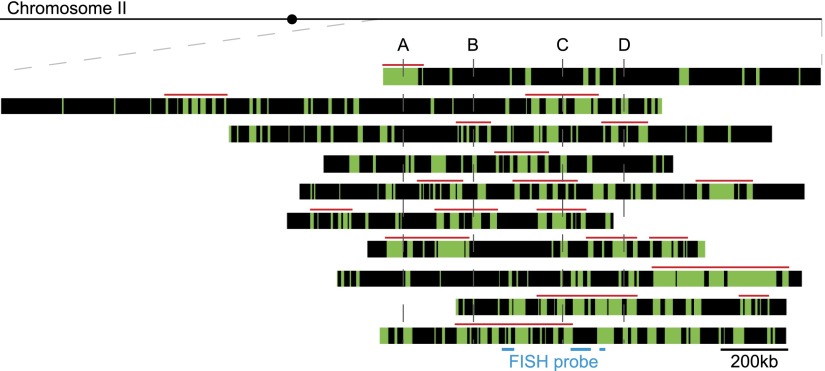
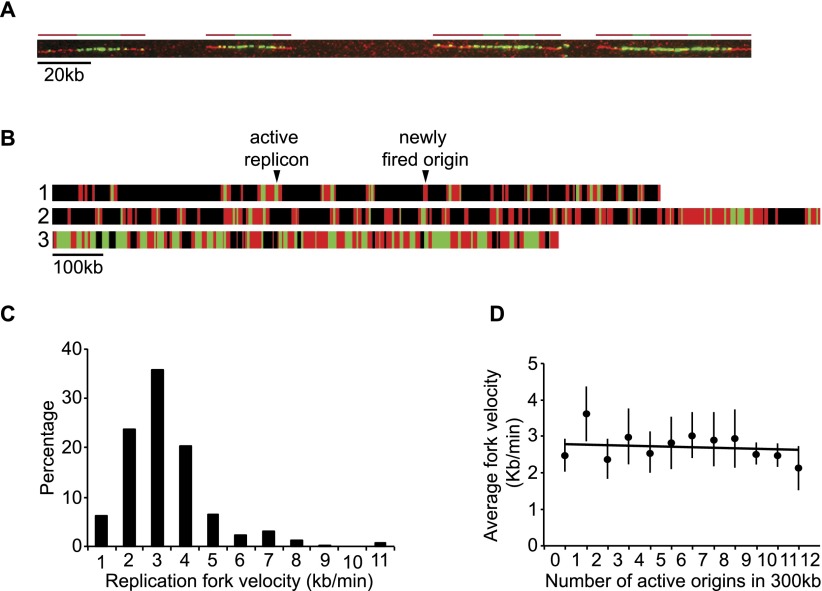
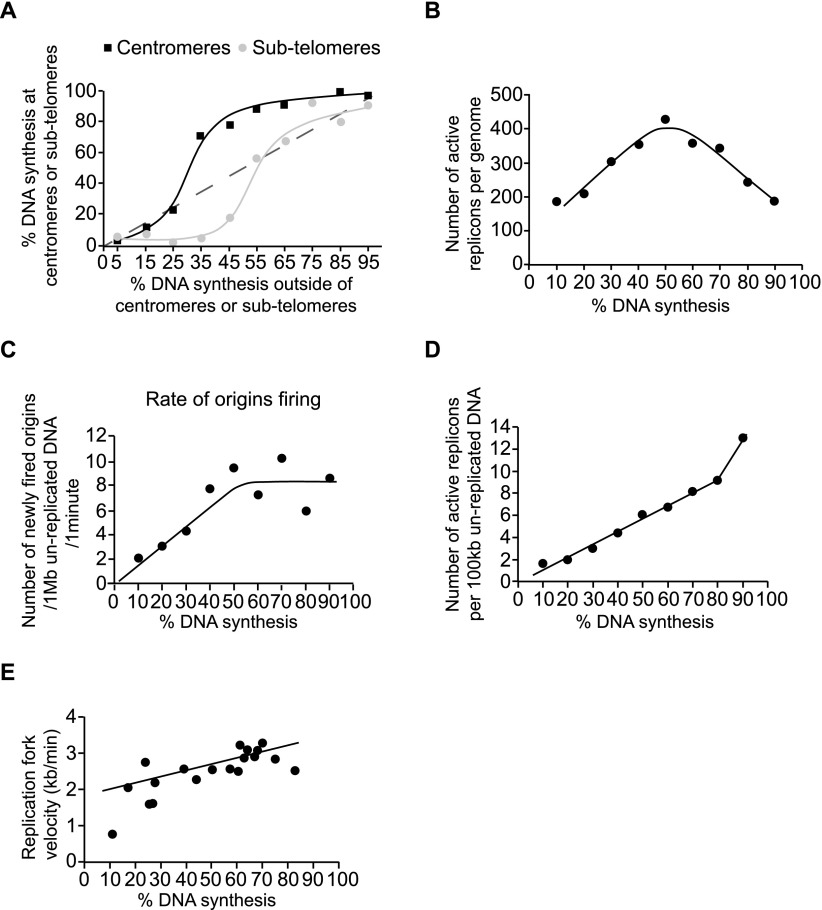
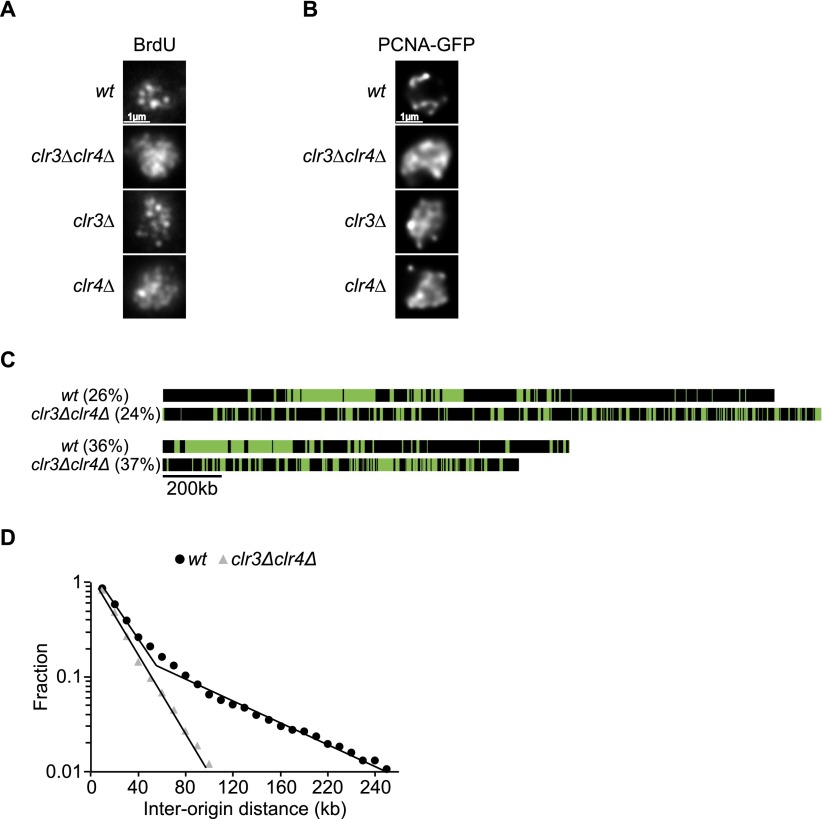
Eukaryotes duplicate their genomes using multiple replication origins, but the organization of origin firing along chromosomes and during S-phase is not well understood. Using fission yeast, we report the first genome-wide analysis of the spatial and temporal organization of replication origin firing, analyzed using single DNA molecules that can approach the full length of chromosomes. At S-phase onset, origins fire randomly and sparsely throughout the chromosomes. Later in S-phase, clusters of fired origins appear embedded in the sparser regions, which form the basis of nuclear replication foci. The formation of clusters requires proper histone methylation and acetylation, and their locations are not inherited between cell cycles. The rate of origin firing increases gradually, peaking just before mid S-phase. Toward the end of S-phase, nearly all the available origins within the unreplicated regions are fired, contributing to the timely completion of genome replication. We propose that the majority of origins do not fire as a part of a deterministic program. Instead, origin firing, both individually and as clusters, should be viewed as being mostly stochastic.
真核生物利用多个复制起点来复制其基因组,但复制起点沿染色体以及在S期的启动机制尚未完全清楚。我们利用裂殖酵母,通过对接近染色体全长的单个DNA分子进行分析,首次在全基因组范围内对复制起点启动的时空组织进行了研究。在S期开始时,复制起点在整个染色体上随机且稀疏地启动。在S期后期,已启动的复制起点簇出现在较稀疏的区域中,这些区域构成了核复制焦点的基础。簇的形成需要适当的组蛋白甲基化和乙酰化,并且它们的位置在细胞周期之间不会遗传。复制起点的启动速率逐渐增加,在S期中期之前达到峰值。在S期接近尾声时,未复制区域内几乎所有可用的复制起点都会启动,这有助于及时完成基因组复制。我们认为,大多数复制起点并非按照确定性程序启动。相反,复制起点的启动,无论是单个还是成簇启动,在很大程度上都应被视为随机事件。