Spiers Helen, Hannon Eilis, Schalkwyk Leonard C, Smith Rebecca, Wong Chloe C Y, O'Donovan Michael C, Bray Nicholas J, Mill Jonathan
Institute of Psychiatry, Psychology & Neuroscience, King's College London, London SE5 8AF, United Kingdom;
University of Exeter Medical School, University of Exeter, Exeter EX2 5DW, United Kingdom;
Genome Res. 2015 Mar;25(3):338-52. doi: 10.1101/gr.180273.114. Epub 2015 Feb 3.
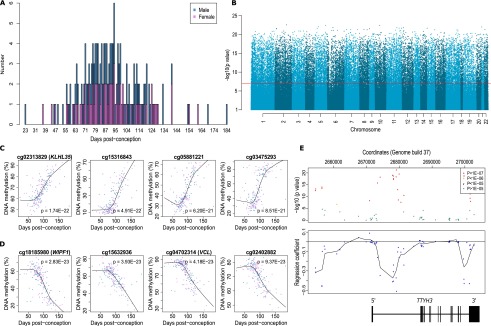
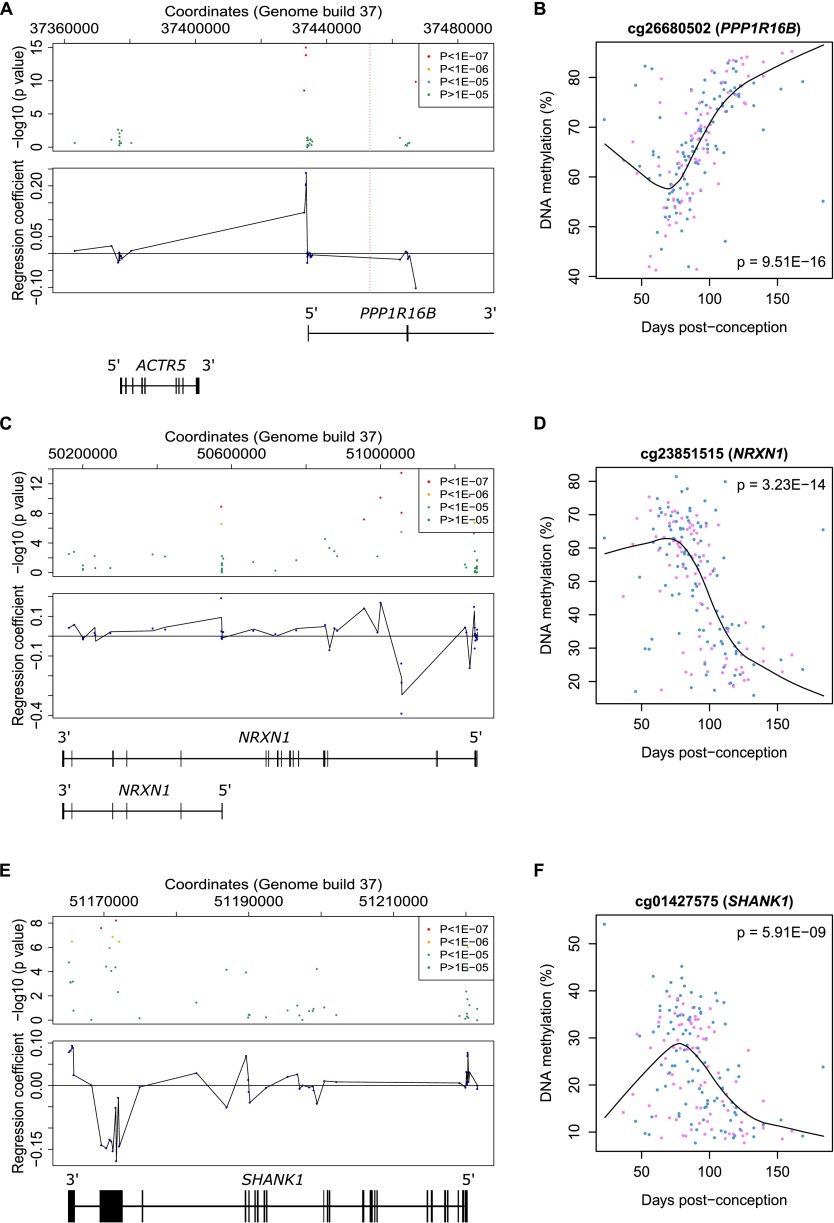
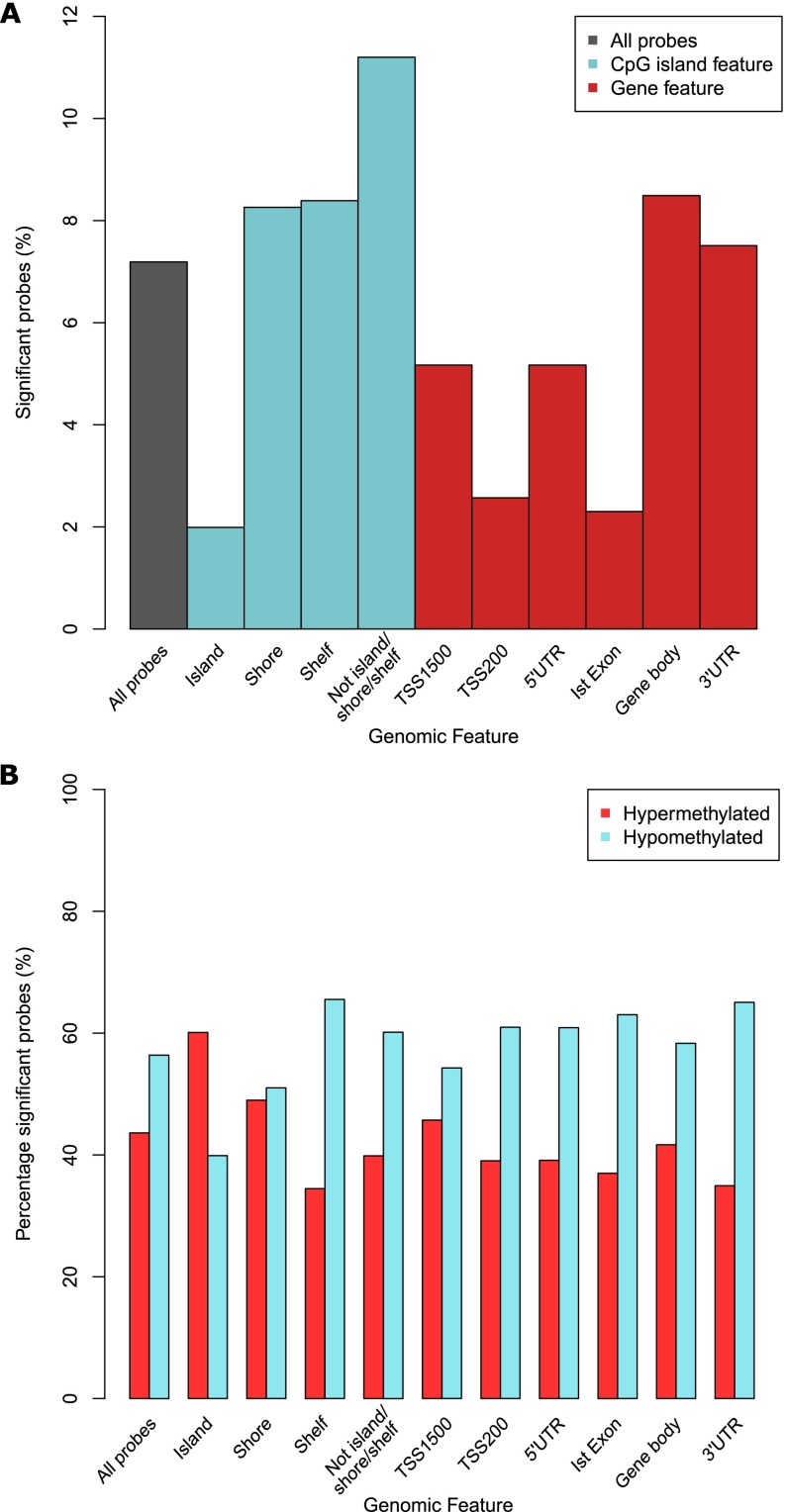
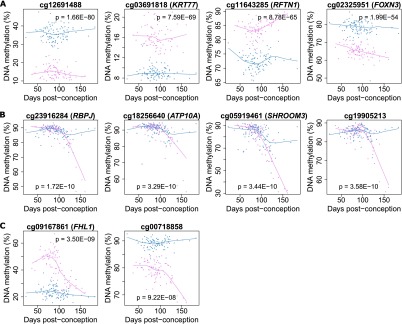
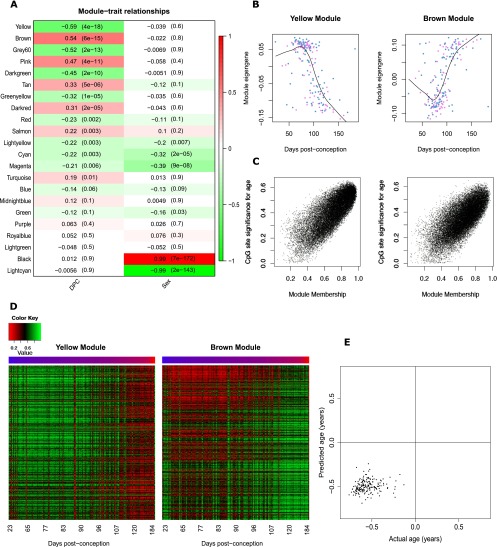
Epigenetic processes play a key role in orchestrating transcriptional regulation during development. The importance of DNA methylation in fetal brain development is highlighted by the dynamic expression of de novo DNA methyltransferases during the perinatal period and neurodevelopmental deficits associated with mutations in the methyl-CpG binding protein 2 (MECP2) gene. However, our knowledge about the temporal changes to the epigenome during fetal brain development has, to date, been limited. We quantified genome-wide patterns of DNA methylation at ∼ 400,000 sites in 179 human fetal brain samples (100 male, 79 female) spanning 23 to 184 d post-conception. We identified highly significant changes in DNA methylation across fetal brain development at >7% of sites, with an enrichment of loci becoming hypomethylated with fetal age. Sites associated with developmental changes in DNA methylation during fetal brain development were significantly underrepresented in promoter regulatory regions but significantly overrepresented in regions flanking CpG islands (shores and shelves) and gene bodies. Highly significant differences in DNA methylation were observed between males and females at a number of autosomal sites, with a small number of regions showing sex-specific DNA methylation trajectories across brain development. Weighted gene comethylation network analysis (WGCNA) revealed discrete modules of comethylated loci associated with fetal age that are significantly enriched for genes involved in neurodevelopmental processes. This is, to our knowledge, the most extensive study of DNA methylation across human fetal brain development to date, confirming the prenatal period as a time of considerable epigenomic plasticity.
表观遗传过程在发育过程中协调转录调控方面发挥着关键作用。围产期从头DNA甲基转移酶的动态表达以及与甲基-CpG结合蛋白2(MECP2)基因突变相关的神经发育缺陷突出了DNA甲基化在胎儿大脑发育中的重要性。然而,迄今为止,我们对胎儿大脑发育过程中表观基因组的时间变化的了解仍然有限。我们对179份人类胎儿大脑样本(100例男性,79例女性)中约40万个位点的全基因组DNA甲基化模式进行了定量分析,这些样本涵盖了受孕后23至184天。我们发现在超过7%的位点上,整个胎儿大脑发育过程中DNA甲基化发生了高度显著的变化,随着胎龄增加,低甲基化位点富集。在胎儿大脑发育过程中与DNA甲基化发育变化相关的位点在启动子调控区域中显著减少,但在CpG岛侧翼区域(海岸和陆架)和基因体中显著增加。在多个常染色体位点上,男性和女性之间观察到了高度显著的DNA甲基化差异,少数区域在整个大脑发育过程中显示出性别特异性的DNA甲基化轨迹。加权基因共甲基化网络分析(WGCNA)揭示了与胎龄相关的共甲基化位点的离散模块,这些模块在参与神经发育过程的基因中显著富集。据我们所知,这是迄今为止对人类胎儿大脑发育过程中DNA甲基化最广泛的研究,证实了产前时期是表观基因组可塑性相当大的时期。