Guo Yanwen, Liu Jun, Elfenbein Sarah J, Ma Yinghong, Zhong Mei, Qiu Caihong, Ding Ye, Lu Jun
Department of Genetics, Yale University School of Medicine, New Haven, CT 06510, USA Yale Stem Cell Center, Yale Cancer Center, New Haven, CT 06520, USA Graduate Program in Biological and Biomedical Sciences, Yale University, New Haven, CT 06510, USA.
Department of Genetics, Yale University School of Medicine, New Haven, CT 06510, USA Yale Stem Cell Center, Yale Cancer Center, New Haven, CT 06520, USA.
Nucleic Acids Res. 2015 Feb 27;43(4):2326-41. doi: 10.1093/nar/gkv057. Epub 2015 Feb 4.
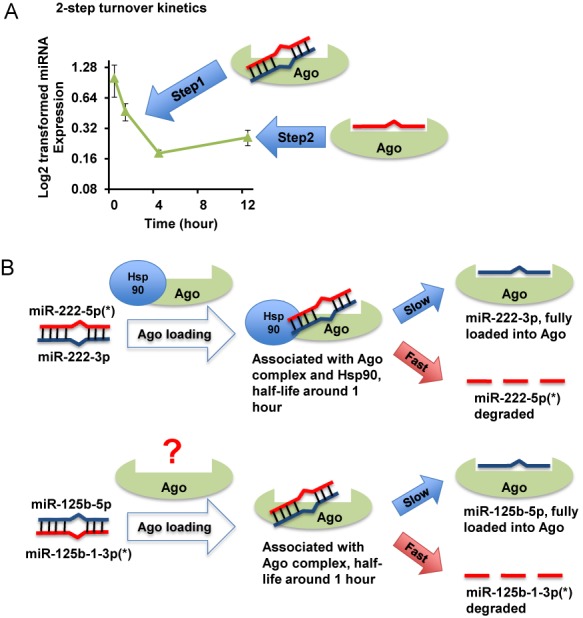
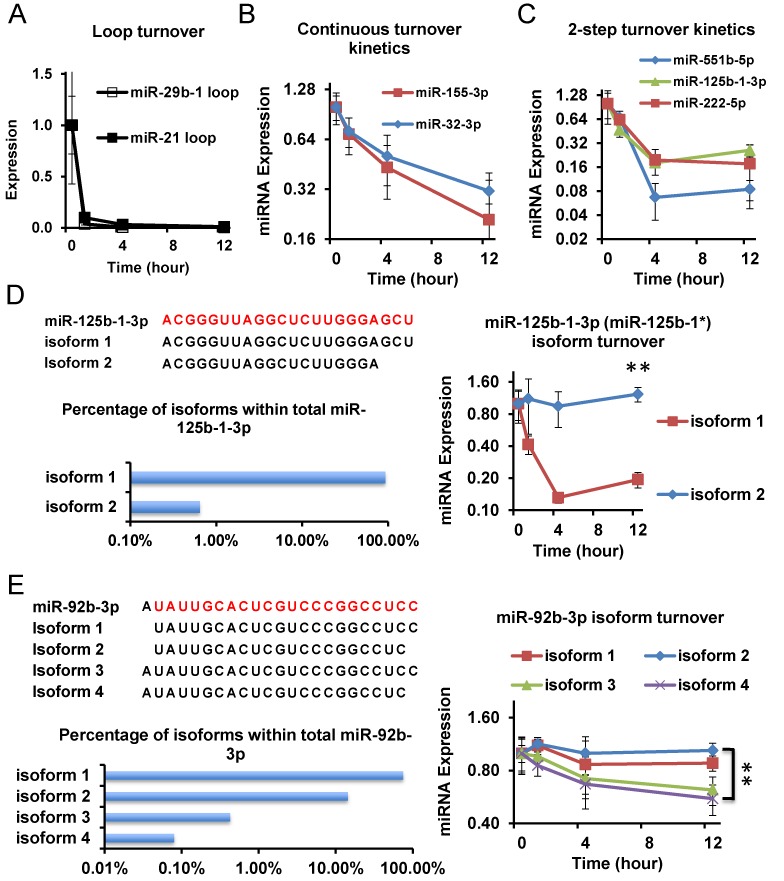
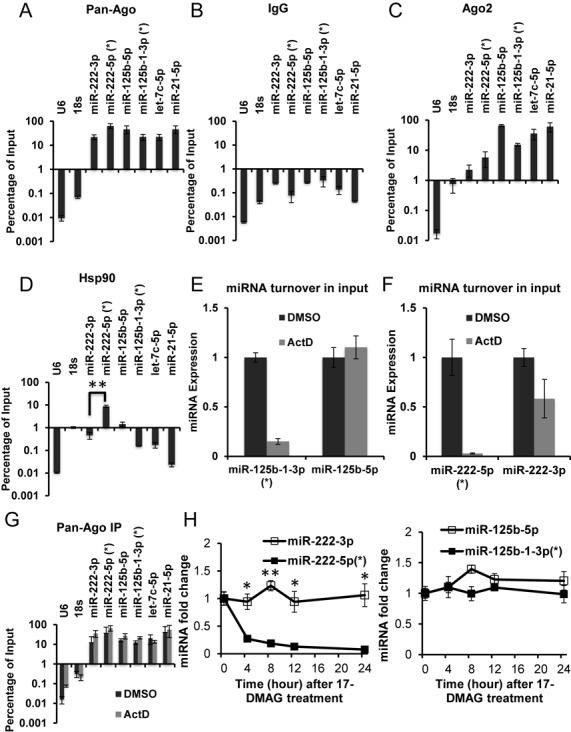
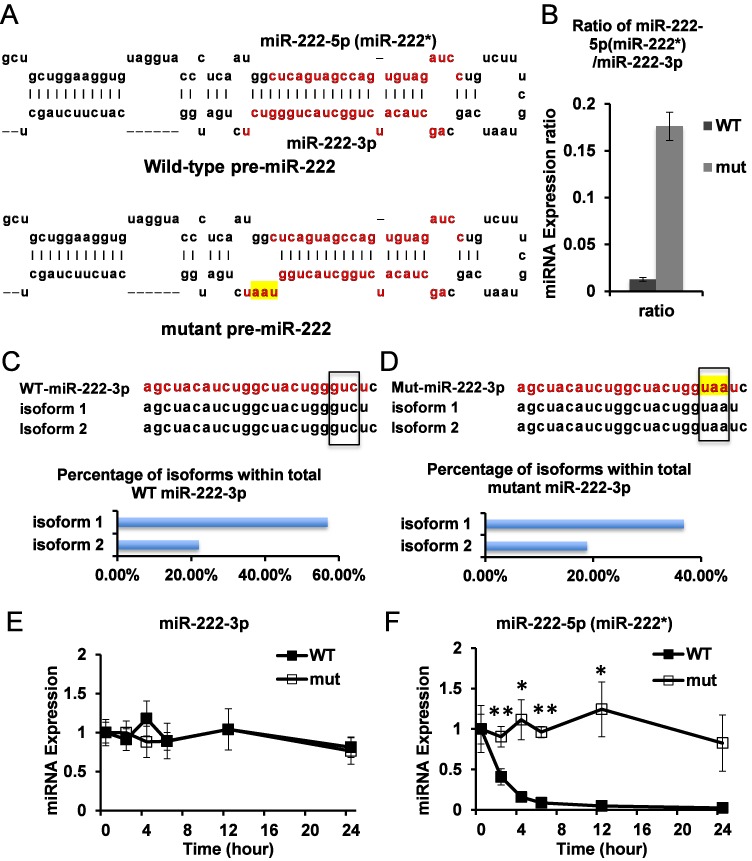
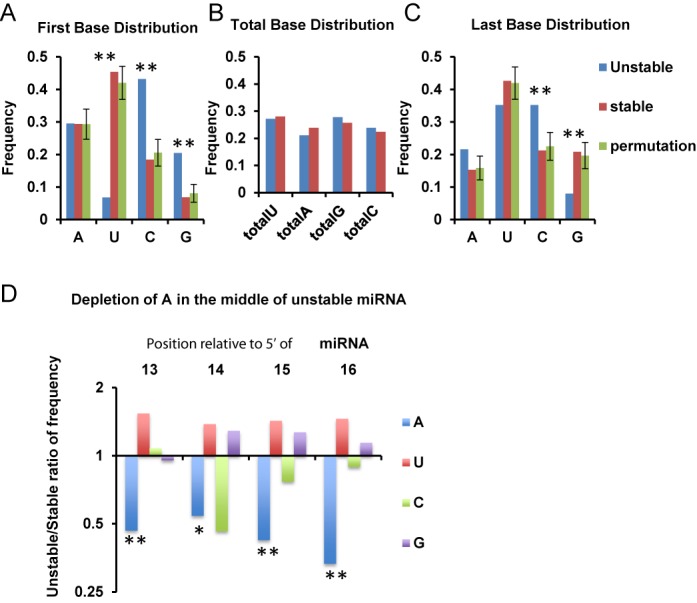
Steady state cellular microRNA (miRNA) levels represent the balance between miRNA biogenesis and turnover. The kinetics and sequence determinants of mammalian miRNA turnover during and after miRNA maturation are not fully understood. Through a large-scale study on mammalian miRNA turnover, we report the co-existence of multiple cellular miRNA pools with distinct turnover kinetics and biogenesis properties and reveal previously unrecognized sequence features for fast turnover miRNAs. We measured miRNA turnover rates in eight mammalian cell types with a combination of expression profiling and deep sequencing. While most miRNAs are stable, a subset of miRNAs, mostly miRNAs, turnovers quickly, many of which display a two-step turnover kinetics. Moreover, different sequence isoforms of the same miRNA can possess vastly different turnover rates. Fast turnover miRNA isoforms are enriched for 5' nucleotide bias against Argonaute-(AGO)-loading, but also additional 3' and central sequence features. Modeling based on two fast turnover miRNAs miR-222-5p and miR-125b-1-3p, we unexpectedly found that while both miRNAs are associated with AGO, they strongly differ in HSP90 association and sensitivity to HSP90 inhibition. Our data characterize the landscape of genome-wide miRNA turnover in cultured mammalian cells and reveal differential HSP90 requirements for different miRNAs. Our findings also implicate rules for designing stable small RNAs, such as siRNAs.
稳态细胞微小RNA(miRNA)水平代表了miRNA生物合成与周转之间的平衡。miRNA成熟过程中及成熟后哺乳动物miRNA周转的动力学和序列决定因素尚未完全明确。通过一项关于哺乳动物miRNA周转的大规模研究,我们报告了具有不同周转动力学和生物合成特性的多个细胞miRNA库的共存,并揭示了快速周转miRNA先前未被识别的序列特征。我们结合表达谱分析和深度测序测量了八种哺乳动物细胞类型中的miRNA周转速率。虽然大多数miRNA是稳定的,但一小部分miRNA,主要是miRNA*,周转迅速,其中许多显示出两步周转动力学。此外,同一miRNA的不同序列异构体可能具有截然不同的周转速率。快速周转的miRNA异构体富含针对AGO装载的5'核苷酸偏向性,同时还具有额外的3'和中心序列特征。基于两个快速周转的miRNA* miR-222-5p和miR-125b-1-3p进行建模,我们意外地发现,虽然这两个miRNA都与AGO相关,但它们在与HSP90的关联以及对HSP90抑制的敏感性方面存在很大差异。我们的数据描绘了培养的哺乳动物细胞中全基因组miRNA周转的情况,并揭示了不同miRNA对HSP90的不同需求。我们的发现还暗示了设计稳定小RNA(如siRNA)的规则。