Nardi Francesca, Hoffmann Thorsten M, Stretton Clare, Cwiklinski Emma, Taylor Peter M, Hundal Harinder S
From the Division of Cell Signalling and Immunology, Sir James Black Centre, College of Life Sciences, University of Dundee, Dundee, DD1 5EH, United Kingdom.
From the Division of Cell Signalling and Immunology, Sir James Black Centre, College of Life Sciences, University of Dundee, Dundee, DD1 5EH, United Kingdom
J Biol Chem. 2015 Mar 27;290(13):8173-84. doi: 10.1074/jbc.M114.625137. Epub 2015 Feb 4.
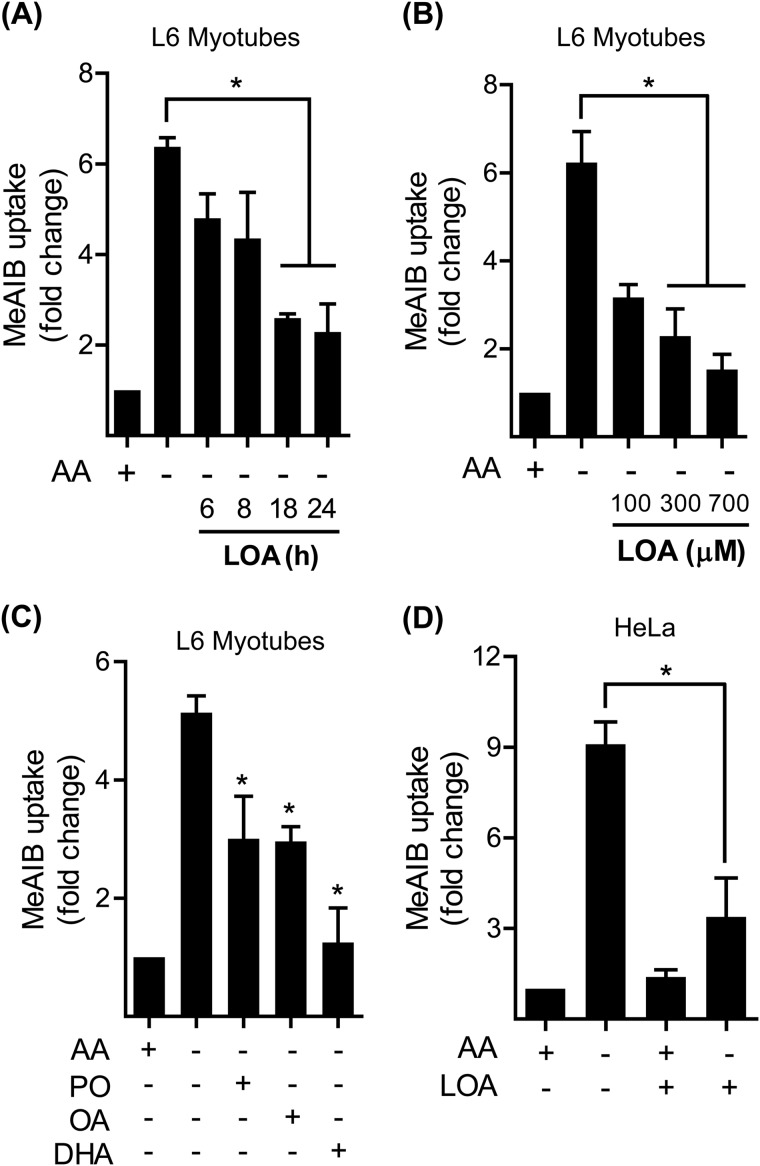
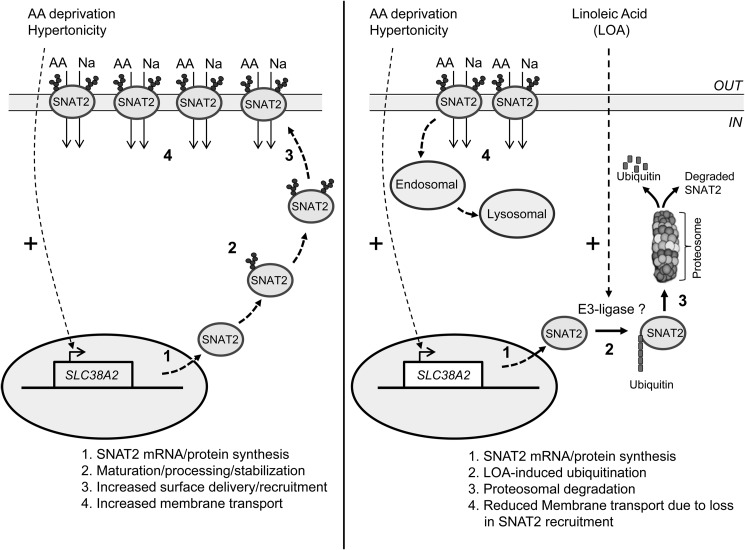
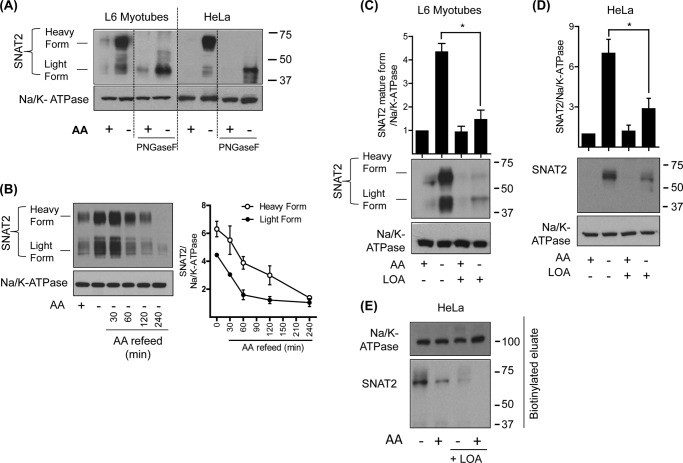
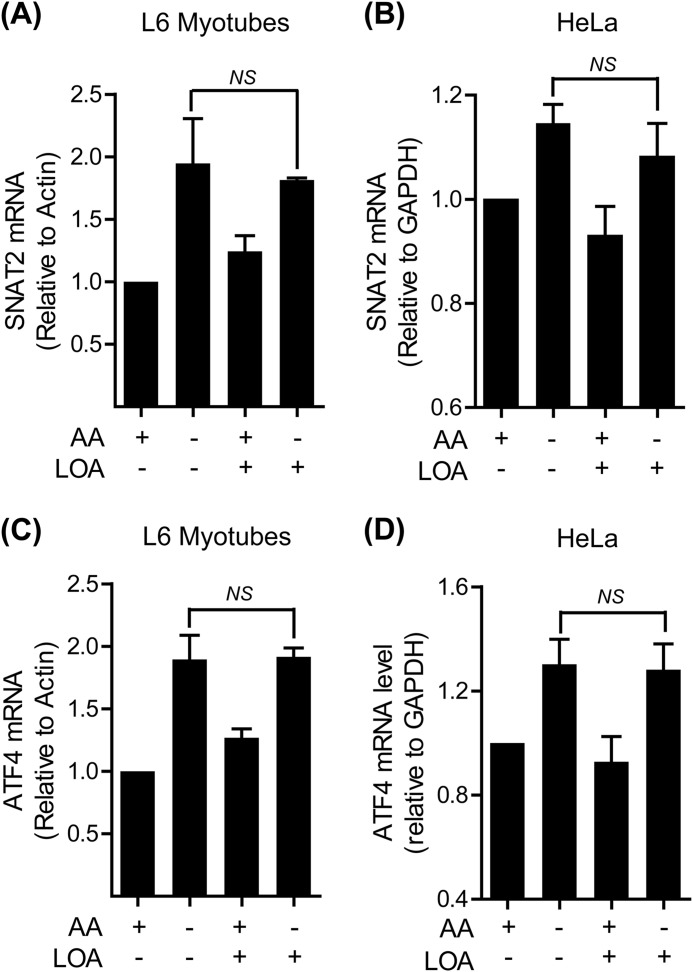
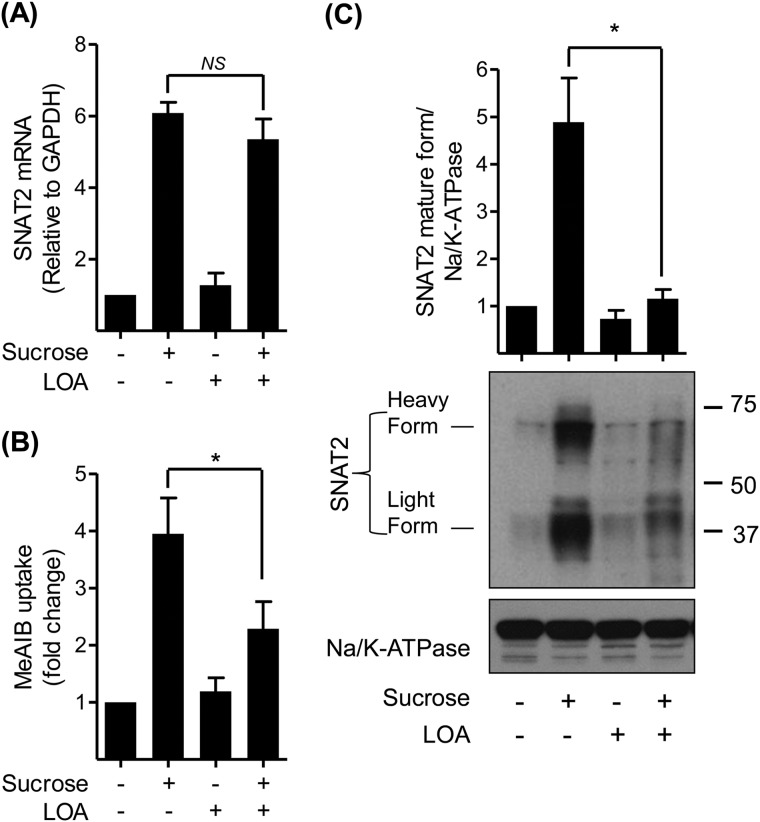
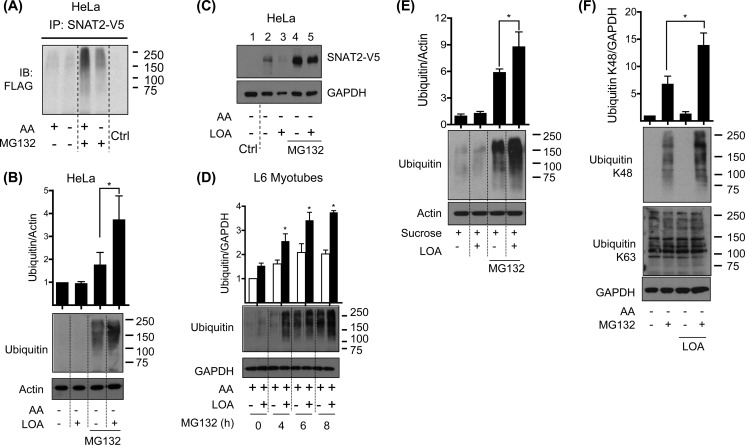
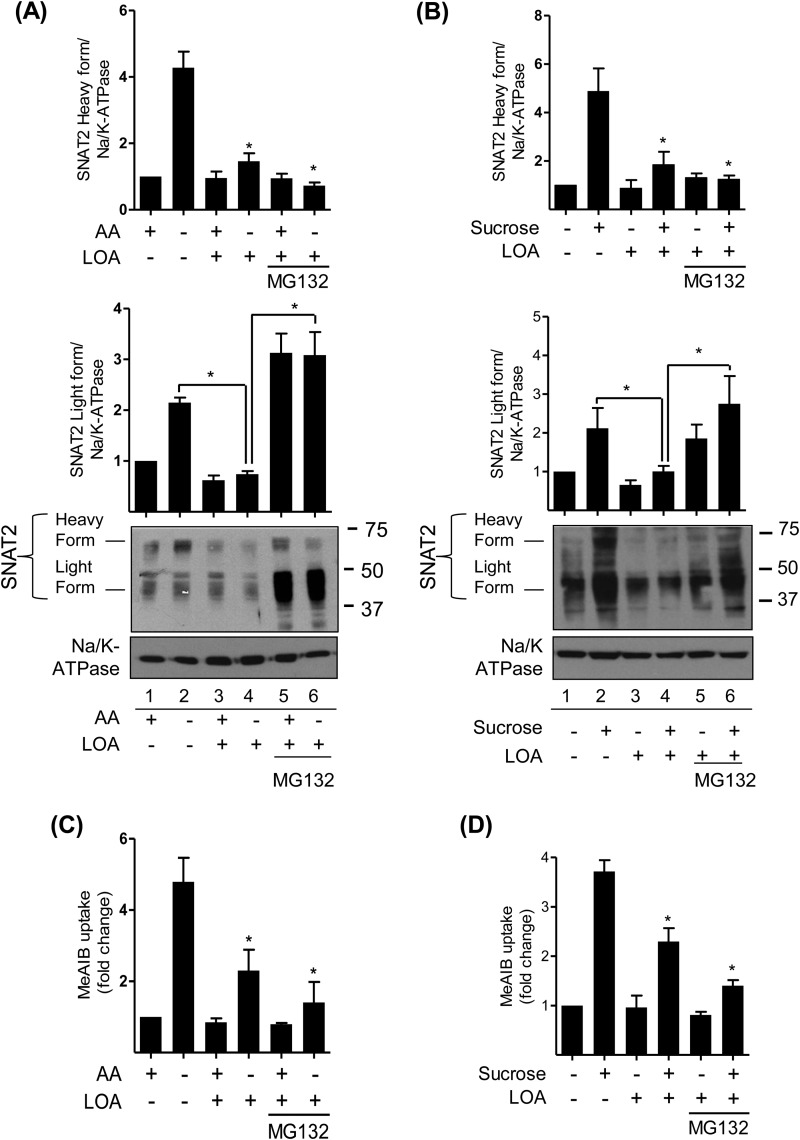
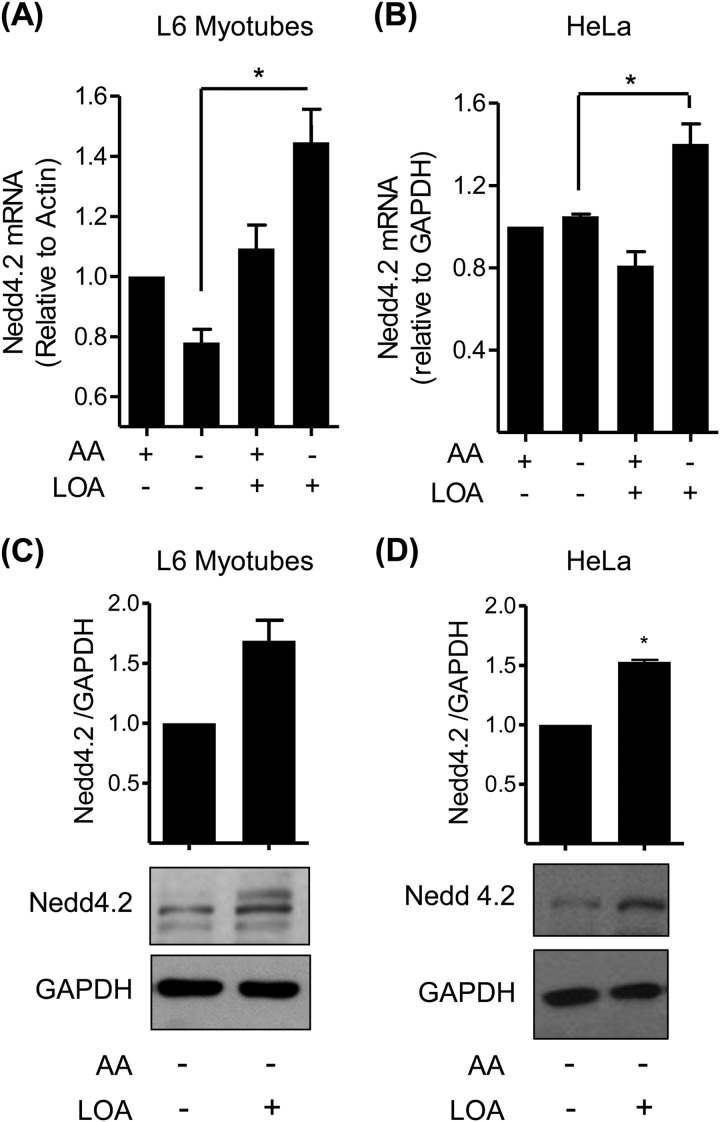
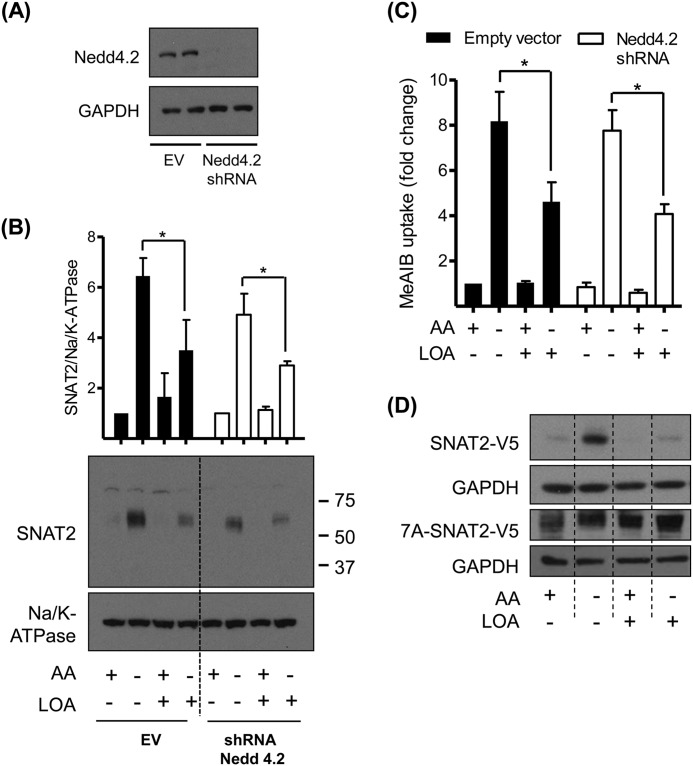
Expression and activity of the System A/SNAT2 (SLC38A2) amino acid transporter is up-regulated by amino acid starvation and hypertonicity by a mechanism dependent on both ATF4-mediated transcription of the SLC38A2 gene and enhanced stabilization of SNAT2 itself, which forms part of an integrated cellular stress response to nutrient deprivation and osmotic stress. Here we demonstrate that this adaptive increase in System A function is restrained in cells subjected to prior incubation with linoleic acid (LOA, an unsaturated C18:2 fatty acid) for 24 h. While fatty acid treatment had no detectable effect upon stress-induced SNAT2 or ATF4 gene transcription, the associated increase in SNAT2 protein/membrane transport activity were strongly suppressed in L6 myotubes or HeLa cells preincubated with LOA. Cellular ubiquitination of many proteins was increased by LOA and although the fatty acid-induced loss of SNAT2 could be attenuated by proteasomal inhibition, the functional increase in System A transport activity associated with amino acid starvation/hypertonicity that depends upon processing/maturation and delivery of SNAT2 to the cell surface could not be rescued. LOA up-regulated cellular expression of Nedd4.2, an E3-ligase implicated in SNAT2 ubiquitination, but shRNA-directed Nedd4.2 gene silencing could not curb fatty acid-induced loss of SNAT2 adaptation. However, expression of SNAT2 in which seven putative lysyl-ubiquitination sites in the cytoplasmic N-terminal domain were mutated to alanine protected SNAT2 against LOA-induced proteasomal degradation. Collectively, our findings indicate that increased availability of unsaturated fatty acids can compromise the stress-induced induction/adaptation in SNAT2 expression and function by promoting its degradation via the ubiquitin-proteasome system.
系统A/SNAT2(溶质载体家族38成员2,SLC38A2)氨基酸转运体的表达和活性可通过一种依赖于ATF4介导的SLC38A2基因转录以及SNAT2自身稳定性增强的机制,在氨基酸饥饿和高渗状态下被上调,这构成了细胞对营养剥夺和渗透压应激的综合应激反应的一部分。在此,我们证明,在用亚油酸(LOA,一种不饱和C18:2脂肪酸)预先孵育24小时的细胞中,系统A功能的这种适应性增加受到抑制。虽然脂肪酸处理对应激诱导的SNAT2或ATF4基因转录没有可检测到的影响,但在预先用LOA孵育的L6肌管或HeLa细胞中,SNAT2蛋白/膜转运活性的相关增加受到强烈抑制。LOA增加了许多蛋白质的细胞泛素化,尽管蛋白酶体抑制可减弱脂肪酸诱导的SNAT2丢失,但依赖于SNAT2加工/成熟并转运至细胞表面的、与氨基酸饥饿/高渗相关的系统A转运活性的功能性增加无法恢复。LOA上调了Nedd4.2的细胞表达,Nedd4.2是一种与SNAT2泛素化有关的E3连接酶,但通过短发夹RNA介导的Nedd4.2基因沉默无法抑制脂肪酸诱导的SNAT2适应性丧失。然而,将细胞质N端结构域中七个假定的赖氨酰泛素化位点突变为丙氨酸的SNAT2表达可保护SNAT2免受LOA诱导的蛋白酶体降解。总的来说,我们的研究结果表明,不饱和脂肪酸可用性的增加可通过泛素-蛋白酶体系统促进其降解,从而损害应激诱导的SNAT2表达和功能的诱导/适应。