ZIEL-PhD Graduate School 'Epigenetics, Imprinting and Nutrition', ZIEL-Institute for Food and Health, School of Life Sciences Weihenstephan, Technical University of Munich, Gregor-Mendel-Straße 2, 85354, Freising, Germany.
Else Kröner-Fresenius-Center for Nutritional Medicine, School of Life Sciences Weihenstephan, Technical University of Munich, Gregor-Mendel-Straße 2, 85354, Freising, Germany.
BMC Mol Cell Biol. 2021 Mar 3;22(1):15. doi: 10.1186/s12860-021-00345-x.
Previously, we revealed sexually dimorphic mRNA expression and responsiveness to maternal dietary supplementation with n-3 long-chain polyunsaturated fatty acids (LCPUFA) in placentas from a defined INFAT study subpopulation. Here, we extended these analyses and explored the respective placental microRNA expression, putative microRNA-mRNA interactions, and downstream target processes as well as their associations with INFAT offspring body composition.
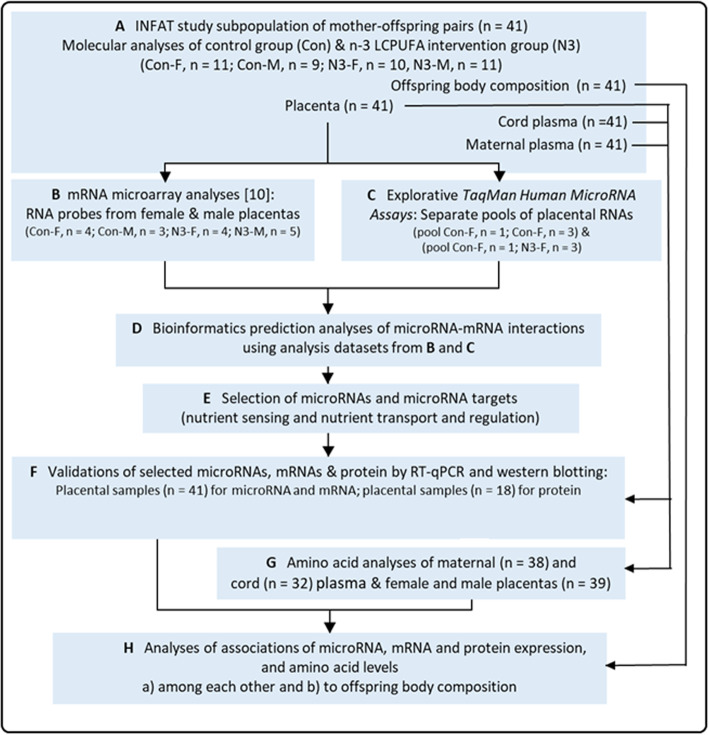
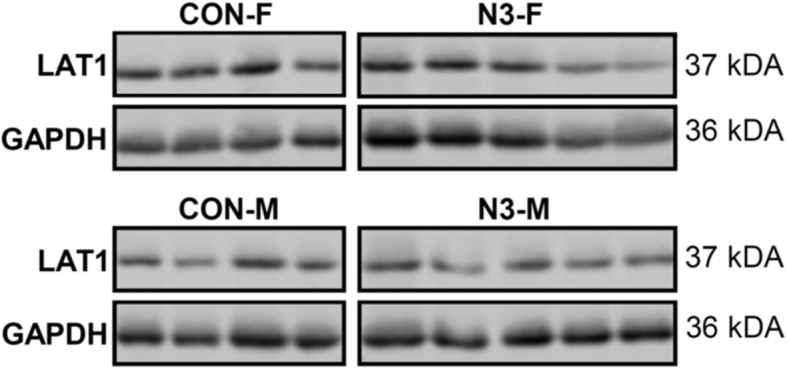
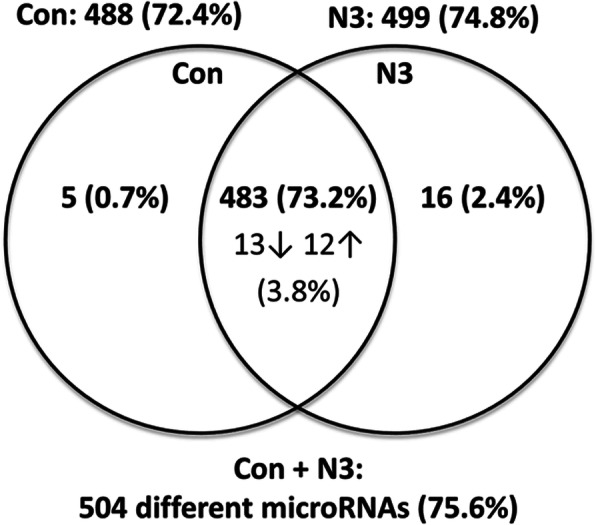
We performed explorative placental microRNA profiling, predicted microRNA-mRNA interactions by bioinformatics, validated placental target microRNAs and their putative targets by RT-qPCR and western blotting, and measured amino acid levels in maternal and offspring cord blood plasma and placenta. microRNA, mRNA, protein, and amino acid levels were associated with each other and with offspring body composition from birth to 5 years of age. Forty-six differentially regulated microRNAs were found. Validations identified differential expression for microRNA-99a (miR-99a) and its predicted target genes mTOR, SLC7A5, encoding L-type amino acid transporter 1 (LAT1), and SLC6A6, encoding taurine transporter (TauT), and their prevailing significant sexually dimorphic regulation. Target mRNA levels were mostly higher in placentas from control male than from female offspring, whereas respective n-3 LCPUFA responsive target upregulation was predominantly found in female placentas, explaining the rather balanced expression levels between the sexes present only in the intervention group. LAT1 and TauT substrates tryptophan and taurine, respectively, were significantly altered in both maternal plasma at 32 weeks' gestation and cord plasma following intervention, but not in the placenta. Several significant associations were observed for miR-99a, mTOR mRNA, SLC7A5 mRNA, and taurine and tryptophan in maternal and cord plasma with offspring body composition at birth, 1 year, 3 and 5 years of age.
Our data suggest that the analyzed targets may be part of a sexually dimorphic molecular regulatory network in the placenta, possibly modulating gene expression per se and/or counteracting n-3 LCPUFA responsive changes, and thereby stabilizing respective placental and fetal amino acid levels. Our data propose placental miR-99, SLC7A5 mRNA, and taurine and tryptophan levels in maternal and fetal plasma as potentially predictive biomarkers for offspring body composition.
此前,我们揭示了在特定 INFAT 研究亚群的胎盘组织中,存在性别二态性的 mRNA 表达和对母体膳食补充 n-3 长链多不饱和脂肪酸(LCPUFA)的反应性。在此,我们扩展了这些分析,并探讨了相应的胎盘 microRNA 表达、推测的 microRNA-mRNA 相互作用及其下游靶过程,以及它们与 INFAT 后代身体成分的关系。
我们进行了探索性胎盘 microRNA 谱分析,通过生物信息学预测 microRNA-mRNA 相互作用,通过 RT-qPCR 和 Western blot 验证胎盘靶 microRNA 及其推测的靶标,并测量母血和胎儿脐血血浆及胎盘中的氨基酸水平。microRNA、mRNA、蛋白质和氨基酸水平相互关联,并与出生至 5 岁的后代身体成分相关。发现 46 个差异调节的 microRNA。验证确定了 microRNA-99a(miR-99a)及其预测靶基因 mTOR、编码 L 型氨基酸转运体 1(LAT1)的 SLC7A5 和编码牛磺酸转运体(TauT)的 SLC6A6 的差异表达,并且它们主要表现出显著的性别二态性调节。靶 mRNA 水平在来自雄性对照后代的胎盘中通常高于来自雌性后代的水平,而相应的 n-3 LCPUFA 反应性靶基因上调主要发生在雌性胎盘中,这解释了仅在干预组中存在的两性之间相对平衡的表达水平。LAT1 和 TauT 的底物色氨酸和牛磺酸分别在干预后 32 周妊娠时的母血浆和脐血浆中显著改变,但在胎盘组织中没有改变。miR-99a、mTOR mRNA、SLC7A5 mRNA 和牛磺酸和色氨酸在母血和脐血中的几种显著相关性与出生、1 岁、3 岁和 5 岁时的后代身体成分有关。
我们的数据表明,所分析的靶标可能是胎盘内性别二态性分子调节网络的一部分,可能本身调节基因表达,或抵消 n-3 LCPUFA 反应性变化,从而稳定相应的胎盘和胎儿氨基酸水平。我们的数据提出了母血和胎血中的胎盘 miR-99、SLC7A5 mRNA、牛磺酸和色氨酸水平可能作为后代身体成分的潜在预测生物标志物。