Quesada-Gómez Carlos, López-Ureña Diana, Acuña-Amador Luis, Villalobos-Zúñiga Manuel, Du Tim, Freire Rosemayre, Guzmán-Verri Caterina, del Mar Gamboa-Coronado María, Lawley Trevor D, Moreno Edgardo, Mulvey Michael R, de Castro Brito Gerly Anne, Rodríguez-Cavallini Evelyn, Rodríguez César, Chaves-Olarte Esteban
Facultad de Microbiología and Centro de Investigación en Enfermedades Tropicales, Universidad de Costa Rica, San José, Costa Rica.
Hospital San Juan de Dios, CCSS, San José, Costa Rica.
J Clin Microbiol. 2015 Apr;53(4):1216-26. doi: 10.1128/JCM.03058-14. Epub 2015 Feb 4.
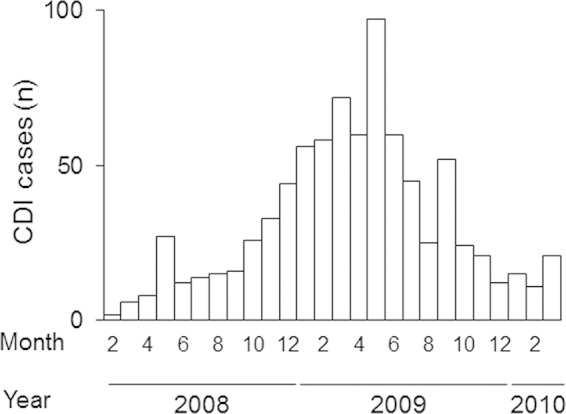
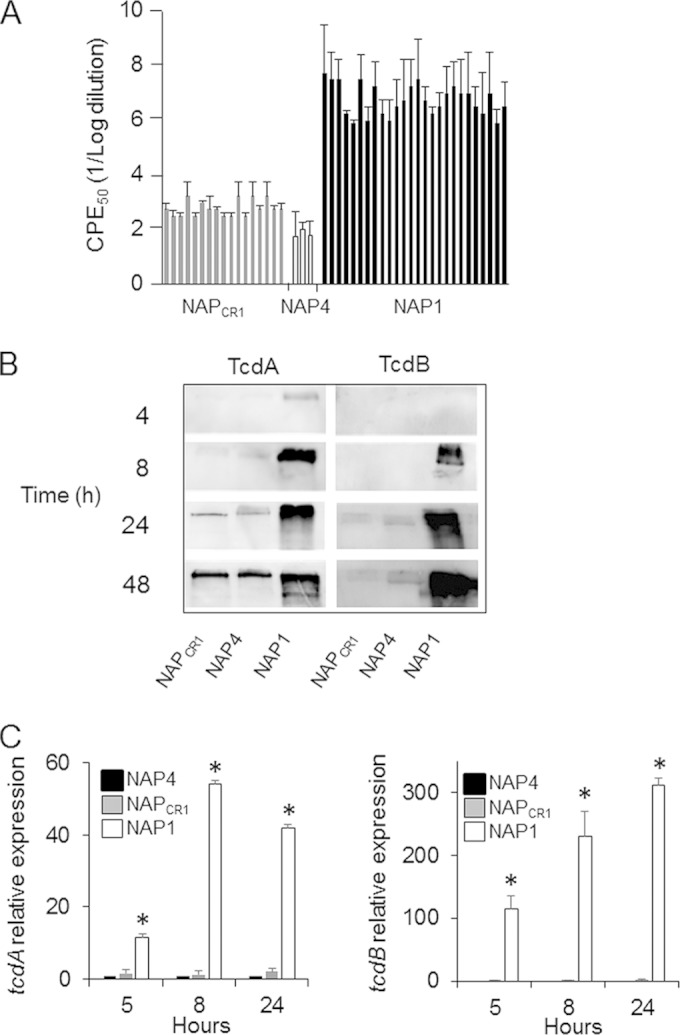
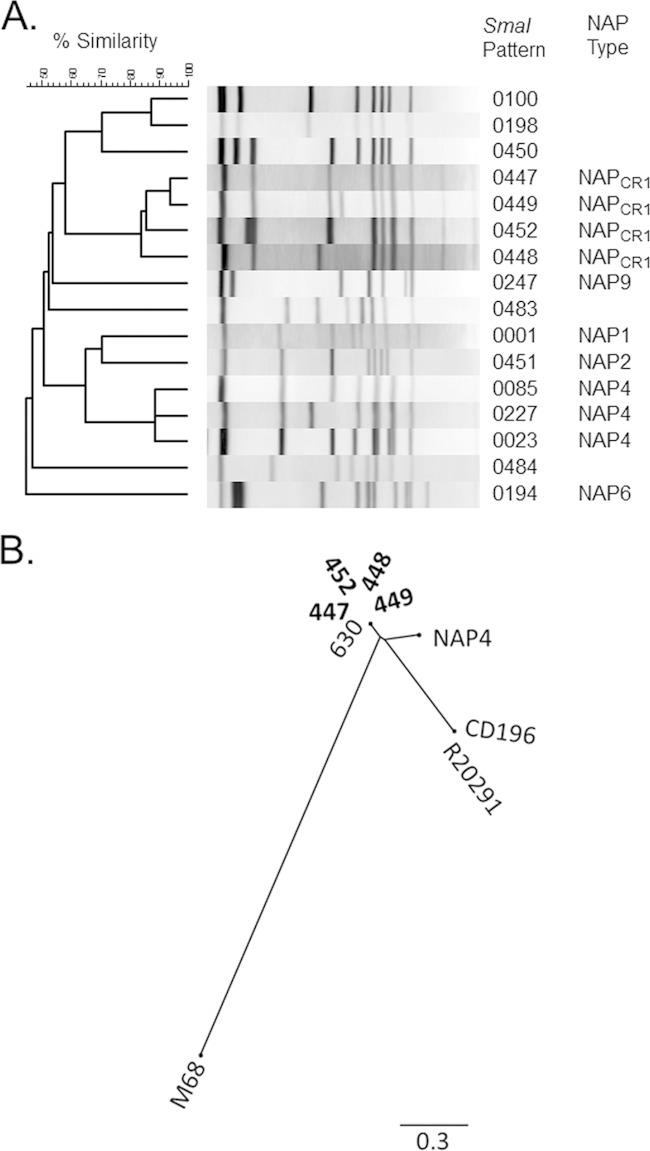
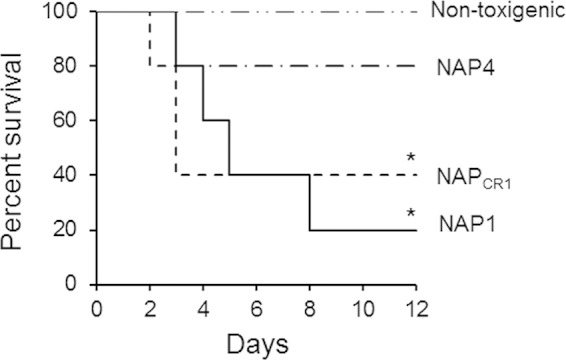
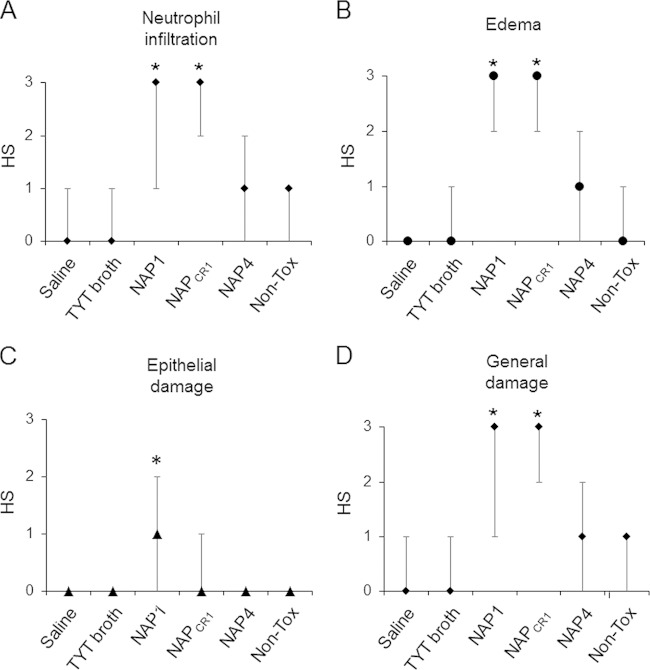
The prevalence of Clostridium difficile infections has increased due to the emergence of epidemic variants from diverse genetic lineages. Here we describe the emergence of a novel variant during an outbreak in a Costa Rican hospital that was associated with severe clinical presentations. This C. difficile variant elicited higher white blood cell counts and caused disease in younger patients than did other strains isolated during the outbreak. Furthermore, it had a recurrence rate, a 30-day attributable disease rate, and disease severity as great as those of the epidemic strain NAP1. Pulsed-field gel electrophoresis genotyping indicated that the outbreak strains belong to a previously undescribed variant, designated NAPCR1. Whole-genome sequencing and ribotyping indicated that the NAPCR1 variant belongs to C. difficile ribotype 012 and sequence type 54, as does the reference strain 630. NAPCR1 strains are resistant to fluoroquinolones due to a mutation in gyrA, and they possess an 18-bp deletion in tcdC that is characteristic of the epidemic, evolutionarily distinct, C. difficile NAP1 variant. NAPCR1 genomes contain 10% more predicted genes than strain 630, most of which are of hypothetical function and are present on phages and other mobile genetic elements. The increased virulence of NAPCR1 was confirmed by mortality rates in the hamster model and strong inflammatory responses induced by bacteria-free supernatants in the murine ligated loop model. However, NAPCR1 strains do not synthesize toxin A and toxin B at levels comparable to those in NAP1 strains. Our results suggest that the pathogenic potential of this emerging C. difficile variant is due to the acquisition of hypothetical functions associated with laterally acquired DNA.
由于来自不同遗传谱系的流行变体的出现,艰难梭菌感染的患病率有所增加。在此,我们描述了在哥斯达黎加一家医院的一次暴发期间出现的一种新型变体,该变体与严重的临床表现相关。与此次暴发期间分离出的其他菌株相比,这种艰难梭菌变体引发的白细胞计数更高,且在年轻患者中引发疾病。此外,它的复发率、30天归因疾病率和疾病严重程度与流行菌株NAP1相当。脉冲场凝胶电泳基因分型表明,暴发菌株属于一个先前未描述的变体,命名为NAPCR1。全基因组测序和核糖分型表明,NAPCR1变体与参考菌株630一样,属于艰难梭菌核糖型012和序列型54。由于gyrA基因发生突变,NAPCR1菌株对氟喹诺酮类药物耐药,并且它们在tcdC基因中有一个18bp的缺失,这是流行的、在进化上不同的艰难梭菌NAP1变体的特征。NAPCR1基因组比菌株630预测的基因多10%,其中大多数基因功能未知,存在于噬菌体和其他可移动遗传元件上。在仓鼠模型中的死亡率以及在小鼠结扎肠袢模型中无细菌上清液诱导的强烈炎症反应证实了NAPCR1毒力的增加。然而,NAPCR1菌株合成毒素A和毒素B的水平与NAP1菌株不同。我们的结果表明,这种新出现的艰难梭菌变体的致病潜力归因于与横向获得的DNA相关的未知功能的获得。