Ní Bhrolcháin Máire, Beaujouan Éva
Professor of Demography, Division of Social Statistics and Demography University of Southampton, UK.
Research Scientist, Vienna Institute of Demography Austria.
Popul Dev Rev. 2013 Sep;39(3):441-458. doi: 10.1111/j.1728-4457.2013.00611.x.
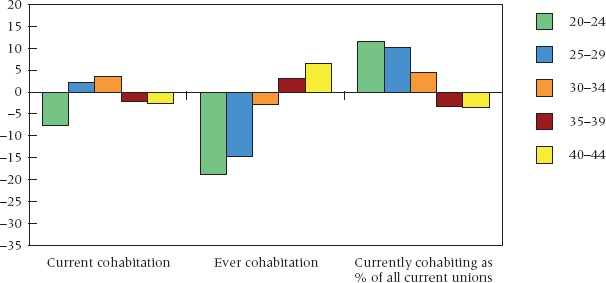
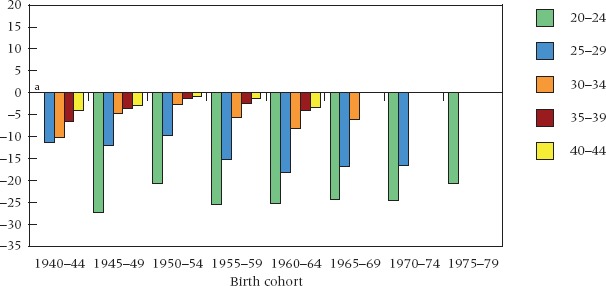
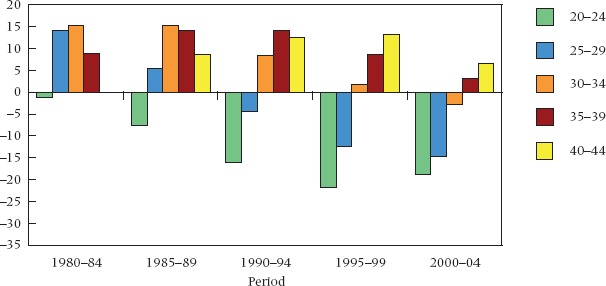
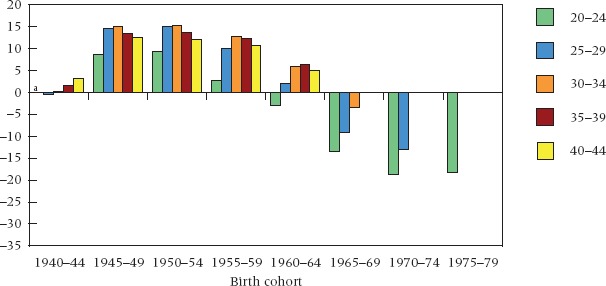
Cohabitation is sometimes thought of as being inversely associated with education, but in Britain a more complex picture emerges. Educational group differences in cohabitation vary by age, time period, cohort, and indicator used. Well-educated women pioneered cohabitation in Britain in the 1970s and 1980s. In the most recent cohorts, however, the less educated have exceeded the best educated in the proportions ever having cohabited at young ages. But the main difference by education currently seems largely a matter of timing-that is, the less educated start cohabiting earlier than the best educated. In Britain, educational differentials in cohabitation appear to be reinstating longstanding social patterns in the level and timing of marriage. Taking partnerships as a whole, social differentials have been fairly stable. Following a period of innovation and diffusion, there is much continuity with the past.
同居有时被认为与教育程度呈负相关,但在英国,情况更为复杂。同居方面的教育群体差异因年龄、时间段、队列以及所使用的指标而有所不同。20世纪70年代和80年代,受过良好教育的女性在英国率先开始同居。然而,在最近几代人中,受教育程度较低者在年轻时同居的比例超过了受教育程度最高者。但目前教育方面的主要差异似乎很大程度上在于时间——也就是说,受教育程度较低者比受教育程度最高者更早开始同居。在英国,同居方面的教育差异似乎正在恢复婚姻水平和时间方面长期存在的社会模式。从整体伴侣关系来看,社会差异相当稳定。经过一段时间的创新和传播后,与过去有很多延续性。