Salzano Giuseppina, Navarro Gemma, Trivedi Malav S, De Rosa Giuseppe, Torchilin Vladimir P
Center for Pharmaceutical Biotechnology and Nanomedicine, Northeastern University, Boston, Massachusetts. Department of Pharmacy, School of Pharmacy Federico II, Naples, Italy.
Center for Pharmaceutical Biotechnology and Nanomedicine, Northeastern University, Boston, Massachusetts.
Mol Cancer Ther. 2015 Apr;14(4):1075-84. doi: 10.1158/1535-7163.MCT-14-0556. Epub 2015 Feb 5.
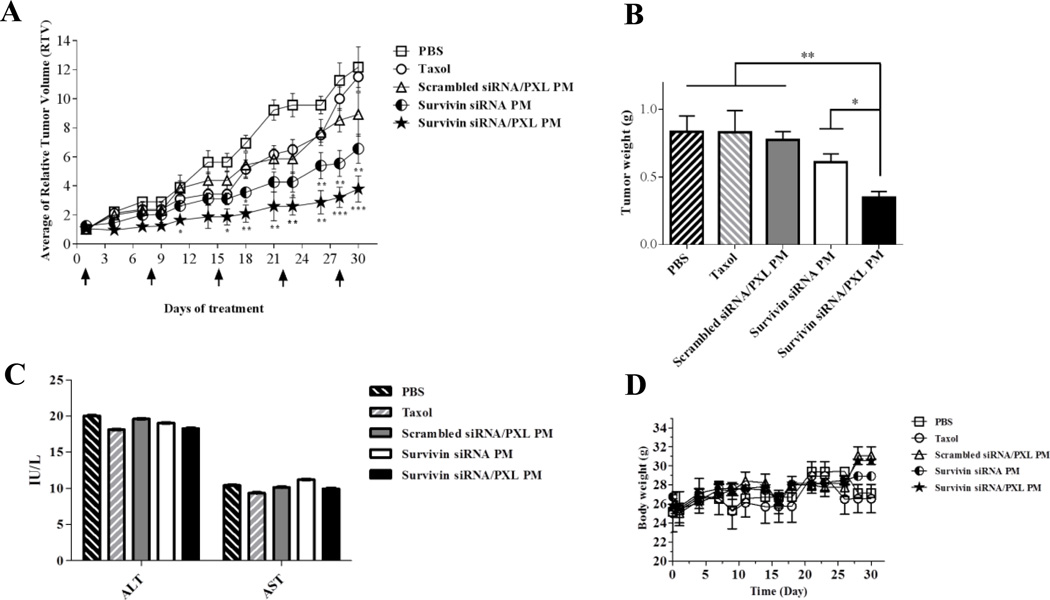
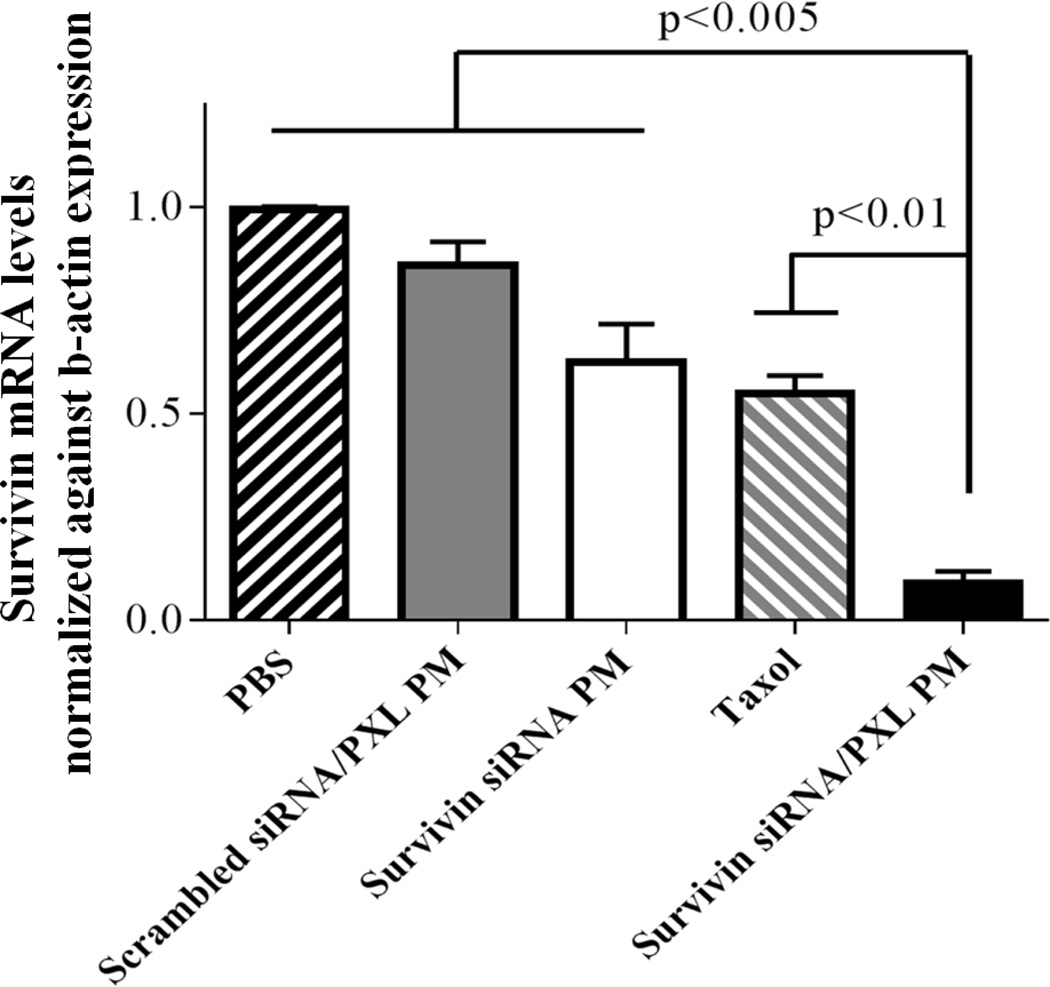
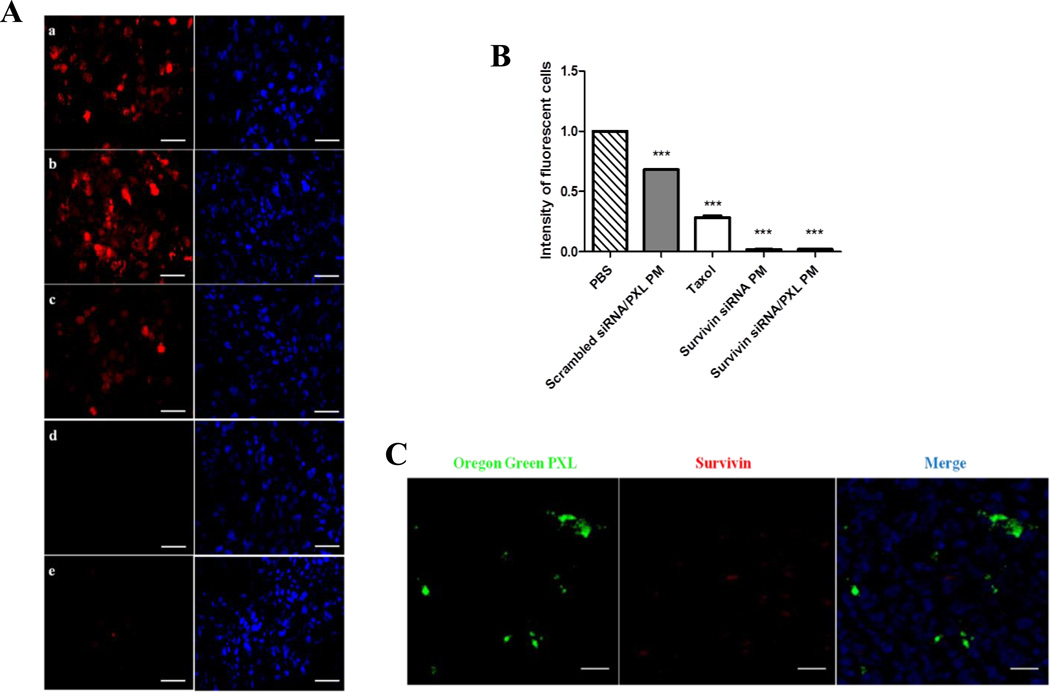
Ovarian cancer is a dreadful disease estimated to be the second most common gynecologic malignancy worldwide. Its current therapy, based on cytoreductive surgery followed by the combination of platinum and taxanes, is frequently complicated by the onset of multidrug resistance (MDR). The discovery that survivin, a small antiapoptotic protein, is involved in chemoresistance provided a new prospect to overcome MDR in cancer, because siRNA could be used to inhibit the expression of survivin in cancer cells. With this in mind, we have developed self-assembly polymeric micelles (PM) able to efficiently co-load an anti-survivin siRNA and a chemotherapeutic agent, such as paclitaxel (PXL; survivin siRNA/PXL PM). Previously, we have successfully demonstrated that the downregulation of survivin by using siRNA-containing PM strongly sensitizes different cancer cells to paclitaxel. Here, we have evaluated the applicability of the developed multifunctional PM in vivo. Changes in survivin expression, therapeutic efficacy, and biologic effects of the nanopreparation were investigated in an animal model of paclitaxel-resistant ovarian cancer. The results obtained in mice xenografed with SKOV3-tr revealed a significant downregulation of survivin expression in tumor tissues together with a potent anticancer activity of survivin siRNA/PXL PM, while the tumors remained unaffected with the same quantity of free paclitaxel. These promising results introduce a novel type of nontoxic and easy-to-obtain nanodevice for the combined therapy of siRNA and anticancer agents in the treatment of chemoresistant tumors.
卵巢癌是一种可怕的疾病,据估计是全球第二常见的妇科恶性肿瘤。其目前的治疗方法是先进行肿瘤细胞减灭术,然后联合铂类和紫杉烷类药物,但经常因多药耐药(MDR)的出现而变得复杂。一种小的抗凋亡蛋白survivin与化疗耐药有关这一发现为克服癌症中的MDR提供了新的前景,因为小干扰RNA(siRNA)可用于抑制癌细胞中survivin的表达。考虑到这一点,我们开发了能够有效共载抗survivin siRNA和化疗药物(如紫杉醇,PXL;survivin siRNA/PXL PM)的自组装聚合物胶束(PM)。此前,我们已成功证明,使用含siRNA的PM下调survivin可使不同癌细胞对紫杉醇高度敏感。在此,我们评估了所开发的多功能PM在体内的适用性。在紫杉醇耐药卵巢癌动物模型中研究了纳米制剂的survivin表达变化、治疗效果和生物学效应。在用SKOV3-tr进行异种移植的小鼠中获得的结果显示,肿瘤组织中survivin表达显著下调,同时survivin siRNA/PXL PM具有强大的抗癌活性,而相同剂量的游离紫杉醇对肿瘤没有影响。这些有前景的结果引入了一种新型的无毒且易于获得的纳米装置,用于在化疗耐药肿瘤的治疗中联合应用siRNA和抗癌药物进行治疗。