Optimum Therapeutics LLC, 9363 Towne Centre Drive, Suite 110, San Diego 92121, USA.
Optimum Therapeutics LLC, 9363 Towne Centre Drive, Suite 110, San Diego 92121, USA; College of Pharmacy, The Ohio State University, Columbus 43210, USA.
J Control Release. 2014 Mar 28;178:79-85. doi: 10.1016/j.jconrel.2014.01.012. Epub 2014 Jan 23.
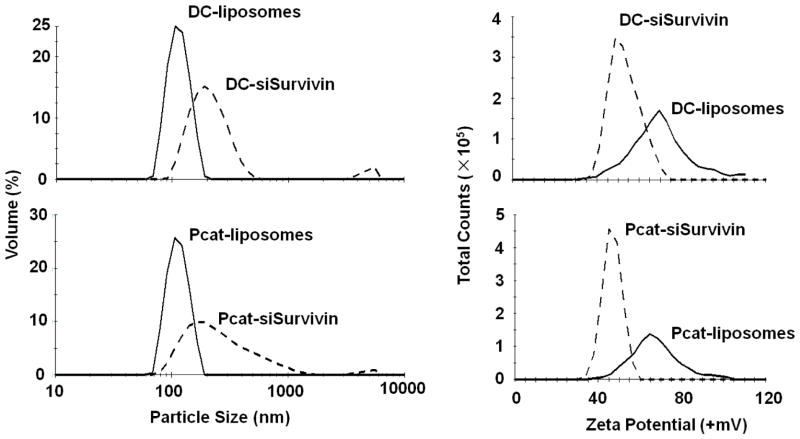
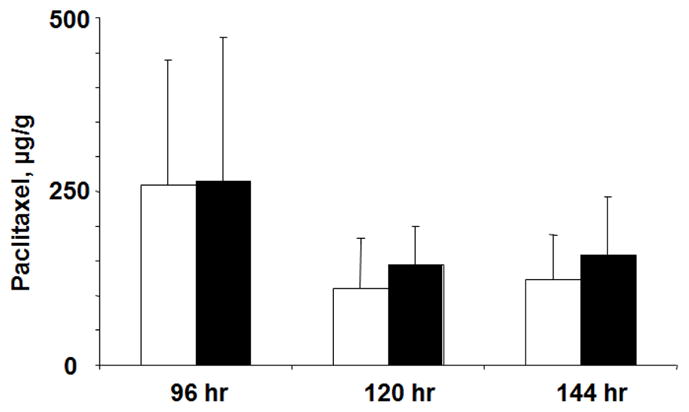
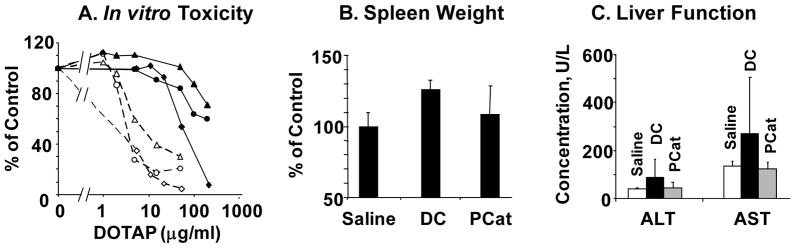
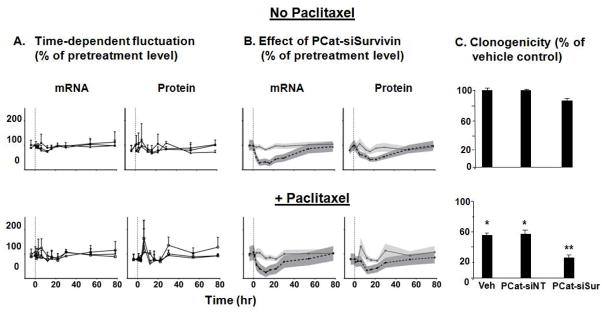
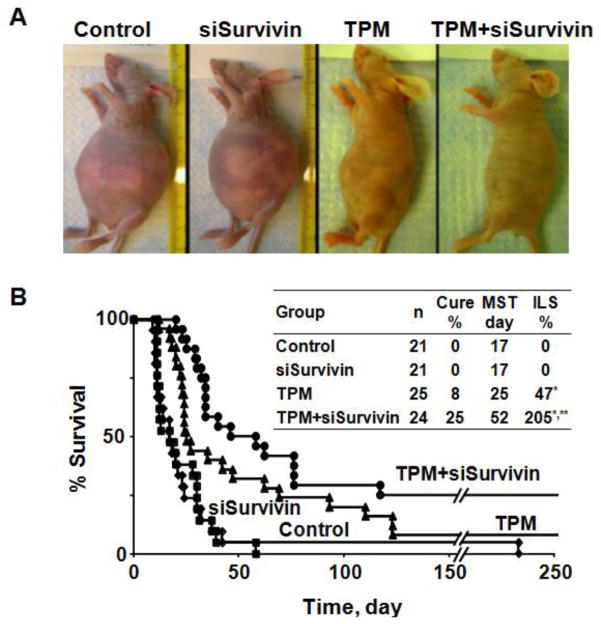
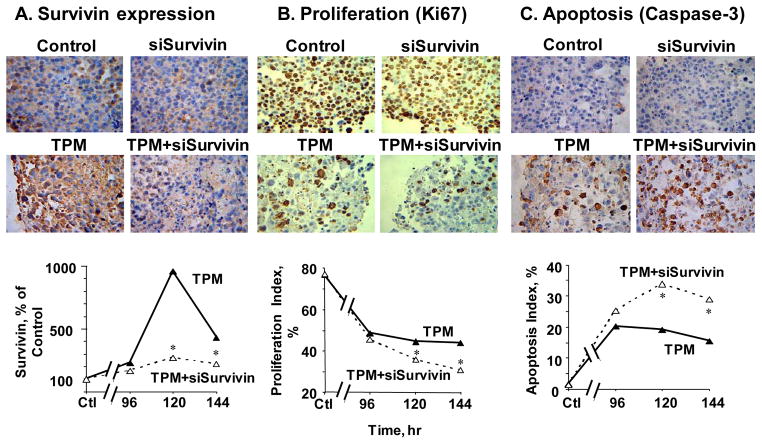
Cancers originating from the digestive system account for 290,000 or ~20% of all new cancer cases annually in the US. We previously developed paclitaxel-loaded tumor-penetrating microparticles (TPM) for intraperitoneal (IP) treatment of peritoneal tumors (Lu et al., 2008; Tsai et al., 2007; Tsai et al., 2013). TPM is undergoing NIH-supported IND-enabling studies for clinical evaluation. The present study evaluated the hypothesis that TPM, via inducing apoptosis and expanding the interstitial space, promotes the delivery and transfection of lipid vectors containing siRNA. The in vivo model was the metastatic human Hs766T pancreatic tumor that, upon IP injection, produced widely distributed solid tumors and ascites in the peritoneal cavity in 100% of animals. The target gene was survivin, an anti-apoptotic protein induced by chemotherapy and associated with metastases and poor prognosis of patients with gastric and colorectal cancers. The siRNA carrier was pegylated liposomes comprising cationic and neutral lipids plus a fusogenic lipid (PCat). PCat-loaded with survivin siRNA (PCat-siSurvivin) was active in cultured cells (decreased survivin mRNA and protein levels, reduced cell clonogenicity, enhanced paclitaxel activity), but lost its activity in vivo; this difference is consistent with the well-known problem of inadequate delivery and transfection of siRNA in vivo. In comparison, single agent TPM prolonged animal survival and, as expected, induced survivin expression in tumors. Addition of PCat-siSurvivin reversed the TPM-induced survivin expression and enhanced the antitumor activity of TPM. The finding that in vivo survivin knockdown by PCat-siSurvivin was successful only when it was given in combination with TPM provides the proof-of-concept that tumor priming promotes the delivery and transfection of liposomal siRNA. The data further suggest the TPM/PCat-siSurvivin combination as a potentially useful chemo-gene therapy for peritoneal cancer.
起源于消化系统的癌症占美国每年新增癌症病例的 29 万例或约 20%。我们之前开发了载紫杉醇的肿瘤穿透微粒(TPM),用于治疗腹膜肿瘤的腹腔内(IP)治疗(Lu 等人,2008;Tsai 等人,2007;Tsai 等人,2013)。TPM 正在进行 NIH 支持的 IND 支持研究,以进行临床评估。本研究评估了这样一种假设,即 TPM 通过诱导细胞凋亡和扩大细胞间隙,促进了含有 siRNA 的脂质载体的递药和转染。体内模型是转移性人 Hs766T 胰腺肿瘤,当 IP 注射时,在 100%的动物中产生广泛分布的实体瘤和腹腔积液。靶基因是 survivin,一种化疗诱导的抗凋亡蛋白,与胃癌和结直肠癌患者的转移和预后不良相关。siRNA 载体是包含阳离子和中性脂质以及融合脂质(PCat)的聚乙二醇化脂质体。载有 survivin siRNA 的 PCat(PCat-siSurvivin)在培养细胞中具有活性(降低 survivin mRNA 和蛋白水平,降低细胞集落形成能力,增强紫杉醇活性),但在体内失去活性;这种差异与体内 siRNA 传递和转染不足的众所周知问题一致。相比之下,单一 TPM 延长了动物的存活时间,并且如预期的那样,诱导了肿瘤中的 survivin 表达。添加 PCat-siSurvivin 逆转了 TPM 诱导的 survivin 表达,并增强了 TPM 的抗肿瘤活性。体内 survivin 敲低仅在与 TPM 联合使用时通过 PCat-siSurvivin 成功的发现为肿瘤引发促进脂质体 siRNA 的递药和转染提供了概念验证。数据进一步表明,TPM/PCat-siSurvivin 联合治疗可能是腹膜癌潜在有用的化疗-基因治疗方法。