Qin Fujun, Song Zhenguo, Babiceanu Mihaela, Song Yansu, Facemire Loryn, Singh Ritambhara, Adli Mazhar, Li Hui
Department of Pathology, School of Medicine, University of Virginia, Charlottesville, Virginia, United States of America.
Department of Pathology, School of Medicine, University of Virginia, Charlottesville, Virginia, United States of America; Pharmacy Department of Affiliated Cancer Hospital of Zhengzhou University, Zhengzhou, Henan, China.
PLoS Genet. 2015 Feb 6;11(2):e1005001. doi: 10.1371/journal.pgen.1005001. eCollection 2015 Feb.
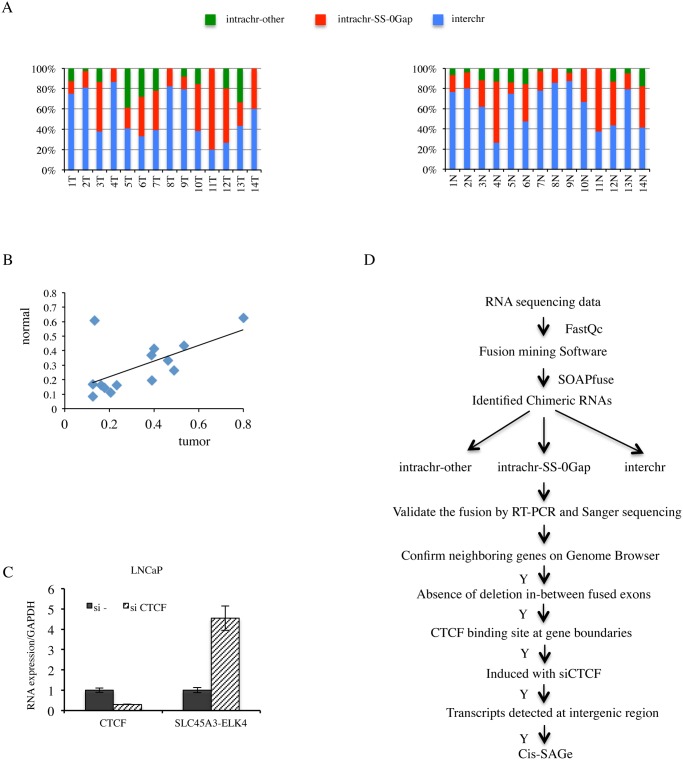
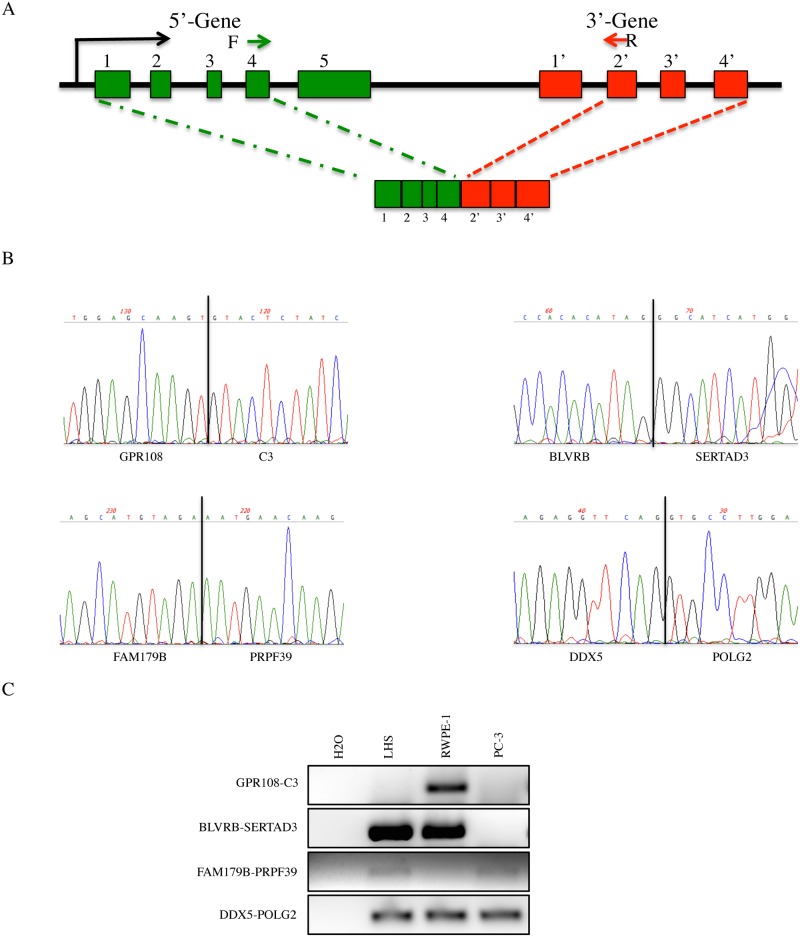
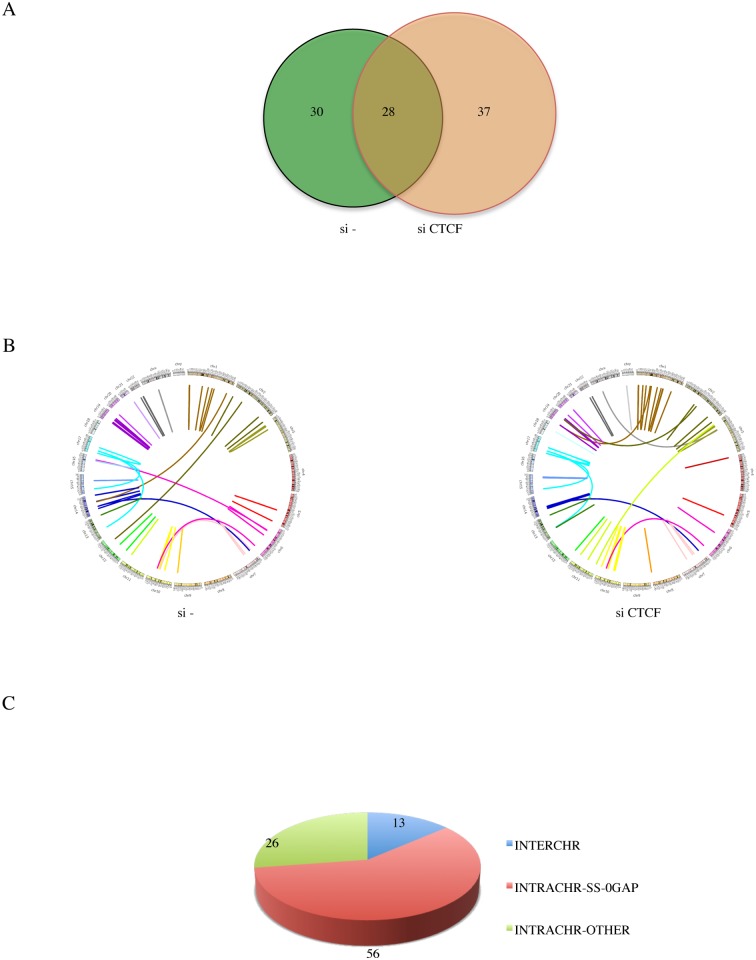
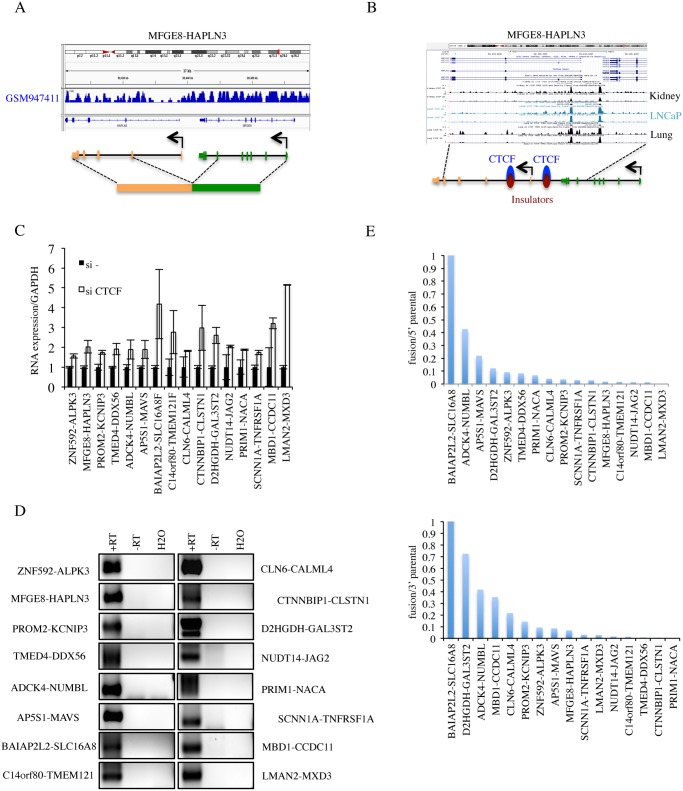
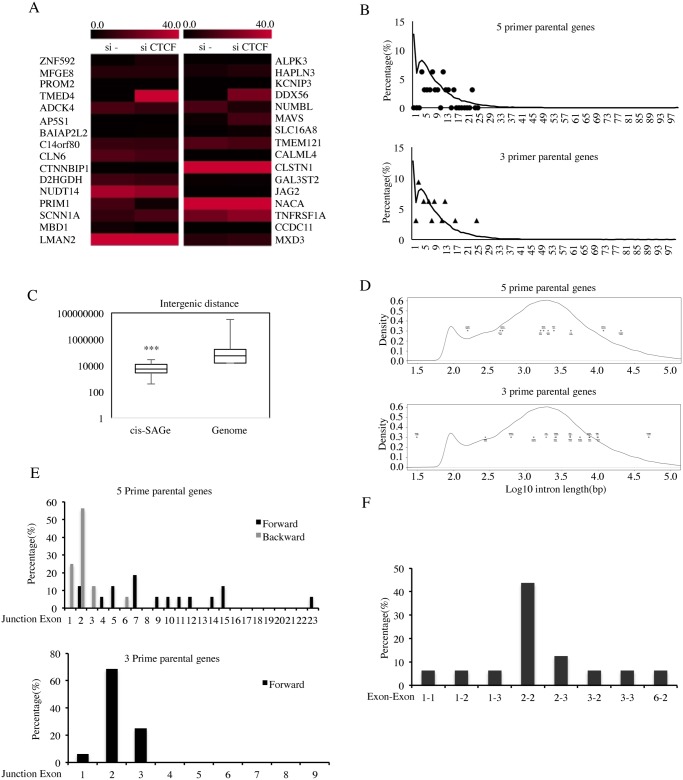
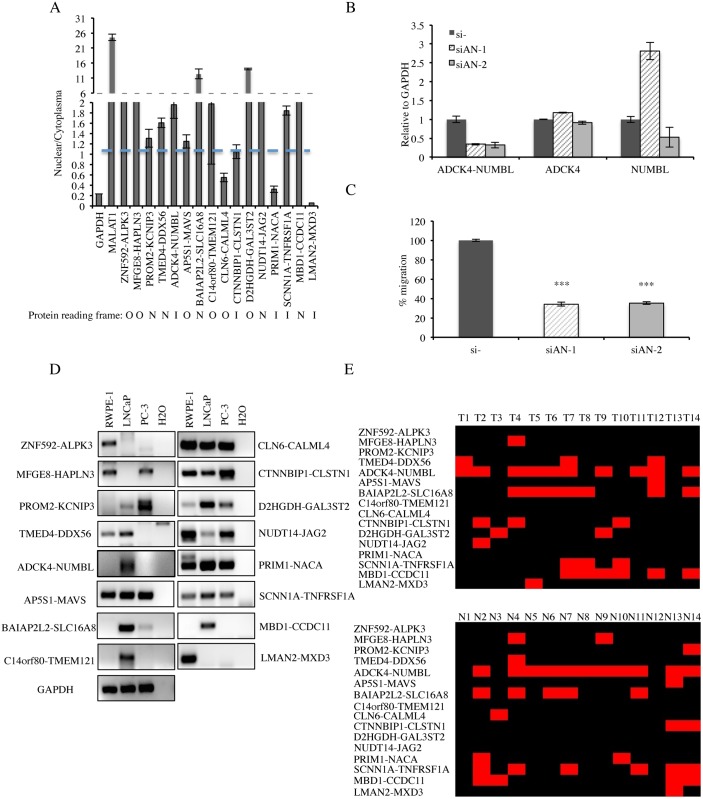
Genes or their encoded products are not expected to mingle with each other unless in some disease situations. In cancer, a frequent mechanism that can produce gene fusions is chromosomal rearrangement. However, recent discoveries of RNA trans-splicing and cis-splicing between adjacent genes (cis-SAGe) support for other mechanisms in generating fusion RNAs. In our transcriptome analyses of 28 prostate normal and cancer samples, 30% fusion RNAs on average are the transcripts that contain exons belonging to same-strand neighboring genes. These fusion RNAs may be the products of cis-SAGe, which was previously thought to be rare. To validate this finding and to better understand the phenomenon, we used LNCaP, a prostate cell line as a model, and identified 16 additional cis-SAGe events by silencing transcription factor CTCF and paired-end RNA sequencing. About half of the fusions are expressed at a significant level compared to their parental genes. Silencing one of the in-frame fusions resulted in reduced cell motility. Most out-of-frame fusions are likely to function as non-coding RNAs. The majority of the 16 fusions are also detected in other prostate cell lines, as well as in the 14 clinical prostate normal and cancer pairs. By studying the features associated with these fusions, we developed a set of rules: 1) the parental genes are same-strand-neighboring genes; 2) the distance between the genes is within 30kb; 3) the 5' genes are actively transcribing; and 4) the chimeras tend to have the second-to-last exon in the 5' genes joined to the second exon in the 3' genes. We then randomly selected 20 neighboring genes in the genome, and detected four fusion events using these rules in prostate cancer and non-cancerous cells. These results suggest that splicing between neighboring gene transcripts is a rather frequent phenomenon, and it is not a feature unique to cancer cells.
除非在某些疾病情况下,基因或其编码产物通常不会相互混合。在癌症中,一种常见的产生基因融合的机制是染色体重排。然而,最近关于RNA反式剪接和顺式剪接(相邻基因间顺式剪接,cis-SAGe)的发现支持了产生融合RNA的其他机制。在我们对28个前列腺正常和癌组织样本的转录组分析中,平均30%的融合RNA是包含属于同链相邻基因外显子的转录本。这些融合RNA可能是cis-SAGe的产物,而cis-SAGe此前被认为很罕见。为了验证这一发现并更好地理解该现象,我们以前列腺癌细胞系LNCaP为模型,通过沉默转录因子CTCF和双末端RNA测序鉴定出另外16个cis-SAGe事件。与它们的亲本基因相比,约一半的融合基因有显著表达。沉默其中一个读码框内的融合基因会导致细胞运动性降低。大多数移码融合基因可能作为非编码RNA发挥作用。这16个融合基因中的大多数在其他前列腺癌细胞系以及14对临床前列腺正常和癌组织样本中也能检测到。通过研究与这些融合基因相关的特征,我们制定了一组规则:1)亲本基因是同链相邻基因;2)基因间距离在30kb以内;3)5'端基因处于活跃转录状态;4)嵌合体倾向于使5'端基因的倒数第二个外显子与3'端基因的第二个外显子相连。然后我们在基因组中随机选择20对相邻基因,利用这些规则在前列腺癌和非癌细胞中检测到4个融合事件。这些结果表明相邻基因转录本之间的剪接是一种相当常见的现象,并非癌细胞所特有的特征。