Qin Fujun, Song Yansu, Zhang Yanmei, Facemire Loryn, Frierson Henry, Li Hui
Department of Pathology, School of Medicine, University of Virginia, Charlottesville, Virginia, United States of America.
Zhejiang Academy of Medical Sciences, Hangzhou, Zhejiang, China.
PLoS One. 2016 Mar 3;11(3):e0150382. doi: 10.1371/journal.pone.0150382. eCollection 2016.
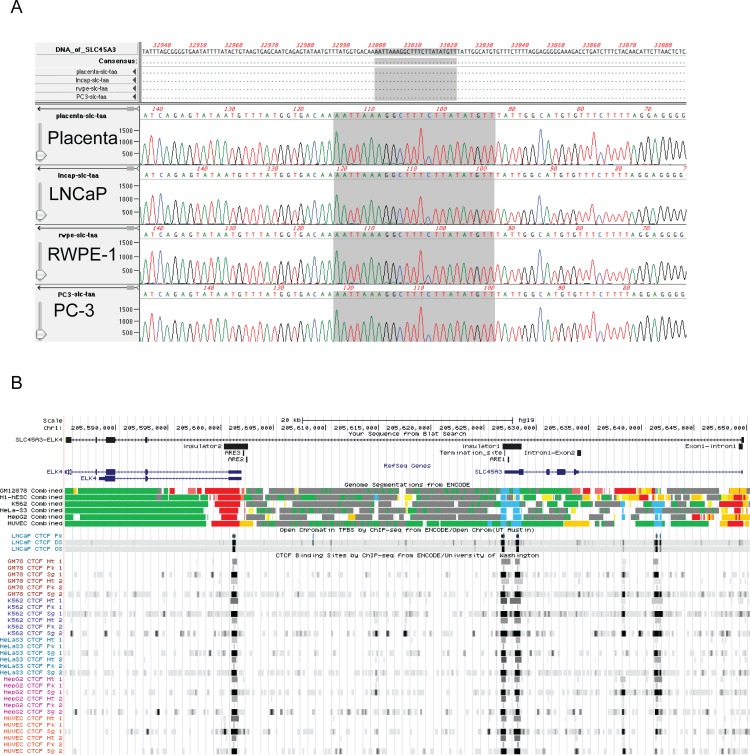
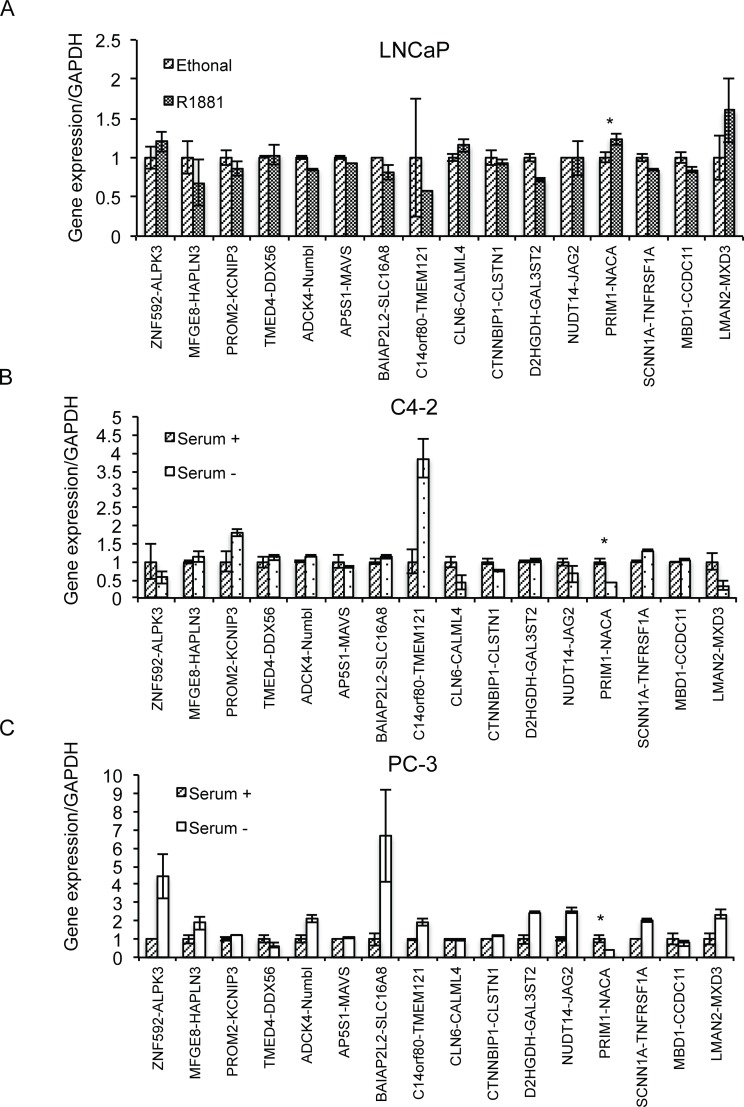
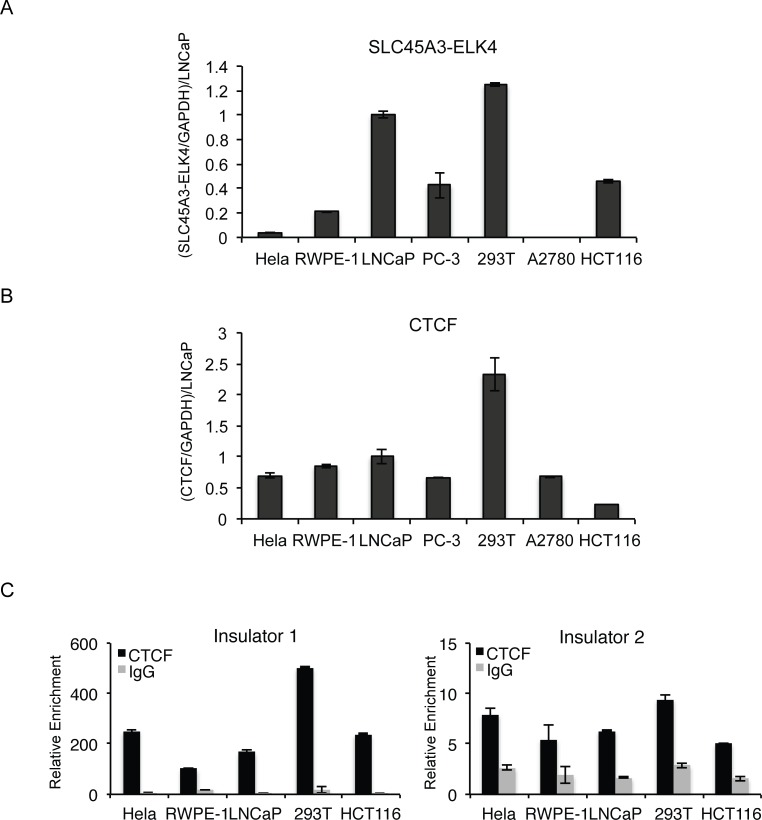
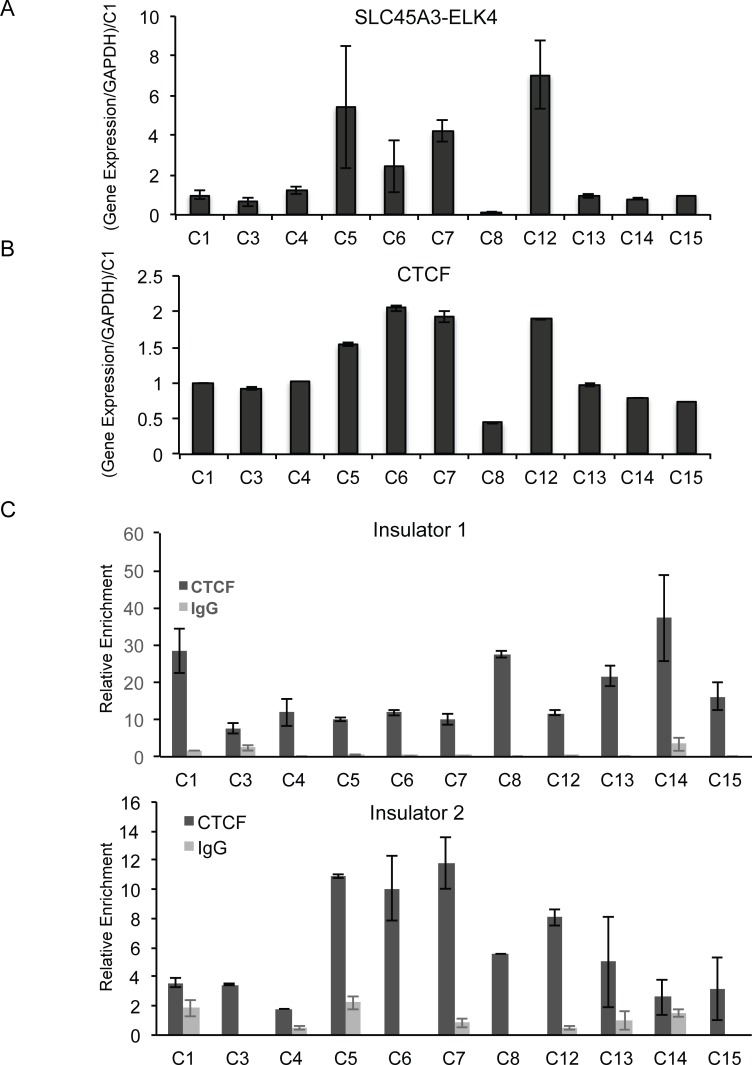
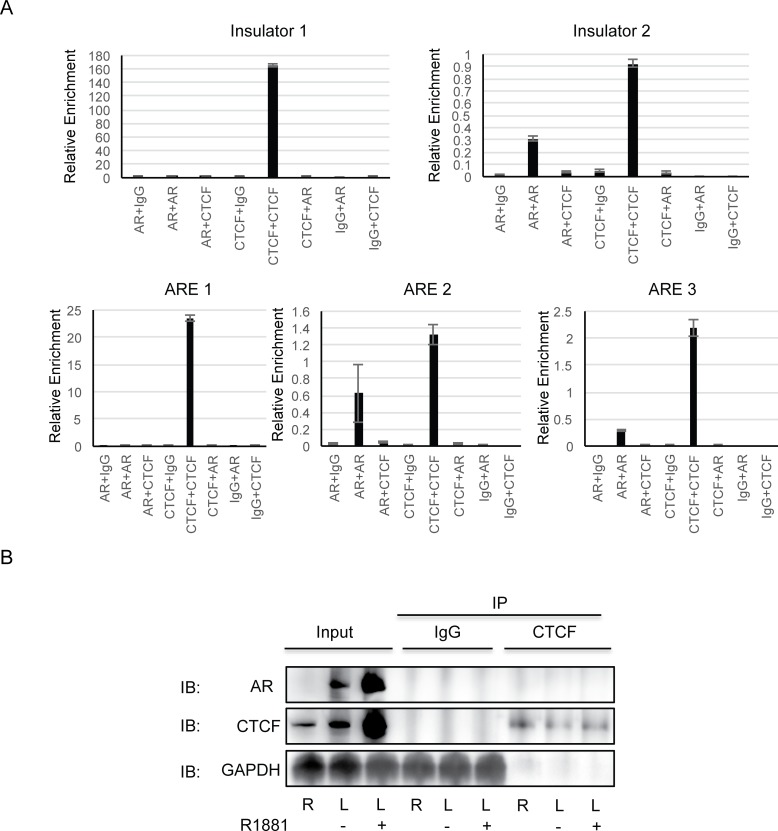
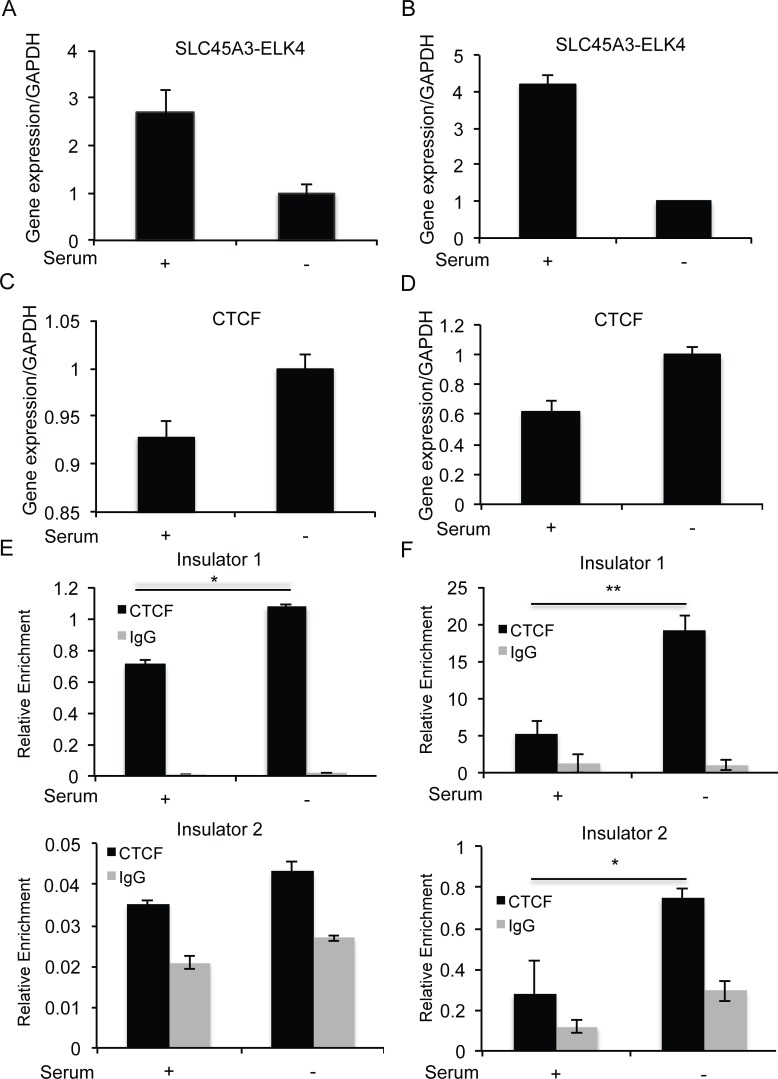
The chimeric RNA, SLC45A3-ELK4, was found to be a product of cis-splicing between the two adjacent genes (cis-SAGe). Despite the biological and clinical significance of SLC45A3-ELK4, its generating mechanism has not been elucidated. It was shown in one cell line that the binding of transcription factor CTCF to the insulators located at or near the gene boundaries, inversely correlates with the level of the chimera. To investigate the mechanism of such cis-SAGe events, we sequenced potential regions that may play a role in such transcriptional read-through. We could not detect mutations at the transcription termination site, insulator sites, splicing sites, or within CTCF itself in LNCaP cells, thus suggesting a "soft-wired" mechanism in regulating the cis-SAGe event. To investigate the role CTCF plays in regulating the chimeric RNA expression, we compared the levels of CTCF binding to the insulators in different cell lines, as well as clinical samples. Surprisingly, we did not find an inverse correlation between CTCF level, or its bindings to the insulators and SLC45A3-ELK4 expression among different samples. However, in three prostate cancer cell lines, different environmental factors can cause the expression levels of the chimeric RNA to change, and these changes do inversely correlate with CTCF level, and/or its bindings to the insulators. We thus conclude that CTCF and its bindings to the insulators are not the primary reasons for differential SLC45A3-ELK4 expression in different cell lines, or clinical cases. However, they are the likely mechanism for the same cells to respond to different environmental cues, in order to regulate the expression of SLC45A3-ELK4 chimeric RNA. This response to different environmental cues is not general to other cis-SAGe events, as we only found one out of 16 newly identified chimeric RNAs showing a pattern similar to SLC45A3-ELK4.
嵌合RNA SLC45A3-ELK4被发现是两个相邻基因之间顺式剪接(cis-SAGe)的产物。尽管SLC45A3-ELK4具有生物学和临床意义,但其产生机制尚未阐明。在一个细胞系中显示,转录因子CTCF与位于基因边界或其附近的绝缘子的结合与嵌合体水平呈负相关。为了研究这种顺式SAGe事件的机制,我们对可能在这种转录通读中起作用的潜在区域进行了测序。我们在LNCaP细胞的转录终止位点、绝缘子位点、剪接位点或CTCF本身内部未检测到突变,因此提示存在一种“软连线”机制来调节顺式SAGe事件。为了研究CTCF在调节嵌合RNA表达中所起的作用,我们比较了不同细胞系以及临床样本中CTCF与绝缘子结合的水平。令人惊讶的是,我们在不同样本中未发现CTCF水平或其与绝缘子的结合与SLC45A3-ELK4表达之间存在负相关。然而,在三种前列腺癌细胞系中,不同的环境因素可导致嵌合RNA的表达水平发生变化,并且这些变化与CTCF水平和/或其与绝缘子的结合呈负相关。因此我们得出结论,CTCF及其与绝缘子的结合不是不同细胞系或临床病例中SLC45A3-ELK4表达差异的主要原因。然而,它们可能是同一细胞对不同环境信号作出反应以调节SLC45A3-ELK4嵌合RNA表达的机制。这种对不同环境信号的反应并非其他顺式SAGe事件所共有,因为在16个新鉴定的嵌合RNA中,我们仅发现1个显示出与SLC45A3-ELK4相似的模式。