Zhang Hongxia, Shao Bei, Zhuge Qichuan, Wang Peng, Zheng Chengcai, Huang Weilong, Yang Chenqi, Wang Brian, Su Dong-Ming, Jin Kunlin
Zhejiang Provincial Key Laboratory of Aging and Neurological Disorder Research, First Affiliated Hospital, Wenzhou Medical University, Wenzhou 35000, China.
Department of Pharmacology and Neuroscience, University of North Texas Health Science Center, Fort Worth, TX 76107, United States of America.
PLoS One. 2015 Feb 6;10(2):e0117432. doi: 10.1371/journal.pone.0117432. eCollection 2015.
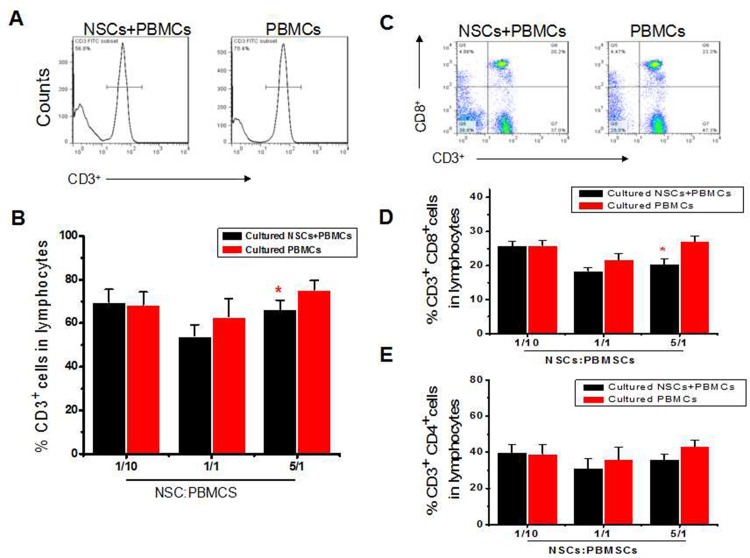
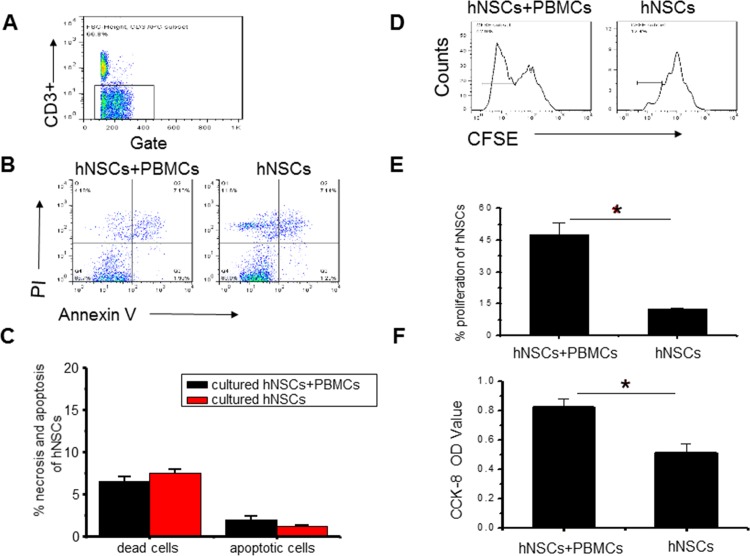
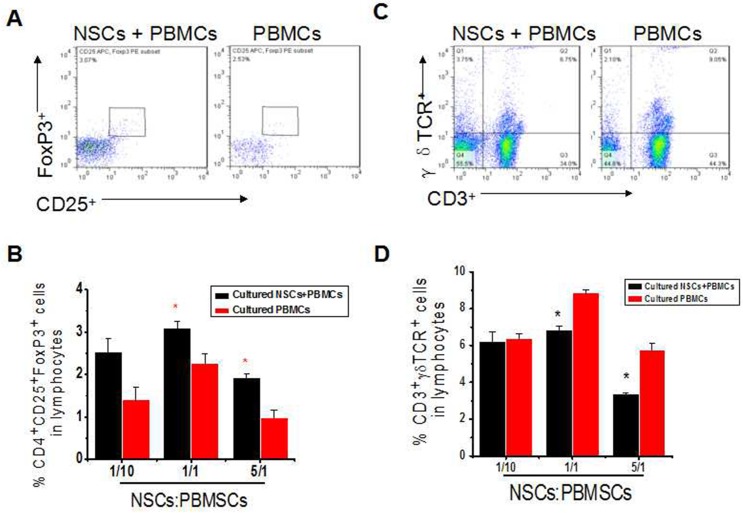
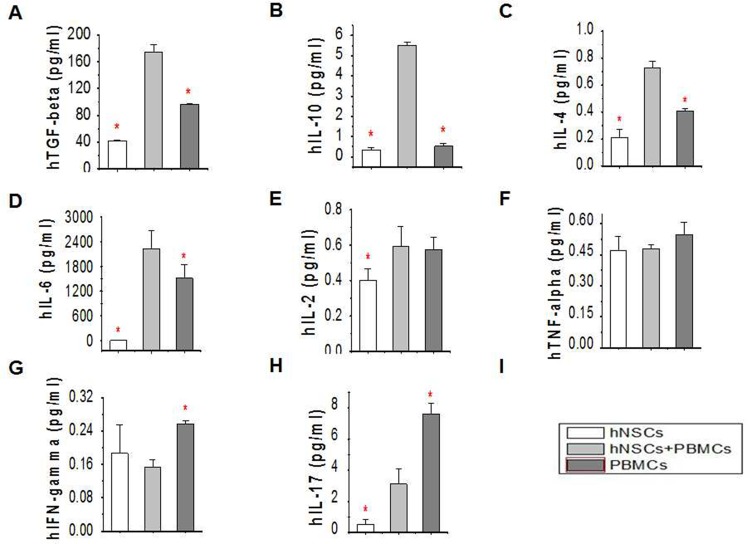
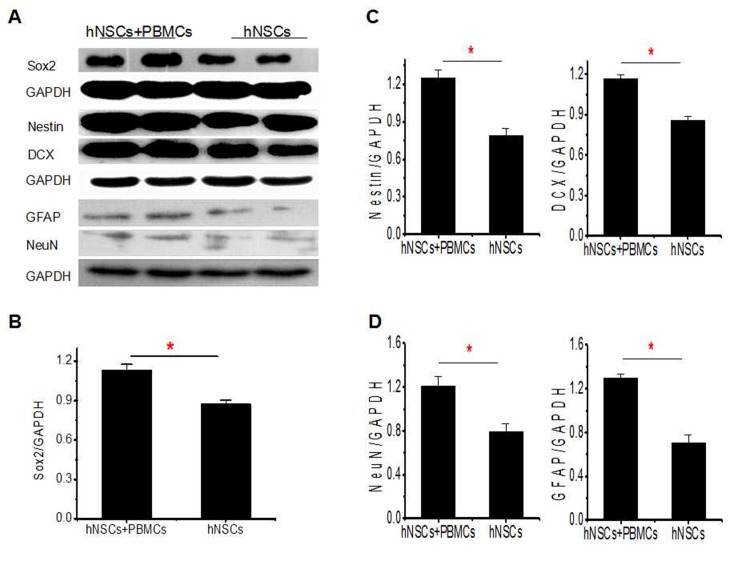
Transplantation of human neural stem/progenitor cells (hNSCs) as a regenerative cell replacement therapy holds great promise. However, the underlying mechanisms remain unclear. We, here, focused on the interaction between hNSCs and allogeneic peripheral blood mononuclear cells (PBMCs) in a co-culture model. We found that hNSCs significantly decrease the CD3+ and CD8+ T cells, reduce the gamma delta T cells and increase the regulatory T cells, along with reduced pro-inflammatory cytokines and increased anti-inflammatory cytokines after co-culture. We also found that PBMCs, in turn, significantly promote the proliferation and differentiation of hNSCs. Our data suggest that hNSCs cross-talk with immune cells.
将人神经干细胞/祖细胞(hNSCs)作为一种再生细胞替代疗法进行移植具有很大的前景。然而,其潜在机制仍不清楚。在此,我们在共培养模型中聚焦于hNSCs与同种异体外周血单个核细胞(PBMCs)之间的相互作用。我们发现,共培养后hNSCs可显著减少CD3⁺和CD8⁺T细胞,减少γδT细胞并增加调节性T细胞,同时促炎细胞因子减少,抗炎细胞因子增加。我们还发现,PBMCs反过来可显著促进hNSCs的增殖和分化。我们的数据表明hNSCs与免疫细胞相互作用。