Sasatani Megumi, Xu Yanbin, Kawai Hidehiko, Cao Lili, Tateishi Satoshi, Shimura Tsutomu, Li Jianxiang, Iizuka Daisuke, Noda Asao, Hamasaki Kanya, Kusunoki Yoichiro, Kamiya Kenji
Department of Experimental Oncology, Research Institute for Radiation Biology and Medicine, Hiroshima University, 1-2-3 Kasumi, Minami-ku, Hiroshima, 734-8553, Japan.
Department of Molecular Radiobiology, Research Institute for Radiation Biology and Medicine, Hiroshima University, 1-2-3 Kasumi, Minami-ku, Hiroshima, 734-8553, Japan.
PLoS One. 2015 Feb 12;10(2):e0117845. doi: 10.1371/journal.pone.0117845. eCollection 2015.
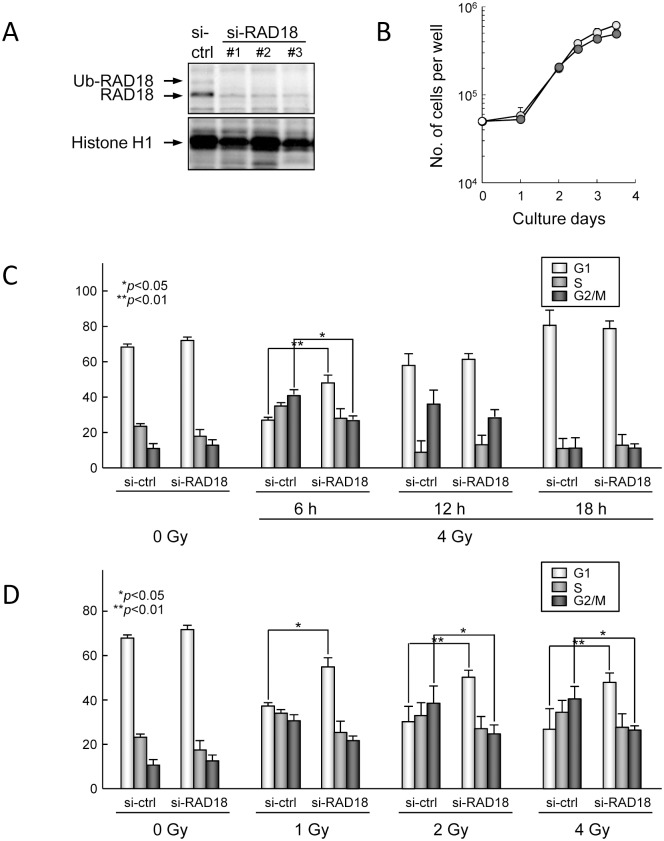
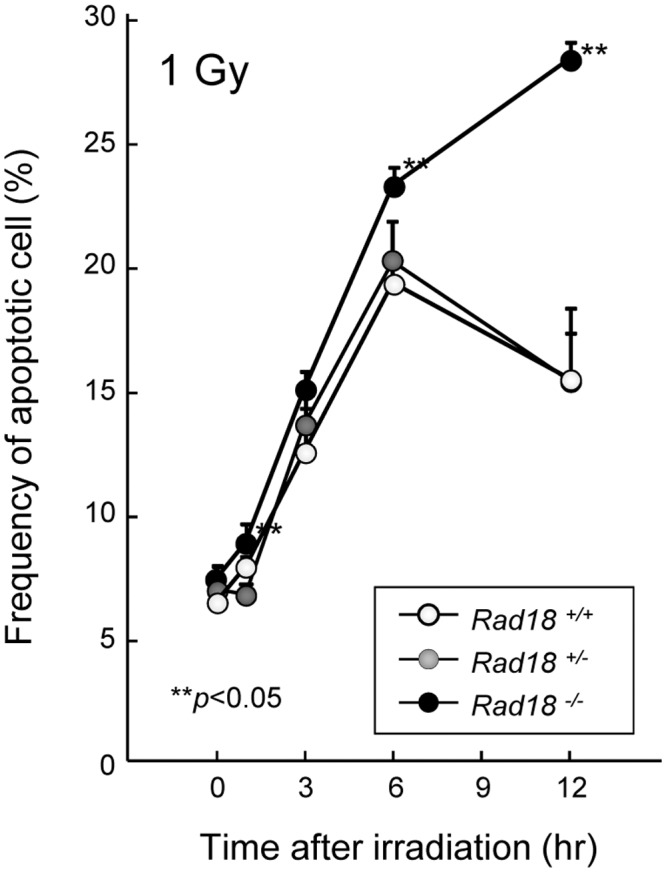
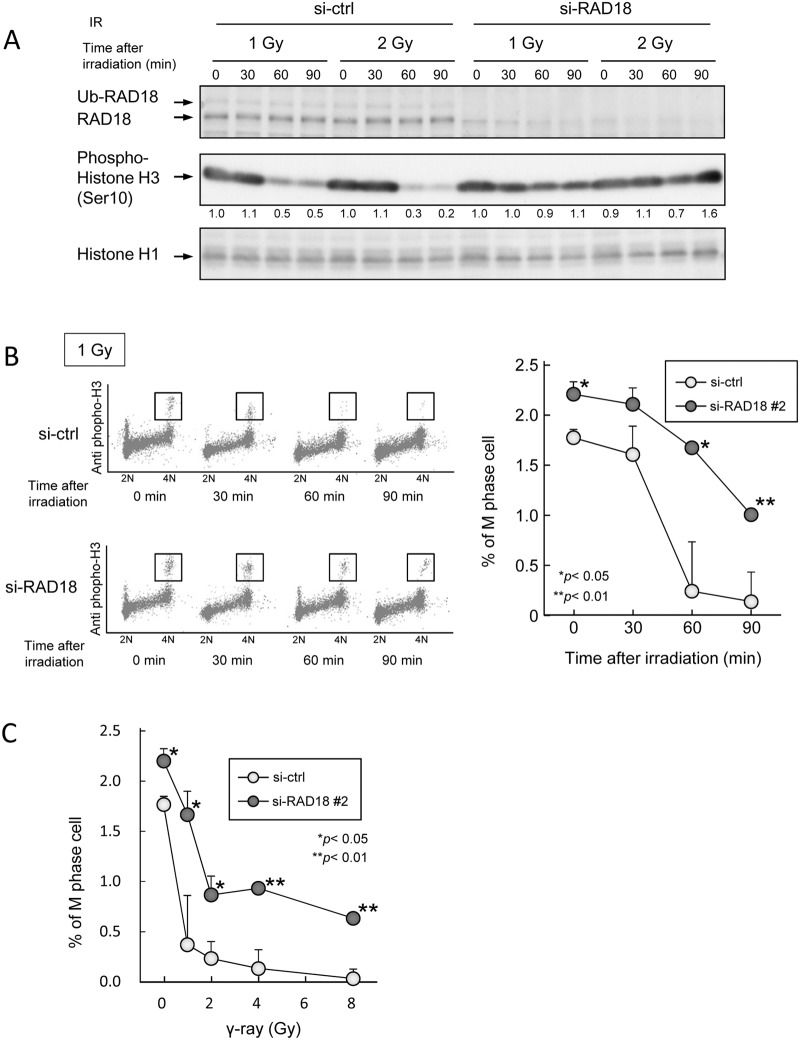
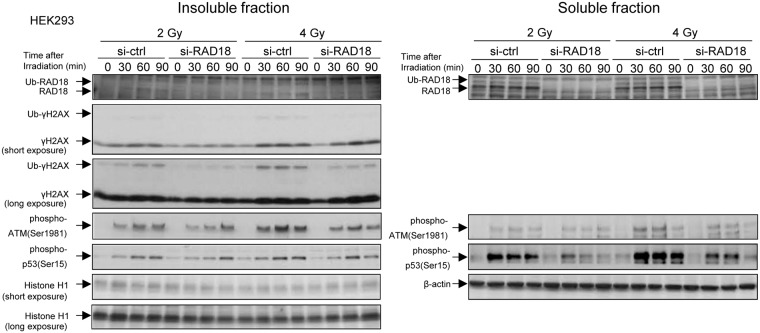
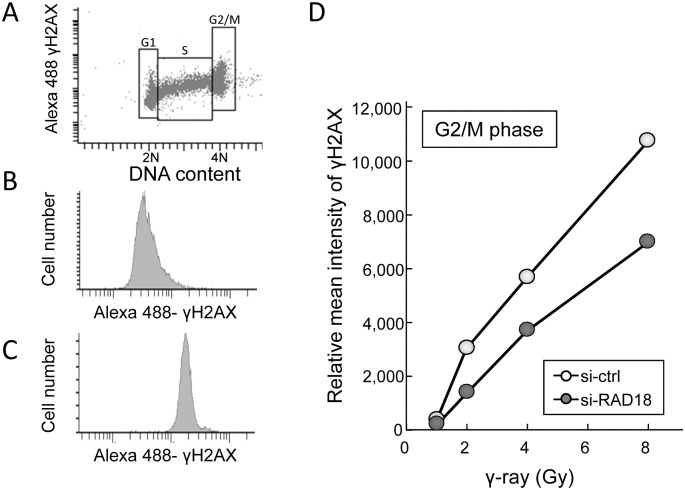
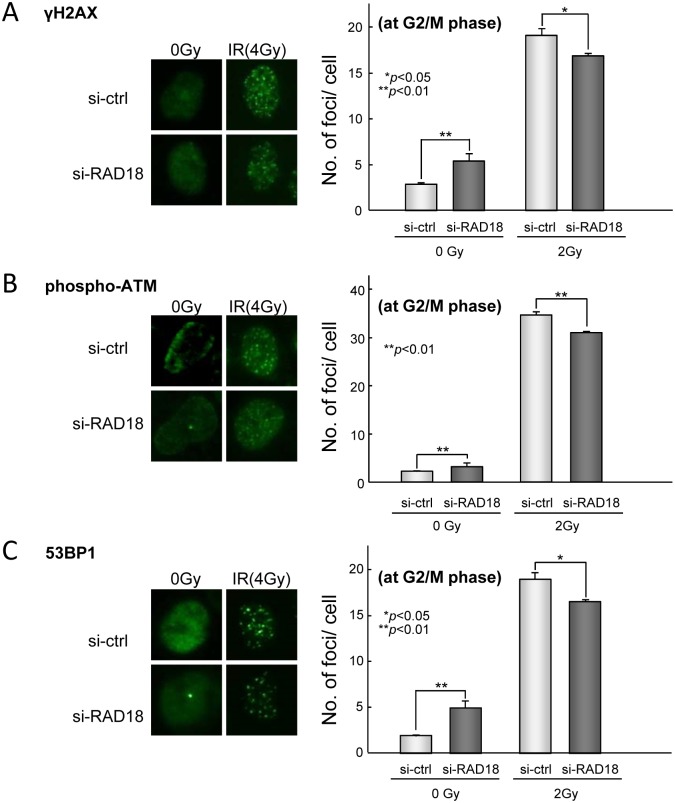
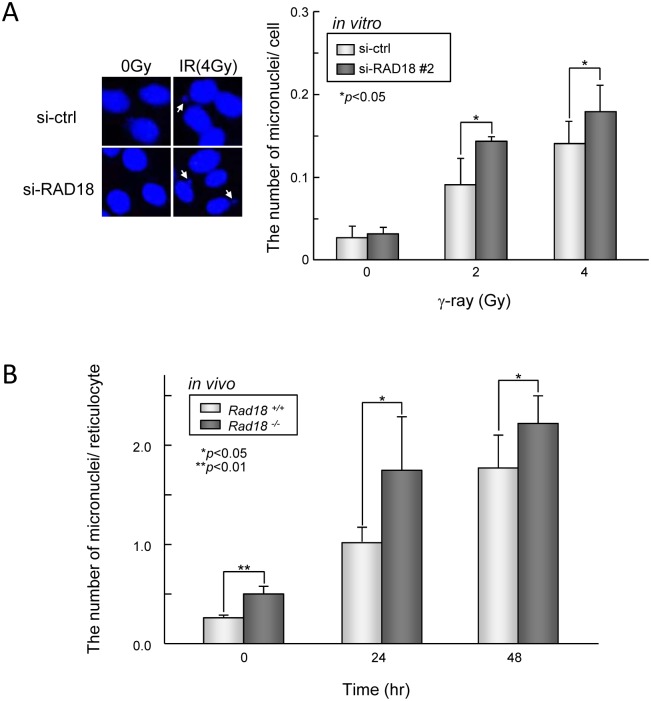
The ubiquitin ligase RAD18 is involved in post replication repair pathways via its recruitment to stalled replication forks, and its role in the ubiquitylation of proliferating cell nuclear antigen (PCNA). Recently, it has been reported that RAD18 is also recruited to DNA double strand break (DSB) sites, where it plays novel functions in the DNA damage response induced by ionizing radiation (IR). This new role is independent of PCNA ubiquitylation, but little is known about how RAD18 functions after IR exposure. Here, we describe a role for RAD18 in the IR-induced DNA damage signaling pathway at G2/M phase in the cell cycle. Depleting cells of RAD18 reduced the recruitment of the DNA damage signaling factors ATM, γH2AX, and 53BP1 to foci in cells at the G2/M phase after IR exposure, and attenuated activation of the G2/M checkpoint. Furthermore, depletion of RAD18 increased micronuclei formation and cell death following IR exposure, both in vitro and in vivo. Our data suggest that RAD18 can function as a mediator for DNA damage response signals to activate the G2/M checkpoint in order to maintain genome integrity and cell survival after IR exposure.
泛素连接酶RAD18通过被招募至停滞的复制叉参与复制后修复途径,及其在增殖细胞核抗原(PCNA)泛素化中的作用。最近,有报道称RAD18也被招募至DNA双链断裂(DSB)位点,在那里它在电离辐射(IR)诱导的DNA损伤反应中发挥新功能。这一新功能独立于PCNA泛素化,但关于IR暴露后RAD18如何发挥功能知之甚少。在这里,我们描述了RAD18在细胞周期G2/M期IR诱导的DNA损伤信号通路中的作用。在IR暴露后,耗尽细胞中的RAD18会减少DNA损伤信号因子ATM、γH2AX和53BP1在G2/M期细胞中向病灶的募集,并减弱G2/M检查点的激活。此外,在体外和体内,耗尽RAD18都会增加IR暴露后的微核形成和细胞死亡。我们的数据表明,RAD18可作为DNA损伤反应信号的介质,激活G2/M检查点,以在IR暴露后维持基因组完整性和细胞存活。