Hospital Rudolfstiftung, Juchgasse 25, A-1030 Vienna, Austria.
J Geriatr Cardiol. 2015 Jan;12(1):83-7. doi: 10.11909/j.issn.1671-5411.2015.01.010.
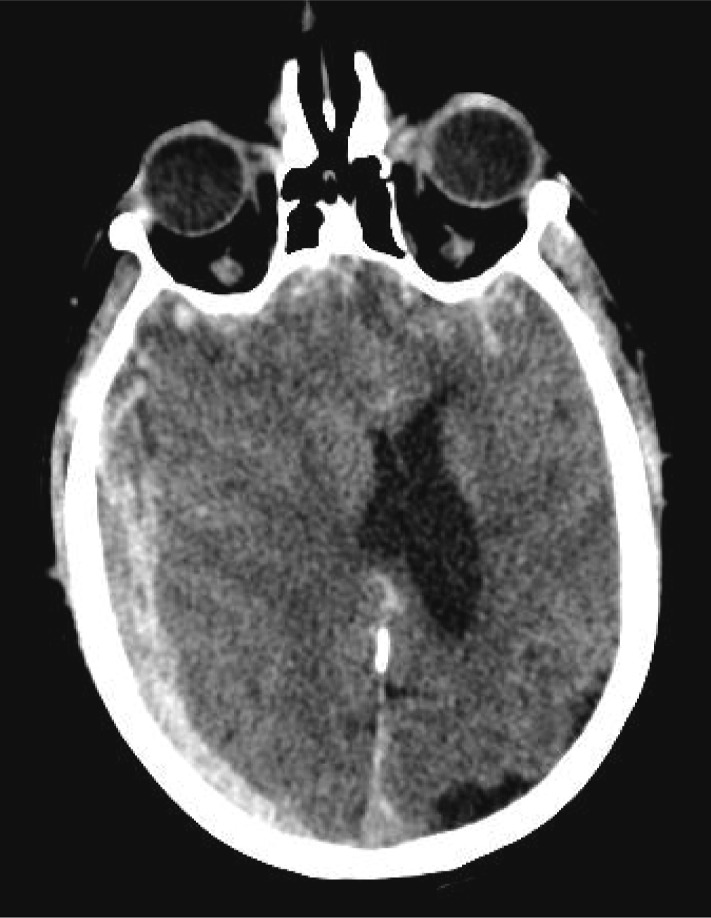
One disadvantage of direct anticoagulant drug is the lack of an antidote, which may become relevant in patients with traumatic brain injury. A 77-years old man with atrial fibrillation and syncope received dabigatran despite recurrent falls. Due to a ground-level-fall, he suffered from subarachnoidal and intraparenchymal hemorrhages, subdural hematoma and brain edema with a midline shift. Despite osteoclastic trepanation and hematoma-evacuation he remained comatose and died seven days later without regaining consciousness. Most probably, decreased dabigatran clearance due to increased age might have contributed to the fatal course. We suggest withholding anticoagulant therapy in patients with unexplained falls. If anticoagulant therapy is deemed necessary, vitamin-K-antagonists with their potential for laboratory monitoring and reversal of anticoagulant activity should be preferred.
直接抗凝药物的一个缺点是缺乏解毒剂,这在创伤性脑损伤患者中可能变得相关。一名 77 岁的心房颤动和晕厥患者尽管反复跌倒仍接受了达比加群治疗。由于平地跌倒,他患有蛛网膜下腔和脑实质内出血、硬膜下血肿和中线移位的脑水肿。尽管进行了骨凿开颅和血肿清除,但他仍处于昏迷状态,七天后死亡,没有恢复意识。很可能是由于年龄增加导致达比加群清除率降低,导致了致命的病程。我们建议对不明原因跌倒的患者停止抗凝治疗。如果认为抗凝治疗是必要的,应首选维生素 K 拮抗剂,因为它们具有实验室监测和逆转抗凝活性的潜力。