Balla Keir M, Andersen Erik C, Kruglyak Leonid, Troemel Emily R
Division of Biological Sciences, Section of Cell and Developmental Biology, University of California, San Diego, La Jolla, California, United States of America.
Department of Molecular Biosciences, Northwestern University, Evanston, Illinois, United States of America.
PLoS Pathog. 2015 Feb 13;11(2):e1004583. doi: 10.1371/journal.ppat.1004583. eCollection 2015 Feb.
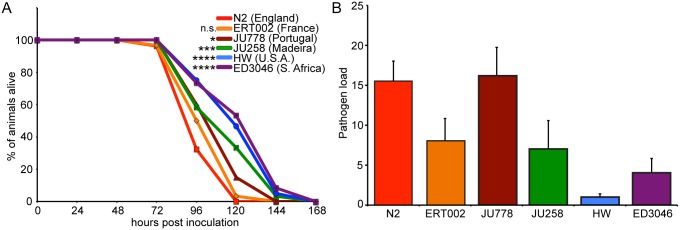
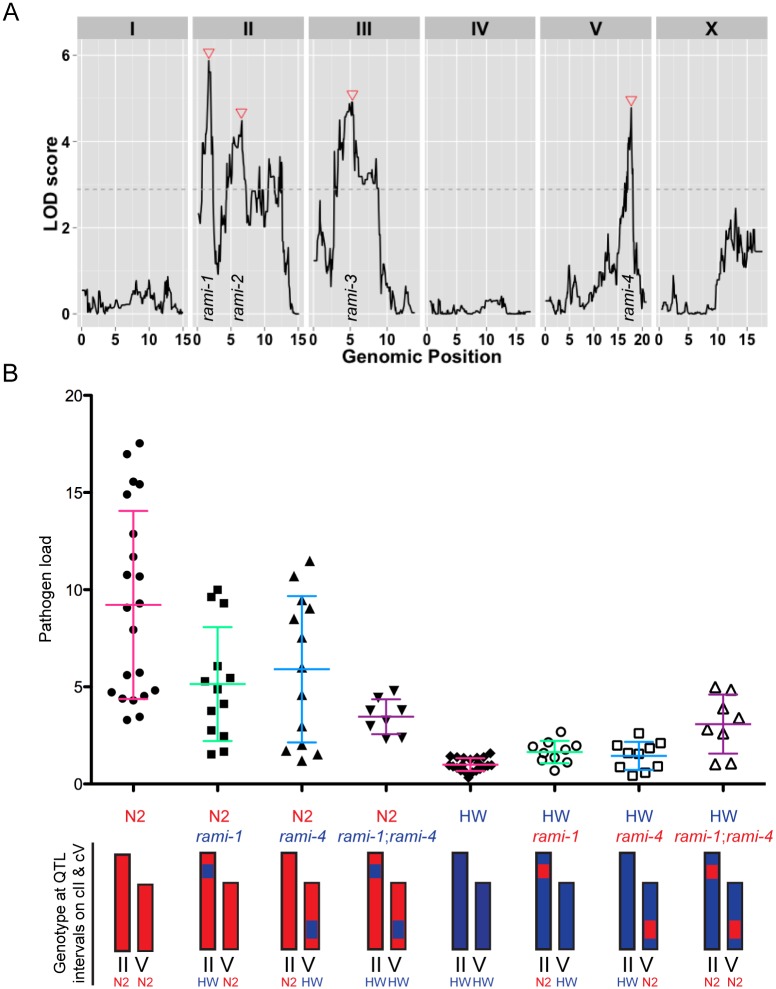
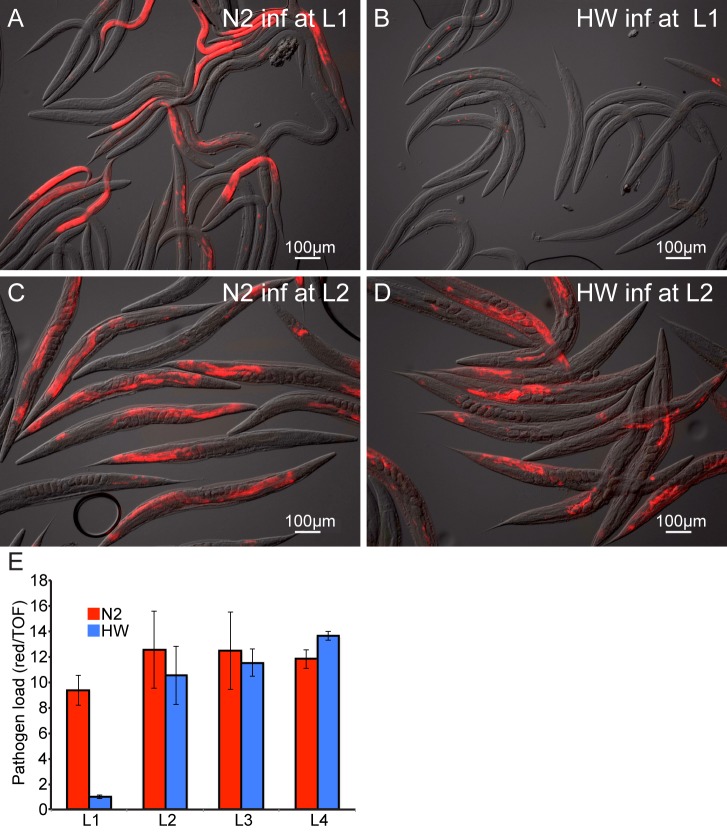
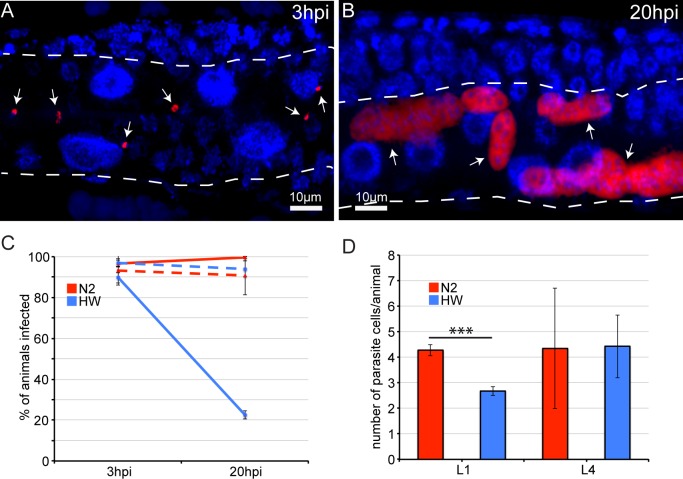
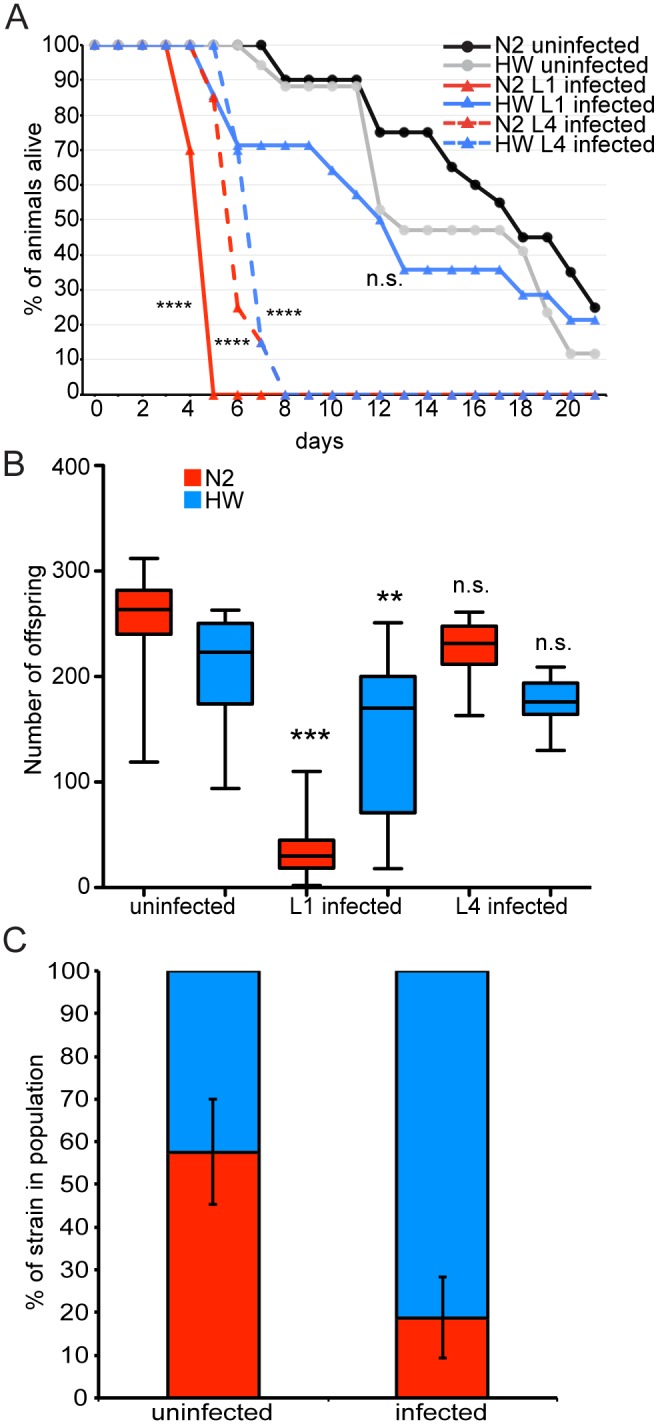
Microbial pathogens impose selective pressures on their hosts, and combatting these pathogens is fundamental to the propagation of a species. Innate immunity is an ancient system that provides the foundation for pathogen resistance, with epithelial cells in humans increasingly appreciated to play key roles in innate defense. Here, we show that the nematode C. elegans displays genetic variation in epithelial immunity against intestinal infection by its natural pathogen, Nematocida parisii. This pathogen belongs to the microsporidia phylum, which comprises a large phylum of over 1400 species of fungal-related parasites that can infect all animals, including humans, but are poorly understood. Strikingly, we find that a wild C. elegans strain from Hawaii is able to clear intracellular infection by N. parisii, with this ability restricted to young larval animals. Notably, infection of older larvae does not impair progeny production, while infection of younger larvae does. The early-life immunity of Hawaiian larvae enables them to produce more progeny later in life, providing a selective advantage in a laboratory setting--in the presence of parasite it is able to out-compete a susceptible strain in just a few generations. We show that enhanced immunity is dominant to susceptibility, and we use quantitative trait locus mapping to identify four genomic loci associated with resistance. Furthermore, we generate near-isogenic strains to directly demonstrate that two of these loci influence resistance. Thus, our findings show that early-life immunity of C. elegans against microsporidia is a complex trait that enables the host to produce more progeny later in life, likely improving its evolutionary success.
微生物病原体对其宿主施加选择压力,而对抗这些病原体是物种繁衍的基础。先天免疫是一个古老的系统,为病原体抗性提供了基础,人们越来越认识到人类上皮细胞在先天防御中发挥着关键作用。在这里,我们表明秀丽隐杆线虫在针对其天然病原体巴黎嗜线虫(Nematocida parisii)引起的肠道感染的上皮免疫中表现出遗传变异。这种病原体属于微孢子虫门,该门包含一个由1400多种与真菌相关的寄生虫组成的大类,这些寄生虫可以感染包括人类在内的所有动物,但人们对它们了解甚少。令人惊讶的是,我们发现来自夏威夷的野生秀丽隐杆线虫菌株能够清除巴黎嗜线虫的细胞内感染,这种能力仅限于幼虫期的动物。值得注意的是,感染大龄幼虫不会影响后代的产生,而感染小龄幼虫则会。夏威夷幼虫的早期免疫使它们能够在生命后期产生更多后代,在实验室环境中提供了一种选择优势——在有寄生虫的情况下,它能够在几代内胜过易感菌株。我们表明增强的免疫力对易感性具有显性作用,并且我们使用数量性状位点定位来鉴定与抗性相关的四个基因组位点。此外,我们生成了近等基因系,以直接证明其中两个位点影响抗性。因此,我们的研究结果表明,秀丽隐杆线虫对微孢子虫的早期免疫是一种复杂的性状,使宿主能够在生命后期产生更多后代,可能提高其进化成功率。