Division of Biological Sciences, University of California, San Diego, La Jolla, California, United States of America.
PLoS One. 2019 Apr 23;14(4):e0216011. doi: 10.1371/journal.pone.0216011. eCollection 2019.
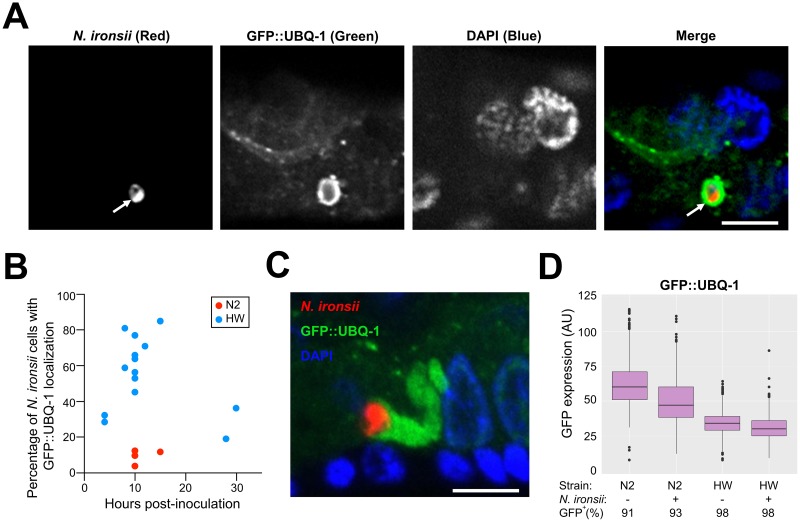
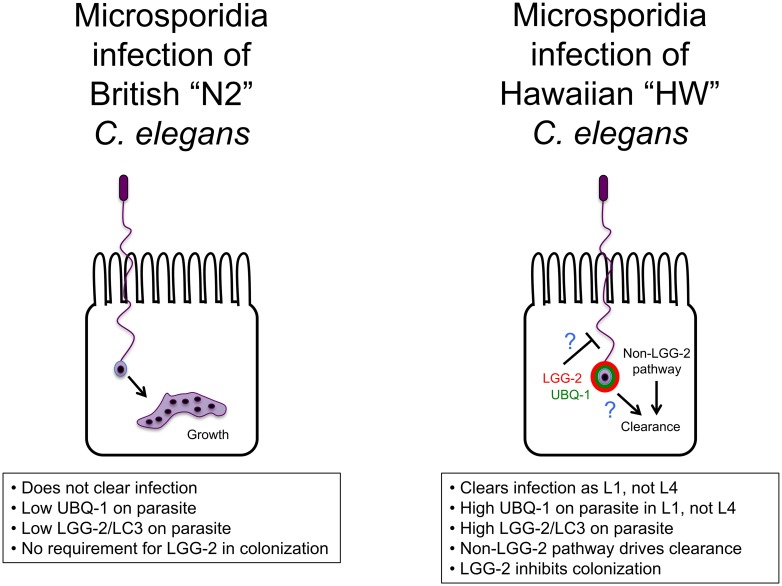
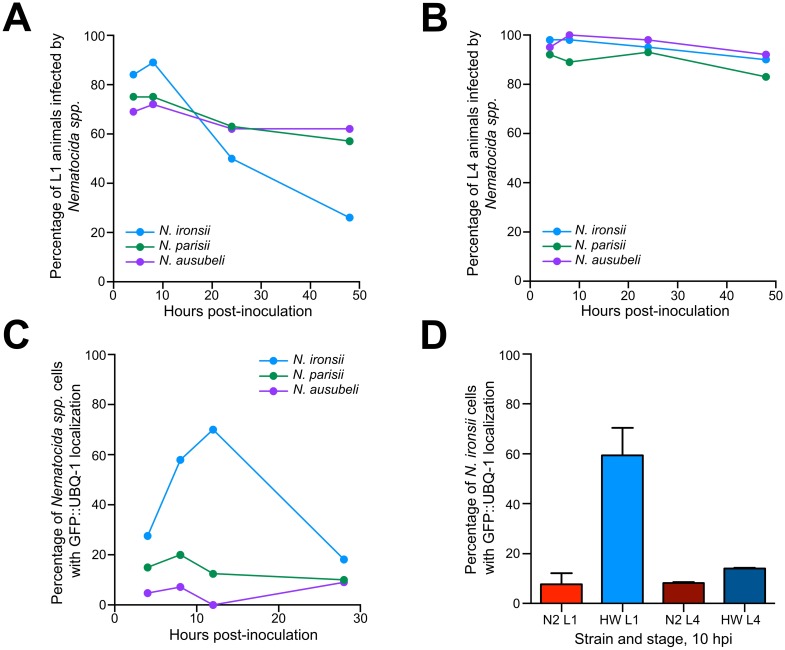
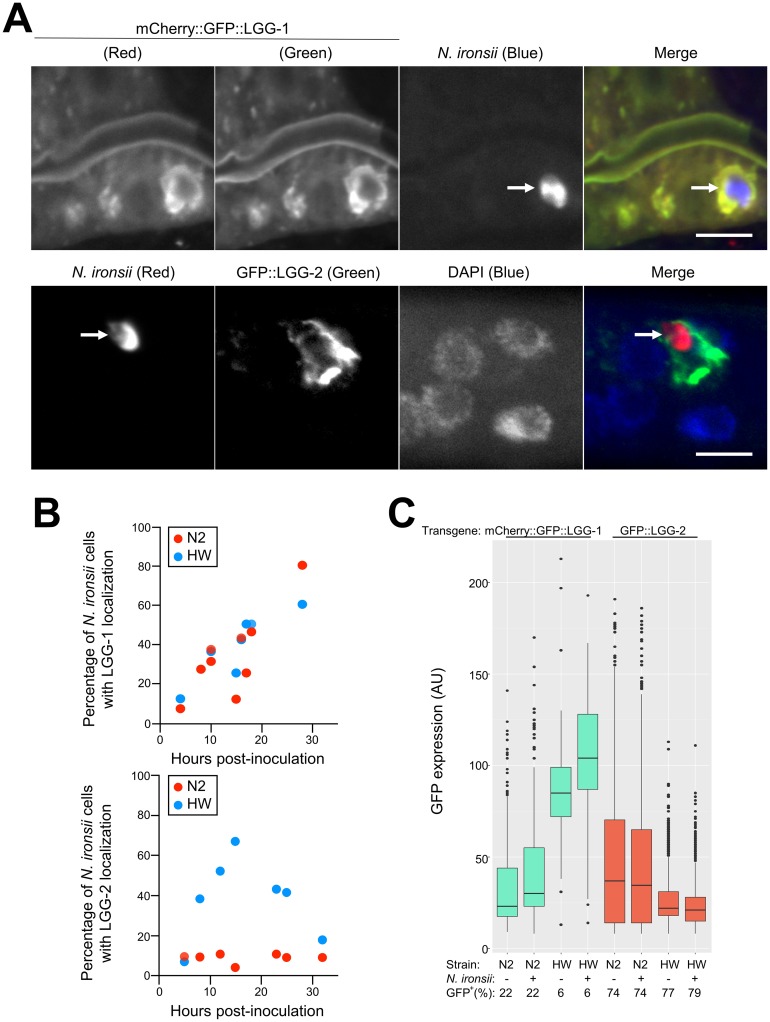
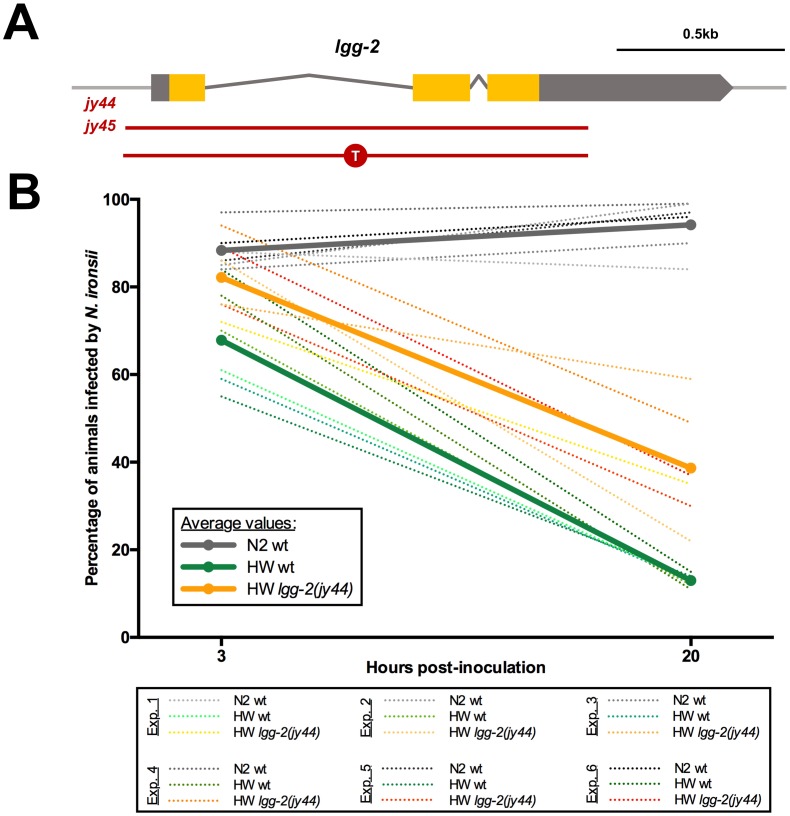
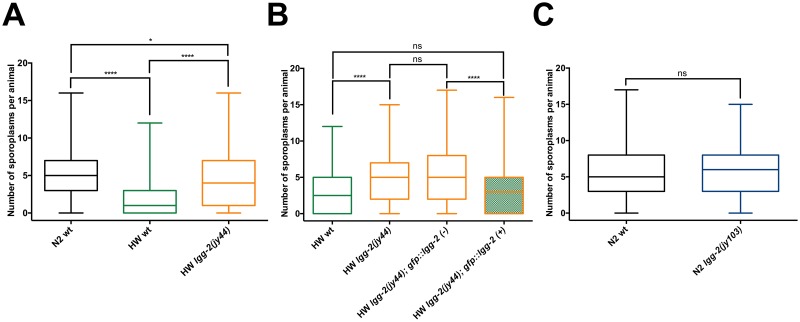
Natural genetic variation can determine the outcome of an infection, and often reflects the co-evolutionary battle between hosts and pathogens. We previously found that a natural variant of the nematode Caenorhabditis elegans from Hawaii (HW) has increased resistance against natural microsporidian pathogens in the Nematocida genus, when compared to the standard laboratory strain of N2. In particular, HW animals can clear infection, while N2 animals cannot. In addition, HW animals have lower levels of initial colonization of Nematocida inside intestinal cells, compared to N2. Here we investigate how this natural variation in resistance relates to autophagy. We found that there is much better targeting of autophagy-related machinery to parasites under conditions where they are cleared. In particular, ubiquitin targeting to Nematocida cells correlates very well with their subsequent clearance in terms of timing, host strain and age, as well as species of Nematocida. Furthermore, clearance correlates with targeting of the LGG-2/LC3 autophagy protein to parasite cells, with HW animals having much more efficient targeting of LGG-2 to parasite cells than N2 animals. Surprisingly, however, we found that LGG-2 is not required to clear infection. Instead, we found that LGG-2/LC3 regulates Nematocida colonization inside intestinal cells. Interestingly, LGG-2/LC3 regulates intracellular colonization only in the HW strain, and not in N2. Altogether these results demonstrate that there is natural genetic variation in an LGG-2-dependent process that regulates microsporidia colonization inside intestinal cells, although not microsporidia clearance.
自然遗传变异可以决定感染的结果,并且通常反映了宿主和病原体之间的共同进化斗争。我们之前发现,与标准的 N2 实验室菌株相比,来自夏威夷的线虫 Caenorhabditis elegans 的天然变异株 HW 对天然微孢子虫病原体具有更高的抗性。特别是,HW 动物可以清除感染,而 N2 动物则不能。此外,HW 动物在肠道细胞内最初定殖 Nematocida 的水平比 N2 动物低。在这里,我们研究这种抗性的自然变异与自噬的关系。我们发现,在清除寄生虫的情况下,自噬相关机制的靶向性要好得多。特别是,泛素靶向 Nematocida 细胞与它们随后的清除在时间、宿主菌株和年龄以及 Nematocida 物种方面非常相关。此外,清除与 LGG-2/LC3 自噬蛋白靶向寄生虫细胞的相关性很好,HW 动物比 N2 动物更有效地将 LGG-2 靶向寄生虫细胞。然而,令人惊讶的是,我们发现 LGG-2 清除感染并非必需。相反,我们发现 LGG-2/LC3 调节 Nematocida 在内肠细胞中的定植。有趣的是,LGG-2/LC3 仅在 HW 菌株中调节细胞内定植,而在 N2 菌株中则不调节。总而言之,这些结果表明,尽管不能清除微孢子虫,但在调节微孢子虫在内肠细胞中定植的 LGG-2 依赖过程中存在自然遗传变异。