Bonatti M, Lombardo F, Vezzali N, Zamboni G, Ferro F, Pernter P, Pycha A, Bonatti G
Department of Radiology, Bolzano Central Hospital, 5 Boehler St., 39100, Bolzano, Italy,
Insights Imaging. 2015 Apr;6(2):261-72. doi: 10.1007/s13244-015-0385-1. Epub 2015 Feb 14.
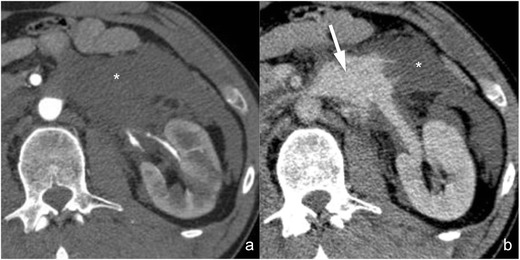
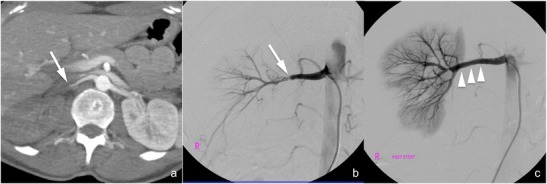
To show the wide spectrum of computed tomography (CT) findings in blunt renal trauma and to correlate them with consequent therapeutic implications.
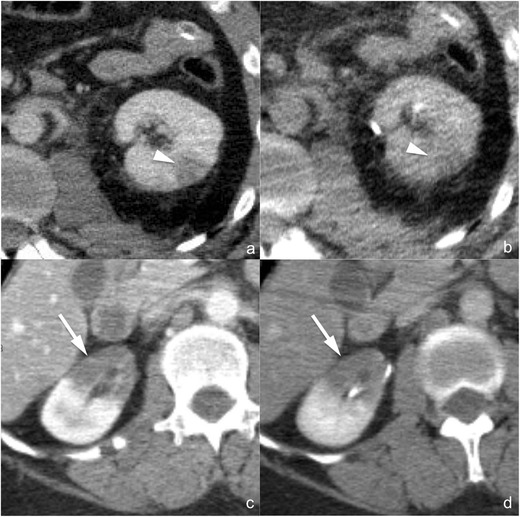
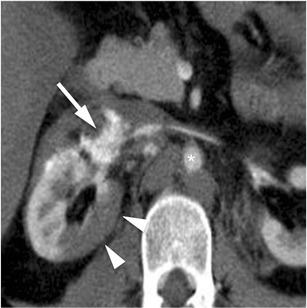
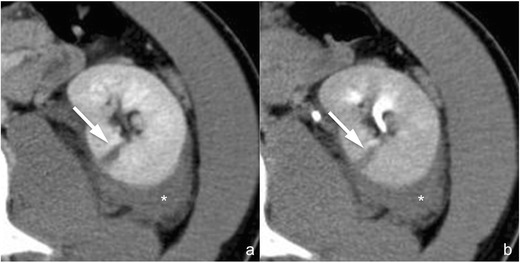
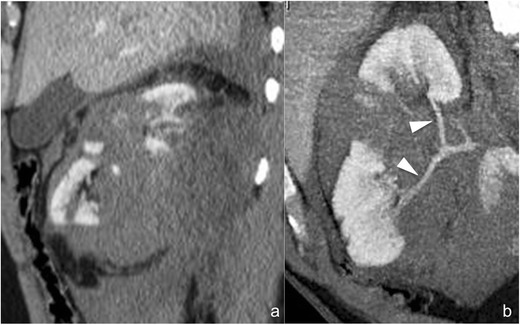
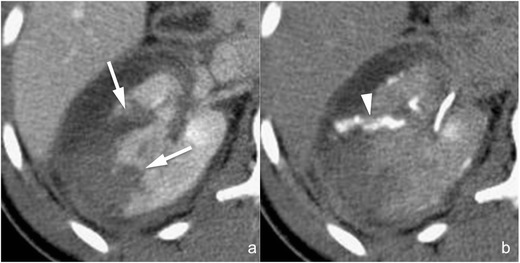
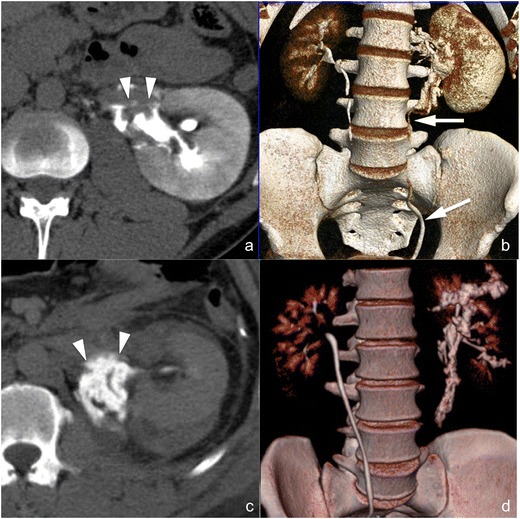
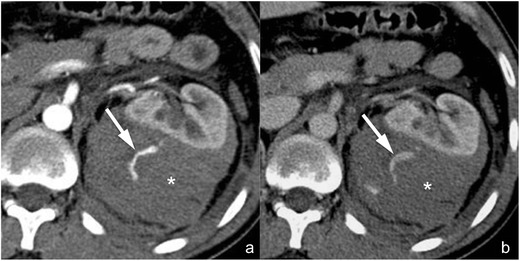
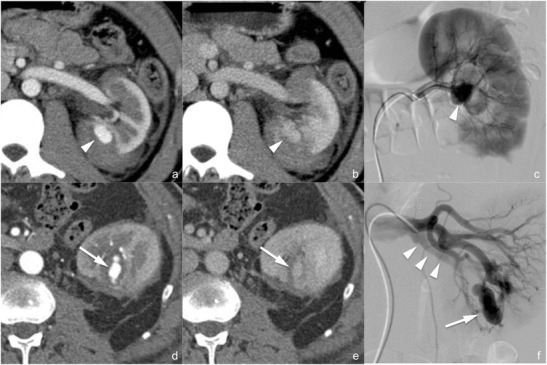
This article is the result of a literature review and our personal experience in a level II trauma centre. Here we describe, discuss and illustrate the possible CT findings in blunt renal trauma, and we correlate them with the American Association for the Surgery of Trauma (AAST) classification and their therapeutic implications.
CT findings following blunt renal trauma can be grouped into 15 main categories, 12 of them directly correlated with the AAST classification and 3 of them not mentioned in it. Non-operative management, which includes the "watchful waiting" approach, endourological treatments and endovascular treatments, is nowadays widely adopted in blunt renal trauma, and surgery is limited to haemodynamically unstable patients and a minority of haemodynamically stable patients.
The interpretation of CT findings in blunt renal trauma may be improved and made faster by the knowledge of their therapeutic consequences.
• The majority of blunt renal injuries do not require surgical treatment. • CT findings in blunt renal injury must be evaluated considering their therapeutic consequences. • Some CT findings in blunt renal trauma are not included in the AAST classification.
展示钝性肾损伤的计算机断层扫描(CT)表现的广泛范围,并将其与相应的治疗意义相关联。
本文是一篇文献综述以及我们在二级创伤中心的个人经验的结果。在此,我们描述、讨论并举例说明钝性肾损伤中可能出现的CT表现,并将它们与美国创伤外科学会(AAST)的分类及其治疗意义相关联。
钝性肾损伤后的CT表现可分为15个主要类别,其中12个与AAST分类直接相关,3个未在该分类中提及。非手术治疗,包括“观察等待”方法、腔内治疗和血管内治疗,如今在钝性肾损伤中被广泛采用,手术仅限于血流动力学不稳定的患者以及少数血流动力学稳定的患者。
了解钝性肾损伤的CT表现的治疗后果,有助于更准确且快速地解读这些表现。
•大多数钝性肾损伤不需要手术治疗。•评估钝性肾损伤的CT表现时必须考虑其治疗后果。•钝性肾损伤的一些CT表现未包括在AAST分类中。