Pant Bikram Datt, Burgos Asdrubal, Pant Pooja, Cuadros-Inostroza Alvaro, Willmitzer Lothar, Scheible Wolf-Rüdiger
Max Planck Institute for Molecular Plant Physiology, D-14476 Potsdam-Golm, Germany Plant Biology Division, The Samuel Roberts Noble Foundation, Ardmore, OK 73401, USA.
Max Planck Institute for Molecular Plant Physiology, D-14476 Potsdam-Golm, Germany
J Exp Bot. 2015 Apr;66(7):1907-18. doi: 10.1093/jxb/eru535. Epub 2015 Feb 13.
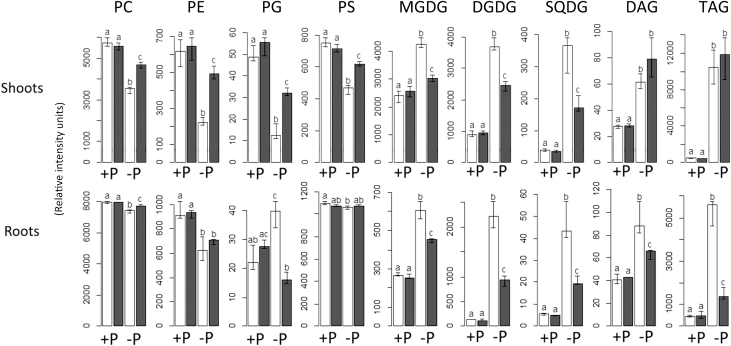
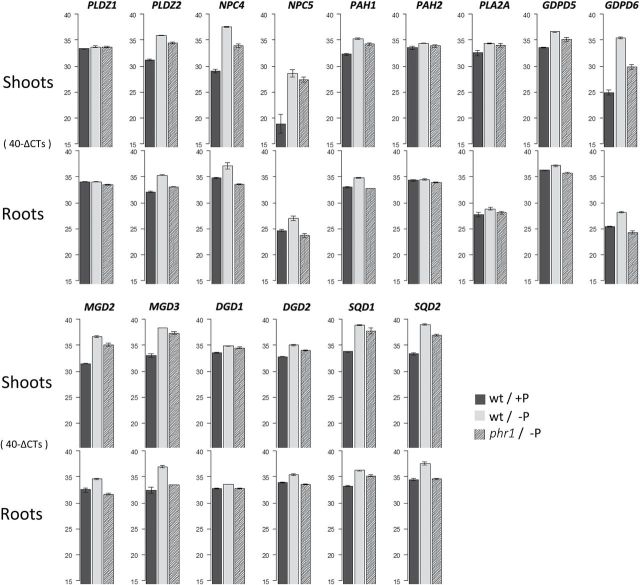
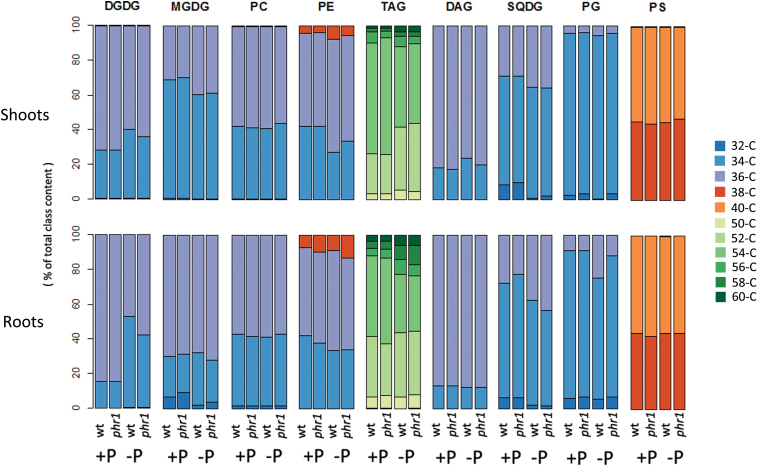
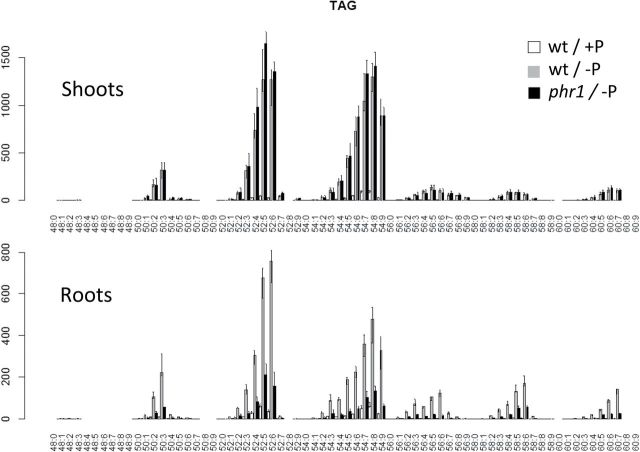
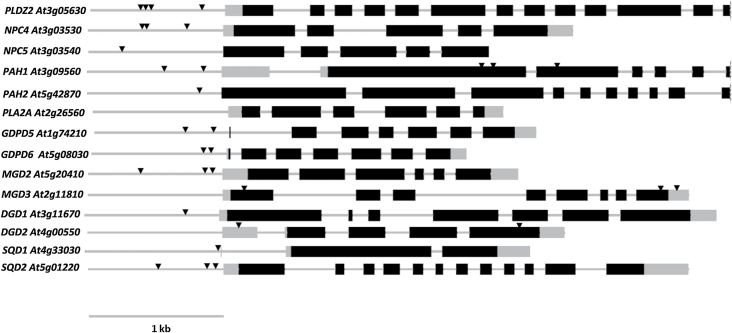
Lipid remodeling is one of the most dramatic metabolic responses to phosphorus (P) starvation. It consists of the degradation of phospholipids to release the phosphate needed by the cell and the accumulation of glycolipids to replace phospholipids in the membranes. It is shown that PHR1, a well-described transcriptional regulator of P starvation of the MYB family, largely controls this response. Glycerolipid composition and the expression of most lipid-remodeling gene transcripts analysed were altered in the phr1 mutant under phosphate starvation in comparison to wild-type plants. In addition to these results, the lipidomic characterization of wild-type plants showed two novel features of the lipid response to P starvation for Arabidopsis. Triacylglycerol (TAG) accumulates dramatically under P starvation (by as much as ~20-fold in shoots and ~13-fold in roots), a response known to occur in green algae but hardly known in plants. Surprisingly, there was an increase in phosphatidylglycerol (PG) in P-starved roots, a response that may be adaptive as it was suppressed in the phr1 mutant.
脂质重塑是对磷(P)饥饿最显著的代谢反应之一。它包括磷脂降解以释放细胞所需的磷酸盐,以及糖脂积累以取代膜中的磷脂。研究表明,PHR1是MYB家族中一个广为人知的磷饥饿转录调节因子,在很大程度上控制了这种反应。与野生型植物相比,在磷酸盐饥饿条件下,phr1突变体中甘油olipid组成和大多数分析的脂质重塑基因转录本的表达发生了改变。除了这些结果,野生型植物的脂质组学特征还显示了拟南芥对磷饥饿脂质反应的两个新特征。在磷饥饿条件下,三酰甘油(TAG)大量积累(在地上部分高达约20倍,在根部高达约13倍),这种反应在绿藻中已知,但在植物中几乎不为人知。令人惊讶的是,在磷饥饿的根中磷脂酰甘油(PG)增加,这种反应可能具有适应性,因为它在phr1突变体中受到抑制。