Zhang Xiaolu, Li Bingnan, de Jonge Nick, Björkholm Magnus, Xu Dawei
Department of Medicine, Division of Hematology and Center for Molecular Medicine, Karolinska Institutet and Karolinska University Hospital Solna, Stockholm, Sweden.
Oncotarget. 2015 Mar 10;6(7):4888-900. doi: 10.18632/oncotarget.2917.
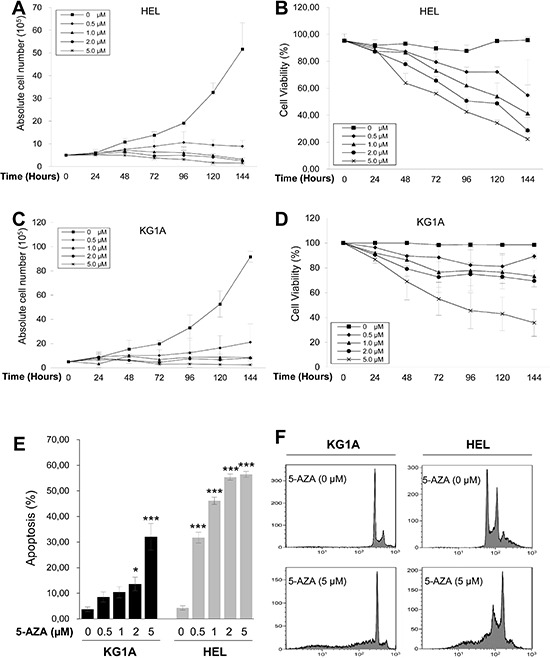
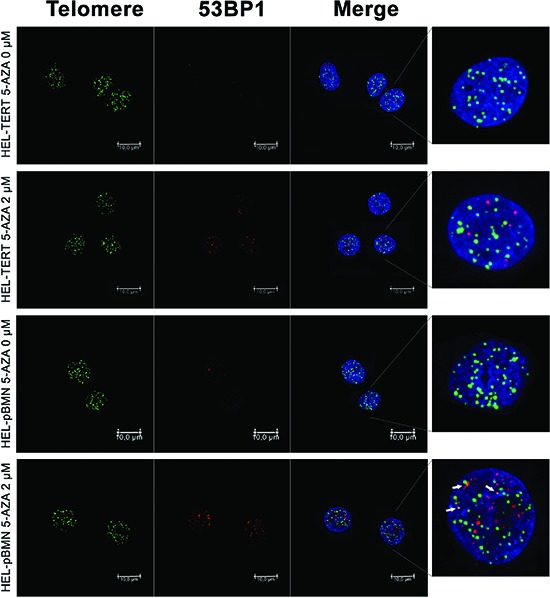
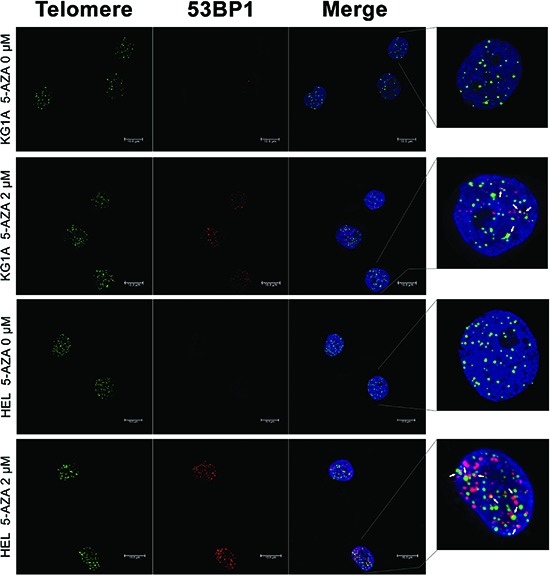
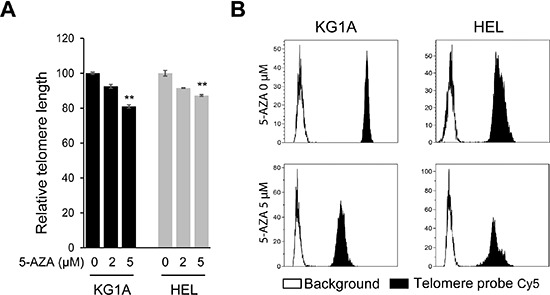
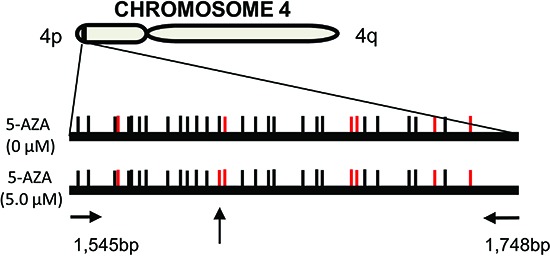
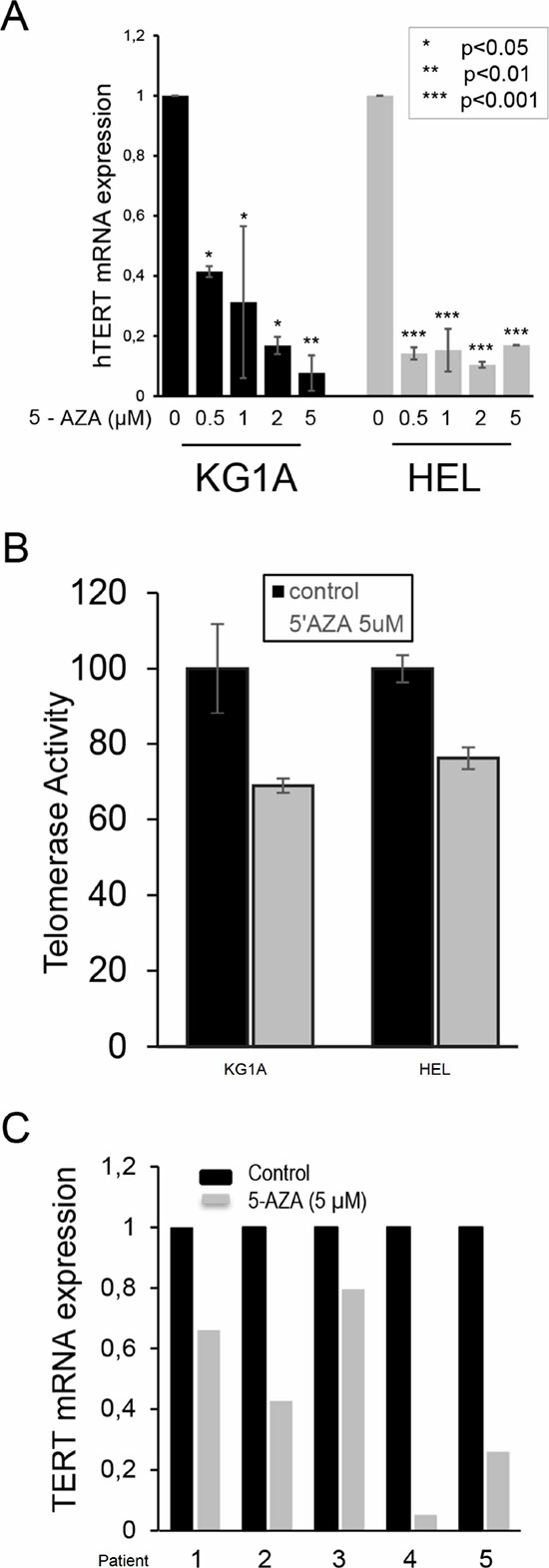
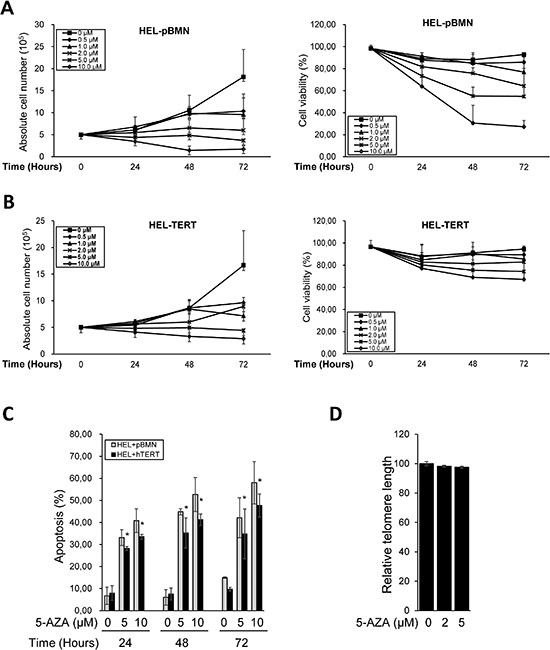
DNA methyltransferase inhibitors (DNMTIs) such as 5-azacytidine (5-AZA) have been used for treatment of acute myeloid leukemia (AML) and other malignancies. Although inhibiting global/gene-specific DNA methylation is widely accepted as a key mechanism behind DNMTI anti-tumor activity, other mechanisms are likely involved in DNMTI's action. Because telomerase reverse transcriptase (TERT) plays key roles in cancer through telomere elongation and telomere lengthening-independent activities, and TERT has been shown to confer chemo- or radio-resistance to cancer cells, we determine whether DNMTIs affect telomere function and whether TERT/telomerase interferes with their anti-cancer efficacy. We showed that 5-AZA induced DNA damage and telomere dysfunction in AML cell lines by demonstrating the presence of 53-BP1 foci and the co-localization of 53-BP1 foci with telomere signals, respectively. Telomere dysfunction was coupled with diminished TERT expression, shorter telomere and apoptosis in 5-AZA-treated cells. However, 5-AZA treatment did not lead to changes in the methylation status of subtelomere regions. Down-regulation of TERT expression similarly occurred in primary leukemic cells derived from AML patients exposed to 5-AZA. TERT over-expression significantly attenuated 5-AZA-mediated DNA damage, telomere dysfunction and apoptosis of AML cells. Collectively, 5-AZA mediates the down-regulation of TERT expression, and induces telomere dysfunction, which consequently exerts an anti-tumor activity.
DNA甲基转移酶抑制剂(DNMTIs),如5-氮杂胞苷(5-AZA),已被用于治疗急性髓系白血病(AML)和其他恶性肿瘤。尽管抑制整体/基因特异性DNA甲基化被广泛认为是DNMTI抗肿瘤活性背后的关键机制,但其他机制可能也参与了DNMTI的作用。由于端粒酶逆转录酶(TERT)通过端粒延长和不依赖端粒延长的活动在癌症中发挥关键作用,并且TERT已被证明赋予癌细胞化学或放射抗性,我们确定DNMTIs是否影响端粒功能以及TERT/端粒酶是否干扰其抗癌疗效。我们通过分别证明53-BP1病灶的存在以及53-BP1病灶与端粒信号的共定位,表明5-AZA在AML细胞系中诱导DNA损伤和端粒功能障碍。在5-AZA处理的细胞中,端粒功能障碍与TERT表达降低、端粒缩短和细胞凋亡相关。然而,5-AZA处理并未导致亚端粒区域甲基化状态的改变。在暴露于5-AZA的AML患者来源的原发性白血病细胞中,TERT表达的下调同样发生。TERT过表达显著减弱了5-AZA介导的AML细胞的DNA损伤、端粒功能障碍和细胞凋亡。总体而言,5-AZA介导TERT表达的下调,并诱导端粒功能障碍,从而发挥抗肿瘤活性。