
植物中硅的重要性及生物硅形成机制
Importance of silicon and mechanisms of biosilica formation in plants.
作者信息
Sahebi Mahbod, Hanafi Mohamed M, Siti Nor Akmar Abdullah, Rafii Mohd Y, Azizi Parisa, Tengoua F F, Nurul Mayzaitul Azwa Jamaludin, Shabanimofrad M
机构信息
Laboratory of Plantation Crops, Institute of Tropical Agriculture, Universiti Putra Malaysia, 43400 Serdang, Selangor, Malaysia.
Laboratory of Plantation Crops, Institute of Tropical Agriculture, Universiti Putra Malaysia, 43400 Serdang, Selangor, Malaysia ; Department of Land Management, Faculty of Agriculture, 43400 Serdang, Selangor, Malaysia.
出版信息
Biomed Res Int. 2015;2015:396010. doi: 10.1155/2015/396010. Epub 2015 Jan 21.
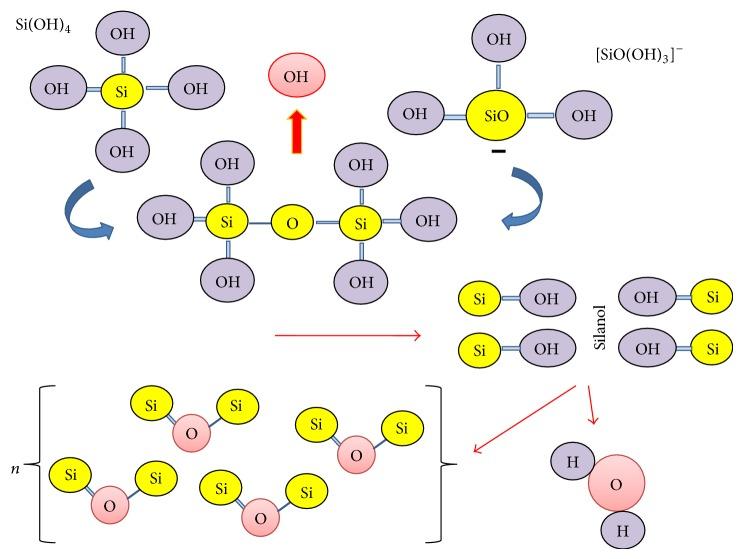
Silicon (Si) is one of the most prevalent macroelements, performing an essential function in healing plants in response to environmental stresses. The purpose of using Si is to induce resistance to distinct stresses, diseases, and pathogens. Additionally, Si can improve the condition of soils, which contain toxic levels of heavy metals along with other chemical elements. Silicon minimizes toxicity of Fe, Al, and Mn, increases the availability of P, and enhances drought along with salt tolerance in plants through the formation of silicified tissues in plants. However, the concentration of Si depends on the plants genotype and organisms. Hence, the physiological mechanisms and metabolic activities of plants may be affected by Si application. Peptides as well as amino acids can effectively create polysilicic species through interactions with different species of silicate inside solution. The carboxylic acid and the alcohol groups of serine and asparagine tend not to engage in any significant role in polysilicates formation, but the hydroxyl group side chain can be involved in the formation of hydrogen bond with Si(OH)4. The mechanisms and trend of Si absorption are different between plant species. Furthermore, the transportation of Si requires an energy mechanism; thus, low temperatures and metabolic repressors inhibit Si transportation.
硅(Si)是最普遍的大量元素之一,在植物应对环境胁迫的愈合过程中发挥着重要作用。使用硅的目的是诱导对不同胁迫、疾病和病原体的抗性。此外,硅可以改善土壤状况,这些土壤含有有毒水平的重金属以及其他化学元素。硅可使铁、铝和锰的毒性降至最低,提高磷的有效性,并通过在植物中形成硅化组织来增强植物的耐旱性和耐盐性。然而,硅的浓度取决于植物基因型和生物体。因此,植物的生理机制和代谢活动可能会受到硅施用的影响。肽和氨基酸可以通过与溶液中不同种类的硅酸盐相互作用有效地形成聚硅酸物种。丝氨酸和天冬酰胺的羧酸和醇基团在聚硅酸盐形成中不发挥任何重要作用,但羟基侧链可参与与Si(OH)4形成氢键。不同植物物种之间硅吸收的机制和趋势不同。此外,硅的运输需要能量机制;因此,低温和代谢抑制剂会抑制硅的运输。


 Zotero 插件