Department of Biomedical Engineering, National University of Singapore , Singapore , Singapore.
INSERM, U698 Cardiovascular Bioengineering , Paris , France ; INSERM, U791 Center for OsteoArticular and Dental Tissue Engineering , Nantes , France.
Front Bioeng Biotechnol. 2015 Feb 3;3:3. doi: 10.3389/fbioe.2015.00003. eCollection 2015.
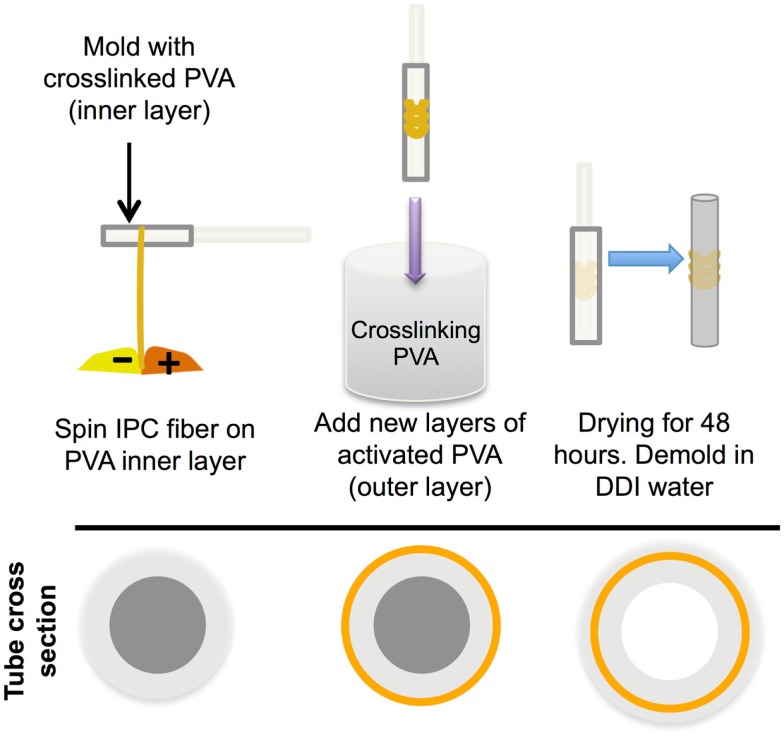
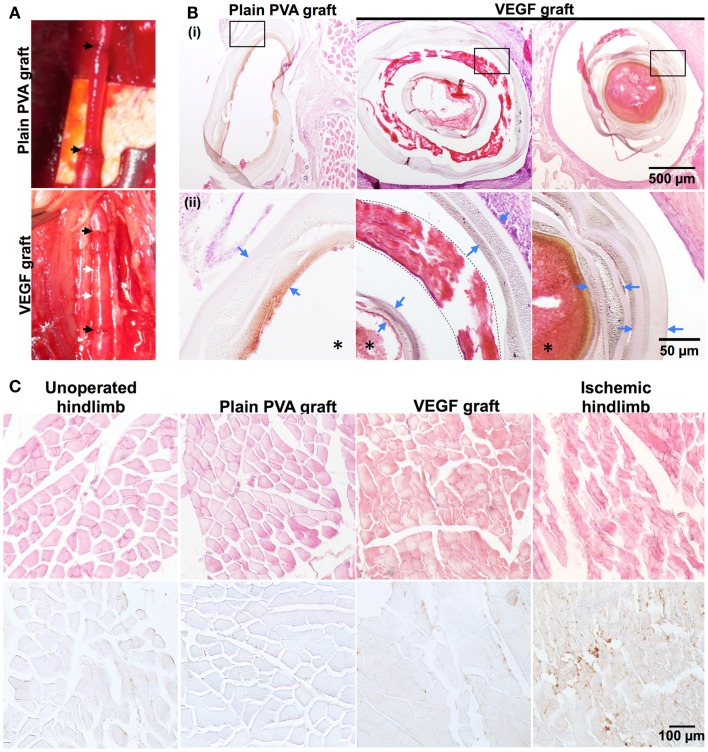
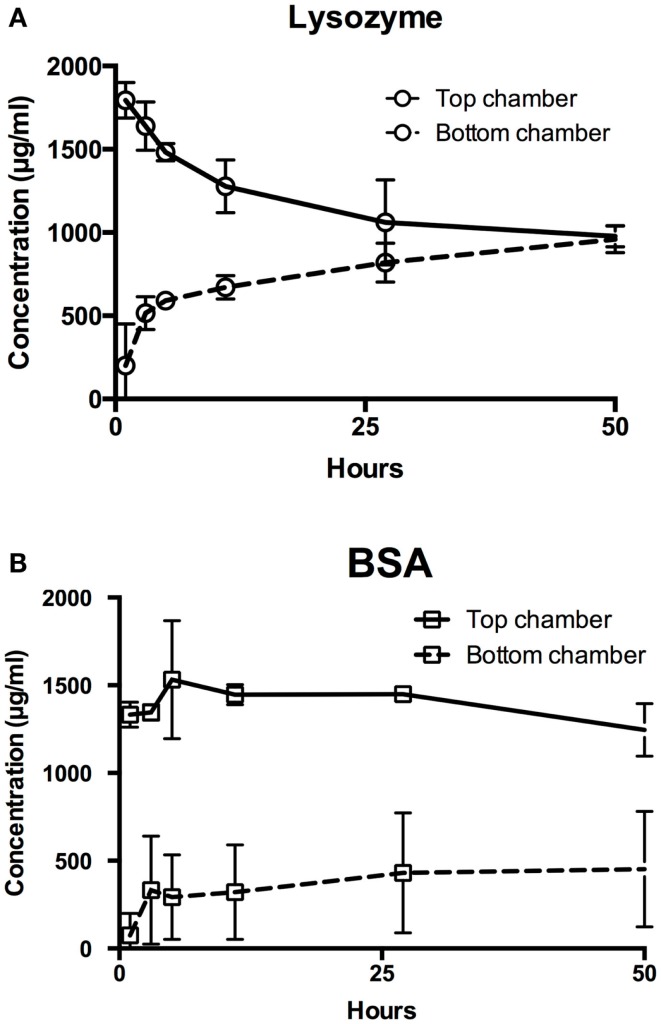
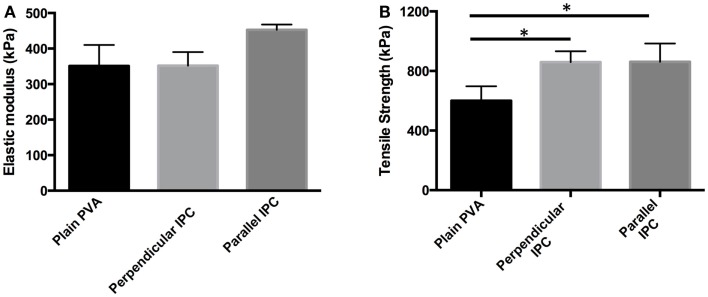
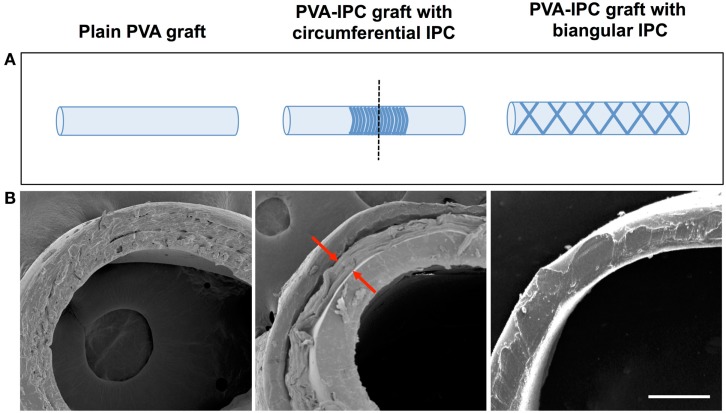
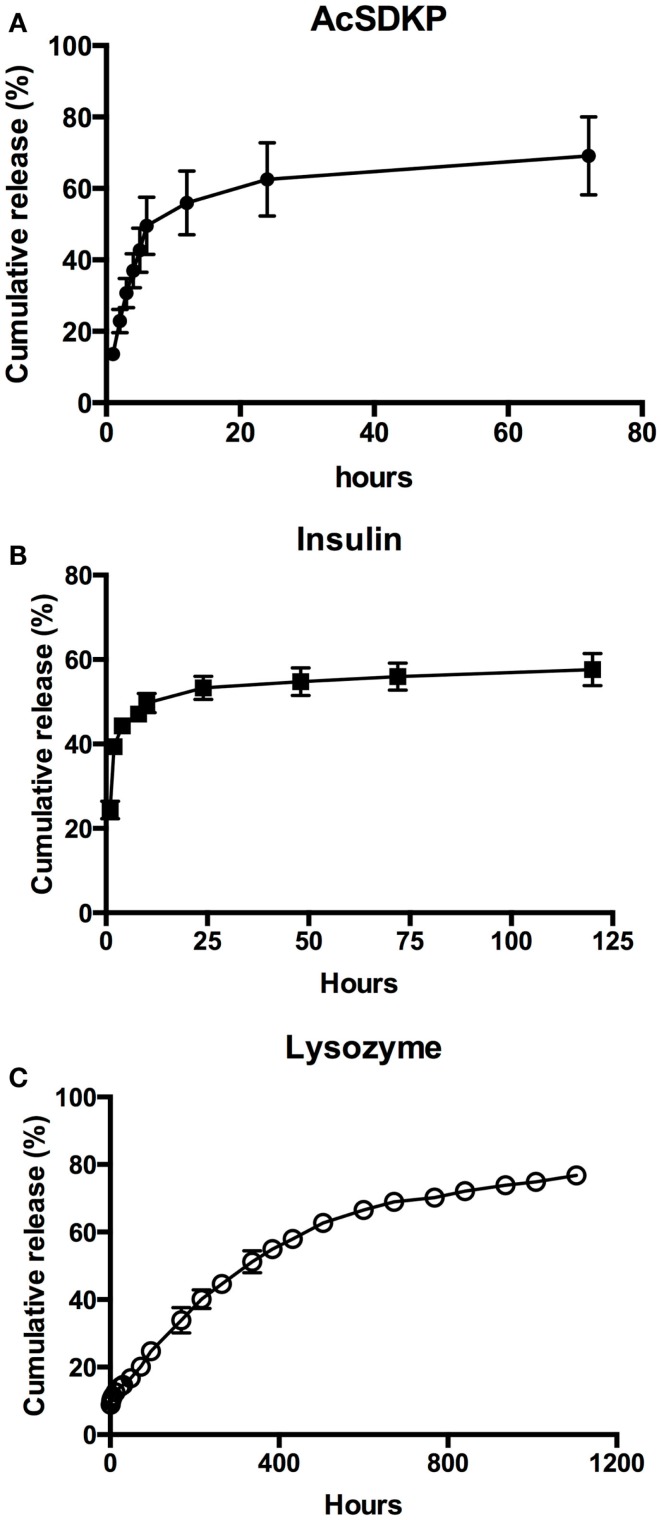
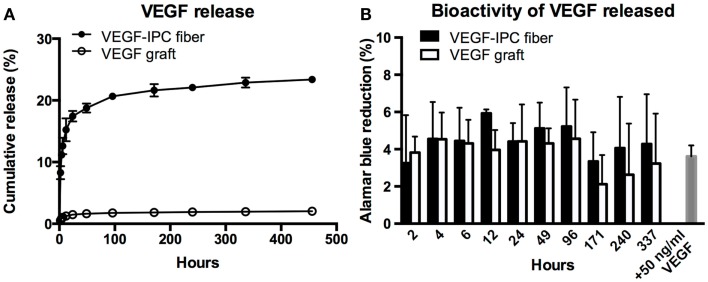
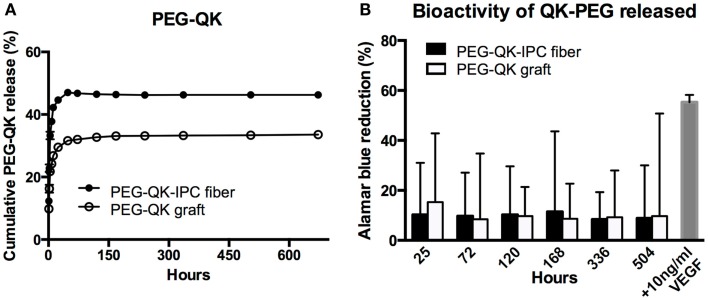
Controlled delivery of hydrophilic proteins is an important therapeutic strategy. However, widely used methods for protein delivery suffer from low incorporation efficiency and loss of bioactivity. The versatile interfacial polyelectrolyte complexation (IPC) fibers have the capacity for precise spatiotemporal release and protection of protein, growth factor, and cell bioactivity. Yet its weak mechanical properties limit its application and translation into a viable clinical solution. To overcome this limitation, IPC fibers can be incorporated into polymeric scaffolds such as the biocompatible poly(vinyl alcohol) hydrogel (PVA). Therefore, we explored the use of a composite scaffold of PVA and IPC fibers for controlled biomolecule release. We first observed that the permeability of biomolecules through PVA films were dependent on molecular weight. Next, IPC fibers were incorporated in between layers of PVA to produce PVA-IPC composite scaffolds with different IPC fiber orientation. The composite scaffold demonstrated excellent mechanical properties and efficient biomolecule incorporation. The rate of biomolecule release from PVA-IPC composite grafts exhibited dependence on molecular weight, with lysozyme showing near-linear release for 1 month. Angiogenic factors were also incorporated into the PVA-IPC grafts, as a potential biomedical application of the composite graft. While vascular endothelial growth factor only showed a maximum cumulative release of 3%, the smaller PEGylated-QK peptide showed maximum release of 33%. Notably, the released angiogenic biomolecules induced endothelial cell activity thus indicating retention of bioactivity. We also observed lack of significant macrophage response against PVA-IPC grafts in a rabbit model. Showing permeability, mechanical strength, precise temporal growth factor release, and bioinertness, PVA-IPC fibers composite scaffolds are excellent scaffolds for controlled biomolecule delivery in soft tissue engineering.
亲水蛋白质的控制释放是一种重要的治疗策略。然而,广泛使用的蛋白质递送方法存在掺入效率低和生物活性丧失的问题。多功能界面聚电解质复合(IPC)纤维具有精确的时空释放和保护蛋白质、生长因子和细胞生物活性的能力。然而,其机械性能较弱限制了其应用和转化为可行的临床解决方案。为了克服这一限制,可以将 IPC 纤维纳入聚合物支架中,如生物相容性的聚乙烯醇(PVA)水凝胶。因此,我们探索了使用 PVA 和 IPC 纤维的复合支架来控制生物分子的释放。我们首先观察到生物分子通过 PVA 膜的渗透性取决于分子量。然后,将 IPC 纤维掺入 PVA 层之间,以产生具有不同 IPC 纤维取向的 PVA-IPC 复合支架。复合支架表现出优异的机械性能和高效的生物分子掺入。PVA-IPC 复合移植物中生物分子的释放速率取决于分子量,溶菌酶在 1 个月内表现出近线性释放。血管生成因子也被纳入 PVA-IPC 移植物中,作为复合移植物的潜在生物医学应用。虽然血管内皮生长因子仅显示出 3%的最大累积释放,但较小的聚乙二醇化-QK 肽显示出 33%的最大释放。值得注意的是,释放的血管生成生物分子诱导了内皮细胞活性,表明保留了生物活性。我们还观察到在兔模型中 PVA-IPC 移植物没有明显的巨噬细胞反应。PVA-IPC 纤维复合支架具有渗透性、机械强度、精确的时间生长因子释放和生物惰性,是软组织工程中控制生物分子递送的优秀支架。