Souza Ana Carolina P, Yuen Peter S T, Star Robert A
Renal Diagnostics and Therapeutics Unit, National Institute of Diabetes and Digestive and Kidney Diseases, National Institutes of Health, Bethesda, Maryland, USA.
Kidney Int. 2015 Jun;87(6):1100-8. doi: 10.1038/ki.2015.26. Epub 2015 Feb 18.
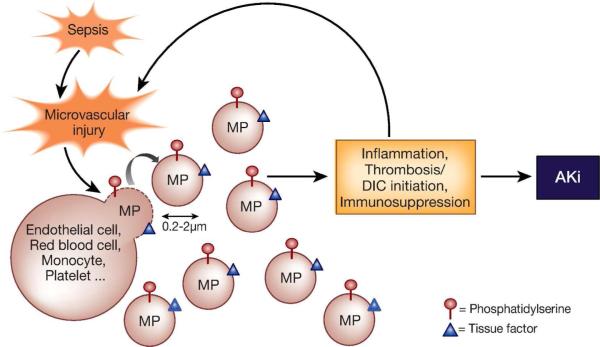
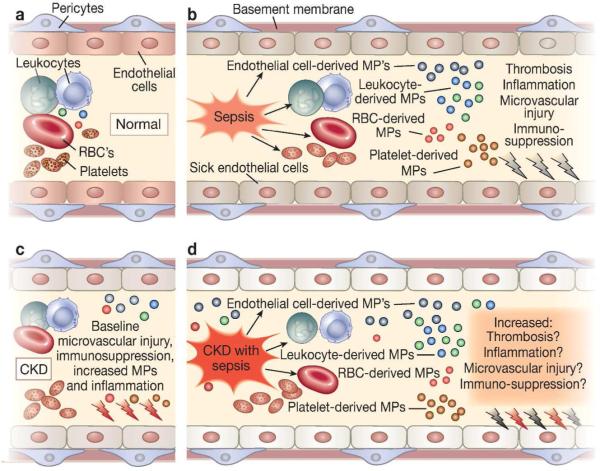
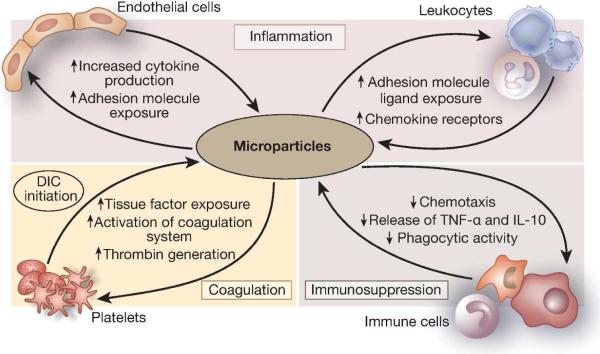
Sepsis is a severe and complex syndrome that lacks effective prevention or therapeutics. The effects of sepsis on the microvasculature have become an attractive area for possible new targets and therapeutics. Microparticles (MPs) are cell membrane-derived particles that can promote coagulation, inflammation, and angiogenesis, and they can participate in cell-to-cell communication. MPs retain cell membrane and cytoplasmic constituents of their parental cells, including two procoagulants: phosphatidylserine and tissue factor. We highlight the role of microparticles released by endothelial and circulating cells after sepsis-induced microvascular injury, and we discuss possible mechanisms by which microparticles can contribute to endothelial dysfunction, immunosuppression, and multiorgan dysfunction--including sepsis-AKI. Once viewed as cellular byproducts, microparticles are emerging as a new class of markers and mediators in the pathogenesis of sepsis.
脓毒症是一种严重且复杂的综合征,缺乏有效的预防或治疗方法。脓毒症对微血管的影响已成为可能的新靶点和治疗方法的一个有吸引力的领域。微粒(MPs)是细胞膜衍生的颗粒,可促进凝血、炎症和血管生成,并且它们可以参与细胞间通讯。MPs保留其亲代细胞的细胞膜和细胞质成分,包括两种促凝剂:磷脂酰丝氨酸和组织因子。我们强调了脓毒症诱导的微血管损伤后内皮细胞和循环细胞释放的微粒的作用,并讨论了微粒可能导致内皮功能障碍、免疫抑制和多器官功能障碍(包括脓毒症相关性急性肾损伤)的机制。微粒曾经被视为细胞副产物,现在正作为脓毒症发病机制中的一类新的标志物和介质而出现。