Ucisik Mehmet H, Sleytr Uwe B, Schuster Bernhard
Department of Biomedical Engineering, School of Engineering and Natural Sciences, Istanbul Medipol University, Ekinciler Cad. No.19, 34810 Beykoz, Istanbul, Turkey.
Curr Pharm Biotechnol. 2015;16(4):392-405. doi: 10.2174/138920101604150218112656.
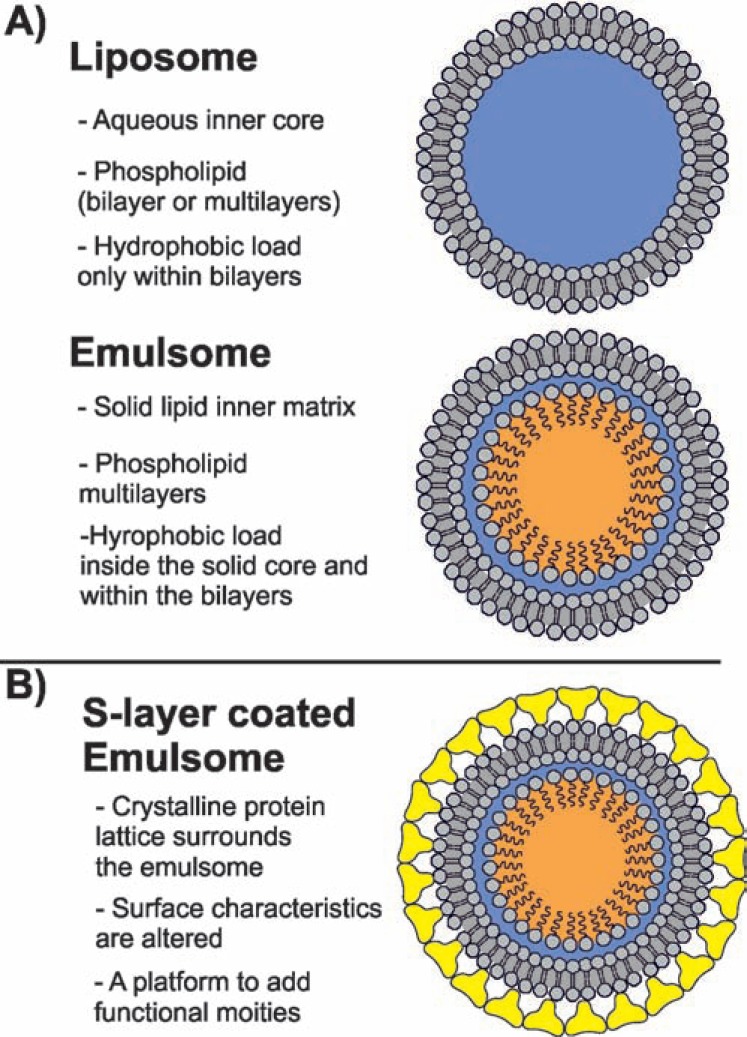
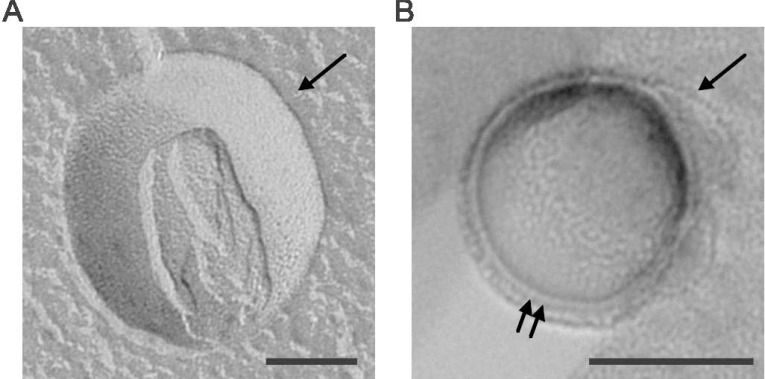
Here, the use of emulsomes as a drug delivery system is reviewed and compared with other similar lipidic nanoformulations. In particular, we look at surface modification of emulsomes using S-layer proteins, which are self-assembling proteins that cover the surface of many prokaryotic organisms. It has been shown that covering emulsomes with a crystalline S-layer lattice can protect cells from oxidative stress and membrane damage. In the future, the capability to recrystallize S-layer fusion proteins on lipidic nanoformulations may allow the presentation of binding functions or homing protein domains to achieve highly specific targeted delivery of drug-loaded emulsomes. Besides the discussion on several designs and advantages of composite emulsomes, the success of emulsomes for the delivery of drugs to fight against viral and fungal infections, dermal therapy, cancer, and autoimmunity is summarized. Further research might lead to smart, biocompatible emulsomes, which are able to protect and reduce the side effects caused by the drug, but at the same time are equipped with specific targeting molecules to find the desired site of action.
本文对乳粒作为药物递送系统的应用进行了综述,并与其他类似的脂质纳米制剂进行了比较。特别地,我们研究了使用S层蛋白对乳粒进行表面修饰,S层蛋白是覆盖许多原核生物表面的自组装蛋白。研究表明,用结晶S层晶格覆盖乳粒可以保护细胞免受氧化应激和膜损伤。未来,在脂质纳米制剂上使S层融合蛋白重结晶的能力可能允许呈现结合功能或归巢蛋白结构域,以实现载药乳粒的高度特异性靶向递送。除了讨论复合乳粒的几种设计和优点外,还总结了乳粒在递送药物以对抗病毒和真菌感染、皮肤治疗、癌症和自身免疫方面的成功案例。进一步的研究可能会产生智能、生物相容性好的乳粒,它们能够保护并减少药物引起的副作用,但同时配备有特定的靶向分子以找到所需的作用部位。