• 文献检索
  • 文档翻译
  • 深度研究
  • 学术资讯
  • Suppr Zotero 插件Zotero 插件
  • 邀请有礼
  • 套餐&价格
  • 历史记录
应用&插件
Suppr Zotero 插件Zotero 插件浏览器插件Mac 客户端Windows 客户端微信小程序
定价
高级版会员购买积分包购买API积分包
服务
文献检索文档翻译深度研究API 文档MCP 服务
关于我们
关于 Suppr公司介绍联系我们用户协议隐私条款
关注我们

Suppr 超能文献

核心技术专利:CN118964589B侵权必究
粤ICP备2023148730 号-1Suppr @ 2026

文献检索

告别复杂PubMed语法,用中文像聊天一样搜索,搜遍4000万医学文献。AI智能推荐,让科研检索更轻松。

立即免费搜索

文件翻译

保留排版,准确专业,支持PDF/Word/PPT等文件格式,支持 12+语言互译。

免费翻译文档

深度研究

AI帮你快速写综述,25分钟生成高质量综述,智能提取关键信息,辅助科研写作。

立即免费体验

冷冻生鱼和鱿鱼会破坏寿司的品质吗?一项使用辨别测试进行感官评估的随机双盲试验。

Is the quality of sushi ruined by freezing raw fish and squid? A randomized double-blind trial with sensory evaluation using discrimination testing.

作者信息

Iwata Kentaro, Fukuchi Takahiko, Yoshimura Kenichi

机构信息

Division of Infectious Diseases Therapeutics, Kobe University Graduate School of Medicine.

Innovative Clinical Research Center (iCREK), Kanazawa University Hospital, Japan.

出版信息

Clin Infect Dis. 2015 May 1;60(9):e43-8. doi: 10.1093/cid/civ057. Epub 2015 Feb 18.

DOI:10.1093/cid/civ057
PMID:25697740
原文链接:https://pmc.ncbi.nlm.nih.gov/articles/PMC4392844/
Abstract

BACKGROUND

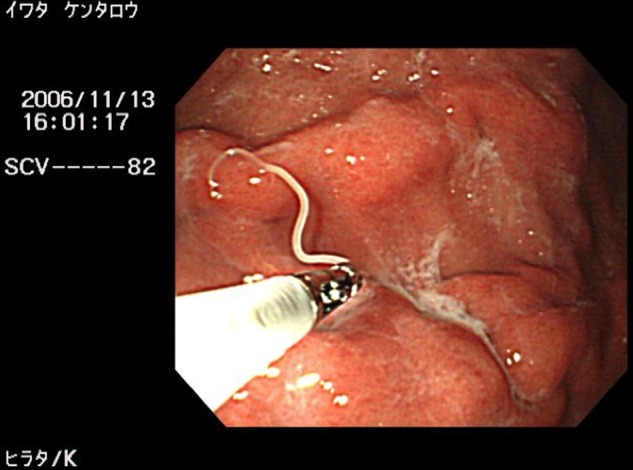
Sushi is a traditional Japanese cuisine enjoyed worldwide. However, using raw fish to make sushi may pose risk of certain parasitic infections, such as anisakidosis, which is most reported in Japan. This risk of infection can be eliminated by freezing fish; however, Japanese people are hesitant to freeze fish because it is believed that freezing ruins sushi's taste.

METHODS

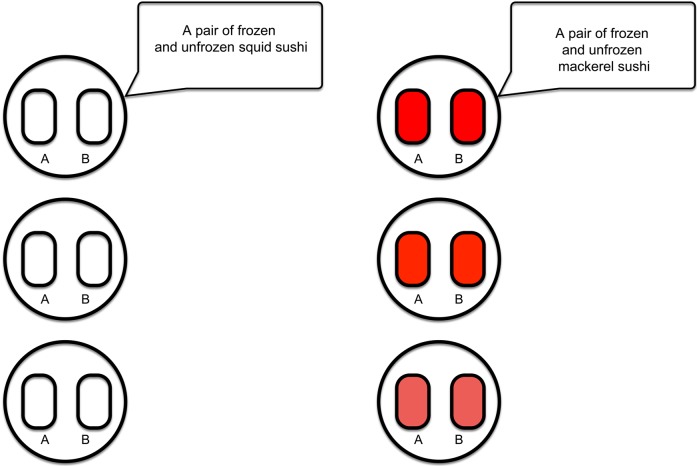
A randomized double-blind trial with discrimination testing was conducted to examine the ability of Japanese individuals to distinguish between frozen and unfrozen sushi. A pair of mackerel and squid sushi, one once frozen and the other not, was provided to the participants, and they were asked to answer which one tasted better.

RESULTS

Among 120 rounds of discrimination testing involving the consumption of 240 pieces of mackerel sushi, unfrozen sushi was believed to taste better in 42.5% (51 dishes) of cases, frozen sushi was thought to taste better in 49.2% (59 dishes), and the participants felt the taste was the same in 8.3% (10 dishes). The odds ratio for selecting unfrozen sushi as "tastes better" over frozen sushi was 0.86 (95% confidence interval [CI], .59-1.26; P = .45). For squid, unfrozen sushi was believed to be superior 48.3% of the time (58 dishes), and frozen sushi, 35.0% of the time (42 dishes). They were felt to be the same in 16.7% (20 dishes) (odds ratio, 1.38; 95% CI, .93-2.05; P = .11).

CONCLUSIONS

Freezing raw fish did not ruin sushi's taste. These findings may encourage the practice of freezing fish before using it in sushi, helping to decrease the incidence of anisakidosis.

摘要

背景

寿司是一种在全球广受欢迎的传统日本料理。然而,使用生鱼制作寿司可能会带来某些寄生虫感染的风险,比如异尖线虫病,这种疾病在日本的报告最为常见。通过冷冻鱼可以消除这种感染风险;然而,日本人对冷冻鱼有所顾虑,因为人们认为冷冻会破坏寿司的口感。

方法

进行了一项带有辨别测试的随机双盲试验,以检验日本人区分冷冻和未冷冻寿司的能力。向参与者提供一对鲭鱼和鱿鱼寿司,其中一个曾被冷冻,另一个未被冷冻,要求他们回答哪个口感更好。

结果

在涉及食用240片鲭鱼寿司的120轮辨别测试中,42.5%(51份)的情况下人们认为未冷冻的寿司口感更好,49.2%(59份)的情况下认为冷冻寿司口感更好,8.3%(10份)的情况下参与者觉得两者口感相同。选择未冷冻寿司比冷冻寿司“口感更好”的优势比为0.86(95%置信区间[CI],0.59 - 1.26;P = 0.45)。对于鱿鱼,48.3%的时间(58份)人们认为未冷冻的寿司更优,35.0%的时间(42份)认为冷冻寿司更优。16.7%(20份)的情况下人们觉得两者相同(优势比,1.38;95% CI,0.93 - 2.05;P = 0.11)。

结论

冷冻生鱼不会破坏寿司的口感。这些发现可能会鼓励在制作寿司前对鱼进行冷冻的做法,有助于降低异尖线虫病的发病率。
https://cdn.ncbi.nlm.nih.gov/pmc/blobs/8cc9/4392844/833259ff6525/civ05702.jpg
https://cdn.ncbi.nlm.nih.gov/pmc/blobs/8cc9/4392844/1391f0eb88bb/civ05701.jpg
https://cdn.ncbi.nlm.nih.gov/pmc/blobs/8cc9/4392844/833259ff6525/civ05702.jpg
https://cdn.ncbi.nlm.nih.gov/pmc/blobs/8cc9/4392844/1391f0eb88bb/civ05701.jpg
https://cdn.ncbi.nlm.nih.gov/pmc/blobs/8cc9/4392844/833259ff6525/civ05702.jpg

相似文献

1
Is the quality of sushi ruined by freezing raw fish and squid? A randomized double-blind trial with sensory evaluation using discrimination testing.冷冻生鱼和鱿鱼会破坏寿司的品质吗?一项使用辨别测试进行感官评估的随机双盲试验。
Clin Infect Dis. 2015 May 1;60(9):e43-8. doi: 10.1093/cid/civ057. Epub 2015 Feb 18.
2
Anisakidosis: a cause of intestinal obstruction from eating sushi.异尖线虫病:食用寿司导致肠梗阻的一个原因。
Am J Gastroenterol. 1998 Jul;93(7):1172-3. doi: 10.1111/j.1572-0241.1998.00356.x.
3
Methods for inactivation of seafood Anisakis larvae and prevention of human anisakiasis: a mini-review.海产品异尖线虫幼虫灭活方法及人类异尖线虫病预防的研究进展:综述
Eur Rev Med Pharmacol Sci. 2023 Jun;27(11):5246-5256. doi: 10.26355/eurrev_202306_32643.
4
Sushi delights and parasites: the risk of fishborne and foodborne parasitic zoonoses in Asia.寿司的美味与寄生虫:亚洲食源性和食源性寄生虫人畜共患病的风险
Clin Infect Dis. 2005 Nov 1;41(9):1297-303. doi: 10.1086/496920. Epub 2005 Sep 22.
5
Double freezing of cod fillets: influence on sensory, physical and chemical attributes of battered and breaded fillet portions.鳕鱼鱼片的双重冷冻:对裹面糊和面包屑鱼片部分的感官、物理和化学特性的影响
Nahrung. 2002 Aug;46(4):227-32. doi: 10.1002/1521-3803(20020701)46:4<227::AID-FOOD227>3.0.CO;2-I.
6
Anisakiasis - is the sushi bar guilty?异尖线虫病——寿司店有罪吗?
Parasitol Today. 1987 Feb;3(2):44-8. doi: 10.1016/0169-4758(87)90212-2.
7
Effect of frozen period on the chemical, microbiological and sensory quality of frozen Tilapia fish (Sarotherodun galiaenus).冷冻期对冷冻罗非鱼(尼罗罗非鱼)化学、微生物和感官品质的影响。
Nutr Health. 2006;18(2):185-92. doi: 10.1177/026010600601800210.
8
Gastrointestinal Anisakidosis - Watch What You Eat.胃肠道异尖线虫病——注意你的饮食。
Cureus. 2016 Nov 2;8(11):e860. doi: 10.7759/cureus.860.
9
Double freezing of saithe fillets. Influence on sensory and physical attributes.无须鳕鱼片的双重冷冻。对感官和物理特性的影响。
Nahrung. 2001 Aug;45(4):280-5. doi: 10.1002/1521-3803(20010801)45:4<280::AID-FOOD280>3.0.CO;2-N.
10
Raw-fish-eating behavior and fishborne zoonotic trematode infection in people of northern Vietnam.越南北方人群的食生鱼行为与鱼类食源性人畜共患吸虫感染。
Foodborne Pathog Dis. 2011 Feb;8(2):255-60. doi: 10.1089/fpd.2010.0670. Epub 2010 Nov 30.

引用本文的文献

1
Colonization with resistant bacteria in hospital employees: an epidemiological surveillance and typing study.医院员工中耐药菌的定植:一项流行病学监测和分型研究。
Antimicrob Agents Chemother. 2024 Nov 6;68(11):e0098524. doi: 10.1128/aac.00985-24. Epub 2024 Sep 26.
2
Nematodes in Fish and Shellfish- from infection to allergies.鱼类和贝类中的线虫——从感染到过敏
Int J Parasitol Parasites Wildl. 2019 Jun 6;9:384-393. doi: 10.1016/j.ijppaw.2019.04.007. eCollection 2019 Aug.

本文引用的文献

1
Anisakis, just think about it in an emergency!异尖线虫,紧急时刻想想它!
Int J Infect Dis. 2013 Nov;17(11):e1071-2. doi: 10.1016/j.ijid.2013.05.008. Epub 2013 Jul 11.
2
Identification of Kudoa septempunctata as the causative agent of novel food poisoning outbreaks in Japan by consumption of Paralichthys olivaceus in raw fish.食用生鱼片导致的日本新型食物中毒爆发,病原体为 Kudoa septempunctata。
Clin Infect Dis. 2012 Apr;54(8):1046-52. doi: 10.1093/cid/cir1040. Epub 2012 Jan 26.
3
Anisakidosis: Perils of the deep.旋毛虫病:深海之险。
Clin Infect Dis. 2010 Oct 1;51(7):806-12. doi: 10.1086/656238.
4
Clinical features of bowel anisakiasis in Japan.日本肠蛔虫病的临床特征。
Am J Trop Med Hyg. 2010 Jul;83(1):104-5. doi: 10.4269/ajtmh.2010.09-0780.
5
Sushi delights and parasites: the risk of fishborne and foodborne parasitic zoonoses in Asia.寿司的美味与寄生虫:亚洲食源性和食源性寄生虫人畜共患病的风险
Clin Infect Dis. 2005 Nov 1;41(9):1297-303. doi: 10.1086/496920. Epub 2005 Sep 22.
6
Anisakiasis - is the sushi bar guilty?异尖线虫病——寿司店有罪吗?
Parasitol Today. 1987 Feb;3(2):44-8. doi: 10.1016/0169-4758(87)90212-2.
7
The spread of upper gastrointestinal endoscopy in Japan and the United States. An international comparative analysis of technology diffusion.日本和美国上消化道内镜检查的普及情况。技术传播的国际比较分析。
Int J Technol Assess Health Care. 1993 Summer;9(3):416-25. doi: 10.1017/s0266462300004670.