Lee Soojin, Kim Diana J, Svenkeson Daniel, Parras Gabriel, Oishi Meeko Mitsuko K, McKeown Martin J
Pacific Parkinson's Research Centre, Department of Medicine, University of British Columbia Vancouver, BC, Canada.
Department of Electrical and Computer Engineering, University of New Mexico Albuquerque, NM, USA.
Front Syst Neurosci. 2015 Feb 2;9:5. doi: 10.3389/fnsys.2015.00005. eCollection 2015.
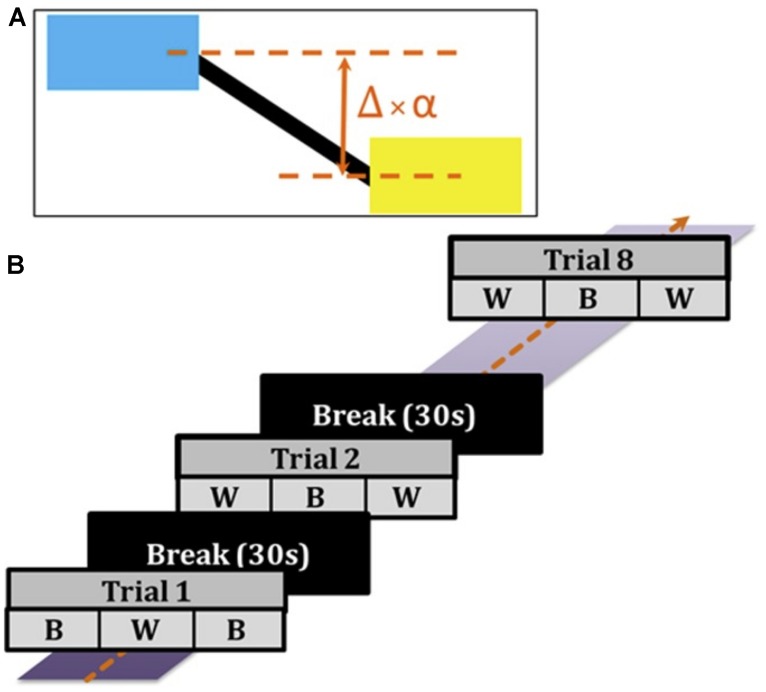
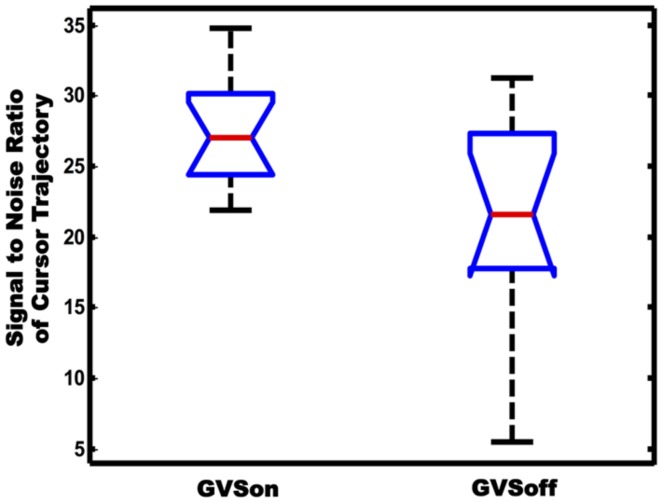
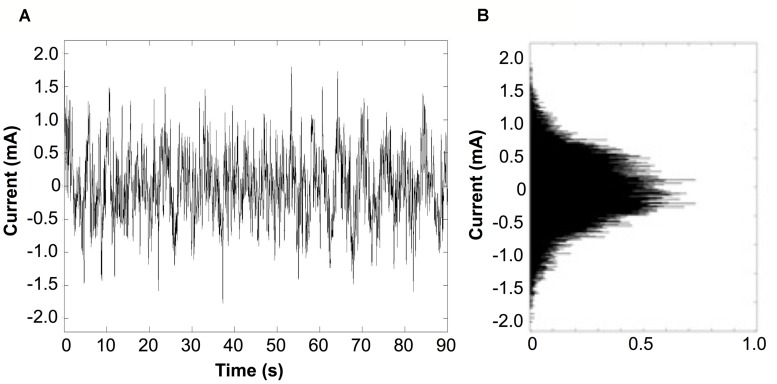
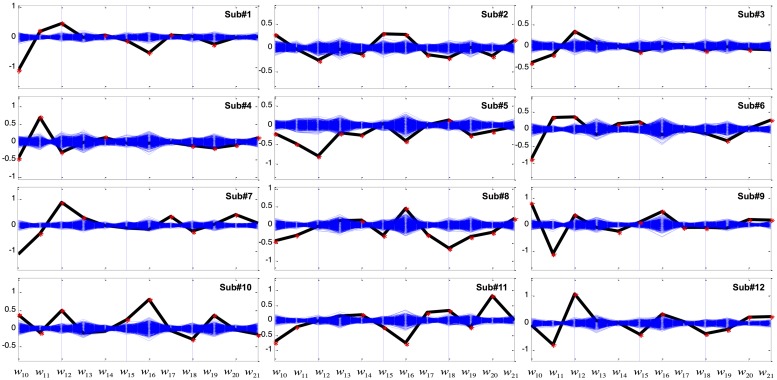
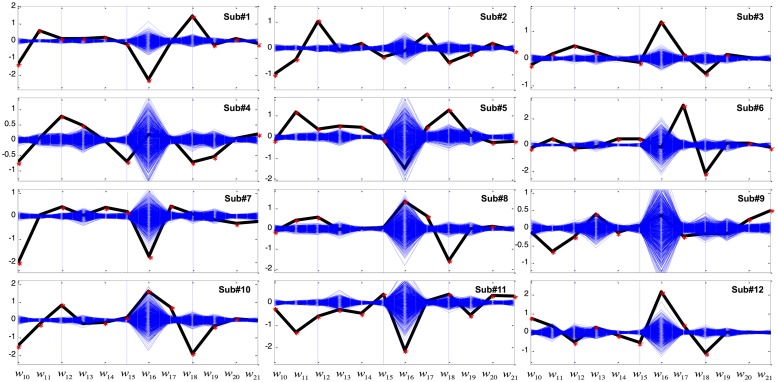
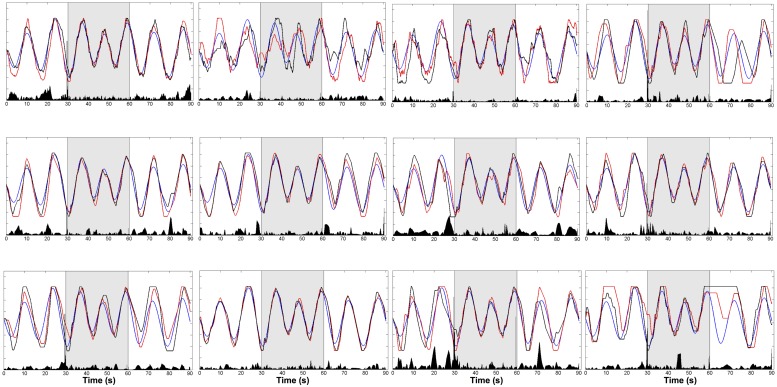
Parkinson's disease (PD) is a neurodegenerative movement disorder that is characterized clinically by slowness of movement, rigidity, tremor, postural instability, and often cognitive impairments. Recent studies have demonstrated altered cortico-basal ganglia rhythms in PD, which raises the possibility of a role for non-invasive stimulation therapies such as noisy galvanic vestibular stimulation (GVS). We applied noisy GVS to 12 mild-moderately affected PD subjects (Hoehn and Yahr 1.5-2.5) off medication while they performed a sinusoidal visuomotor joystick tracking task, which alternated between 2 task conditions depending on whether the displayed cursor position underestimated the actual error by 30% ('Better') or overestimated by 200% ('Worse'). Either sham or subthreshold, noisy GVS (0.1-10 Hz, 1/f-type power spectrum) was applied in pseudorandom order. We used exploratory (linear discriminant analysis with bootstrapping) and confirmatory (robust multivariate linear regression) methods to determine if the presence of GVS significantly affected our ability to predict cursor position based on target variables. Variables related to displayed error were robustly seen to discriminate GVS in all subjects particularly in the Worse condition. If we considered higher frequency components of the cursor trajectory as "noise," the signal-to-noise ratio of cursor trajectory was significantly increased during the GVS stimulation. The results suggest that noisy GVS influenced motor performance of the PD subjects, and we speculate that they were elicited through a combination of mechanisms: enhanced cingulate activity resulting in modulation of frontal midline theta rhythms, improved signal processing in neuromotor system via stochastic facilitation and/or enhanced "vigor" known to be deficient in PD subjects. Further work is required to determine if GVS has a selective effect on corrective submovements that could not be detected by the current analyses.
帕金森病(PD)是一种神经退行性运动障碍,其临床特征为运动迟缓、僵硬、震颤、姿势不稳,且常伴有认知障碍。最近的研究表明,帕金森病患者的皮质 - 基底神经节节律发生了改变,这增加了诸如噪声性电刺激前庭刺激(GVS)等非侵入性刺激疗法发挥作用的可能性。我们对12名轻度至中度受影响的帕金森病患者(Hoehn和Yahr分级为1.5 - 2.5)在未服药状态下进行了噪声性GVS刺激,同时他们执行一项正弦视觉运动操纵杆跟踪任务,该任务根据显示的光标位置是低估实际误差30%(“较好”)还是高估200%(“较差”)在两种任务条件之间交替。采用伪随机顺序施加假刺激或阈下噪声性GVS(0.1 - 10 Hz,1/f型功率谱)。我们使用探索性方法(带自助法的线性判别分析)和验证性方法(稳健多元线性回归)来确定GVS的存在是否显著影响我们基于目标变量预测光标位置的能力。在所有受试者中,尤其是在“较差”条件下,与显示误差相关的变量能够可靠地区分GVS。如果我们将光标轨迹的高频成分视为“噪声”,那么在GVS刺激期间,光标轨迹的信噪比显著增加。结果表明,噪声性GVS影响了帕金森病患者的运动表现,我们推测其作用机制是多种机制共同作用的结果:扣带回活动增强导致额中线θ节律的调制,通过随机促进和/或增强已知在帕金森病患者中缺乏的“活力”改善神经运动系统中的信号处理。需要进一步的研究来确定GVS是否对当前分析无法检测到的纠正性子运动有选择性影响。