Lee Soojin, Smith Paul F, Lee Won Hee, McKeown Martin J
Pacific Parkinson's Research Centre, University of British Columbia, Vancouver, BC, Canada.
Wellcome Centre for Integrative Neuroimaging, Oxford Centre for Functional MRI of the Brain (FMRIB), Nuffield Department of Clinical Neurosciences, University of Oxford, Oxford, United Kingdom.
Front Neurol. 2021 Nov 2;12:758122. doi: 10.3389/fneur.2021.758122. eCollection 2021.
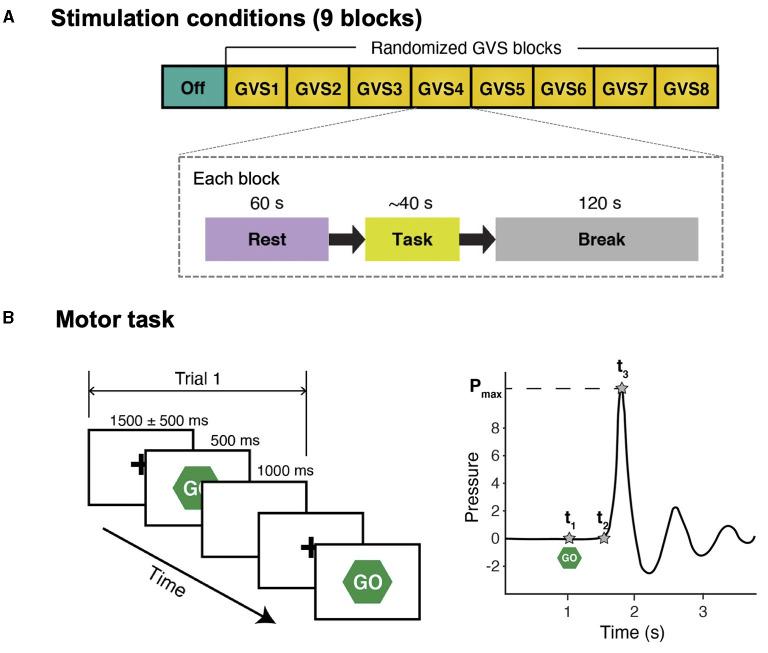
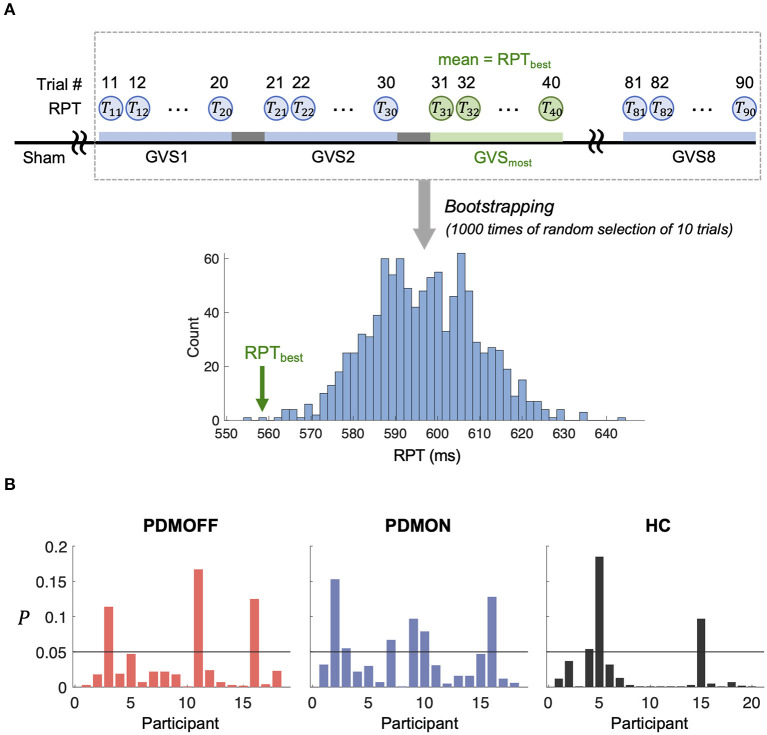
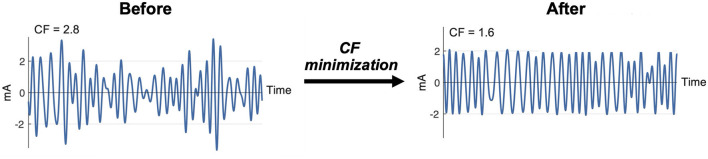
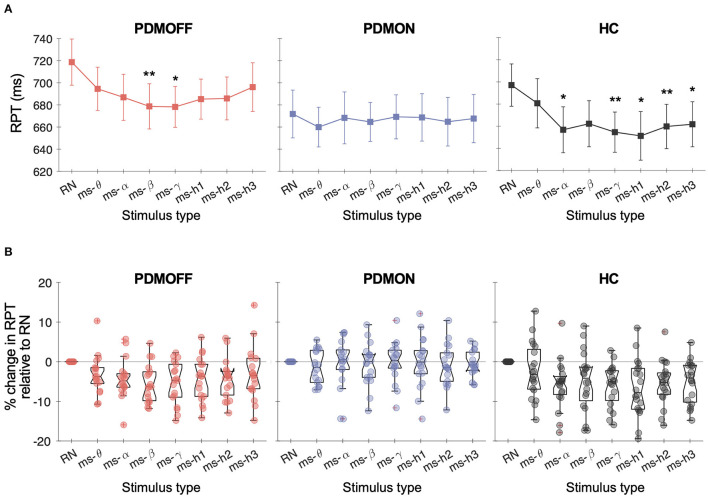
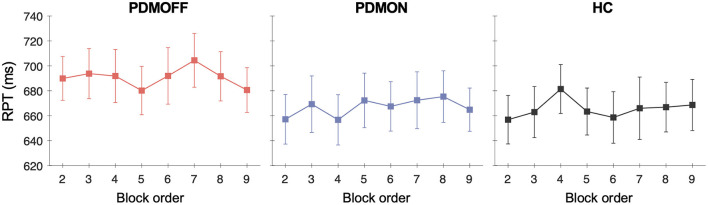
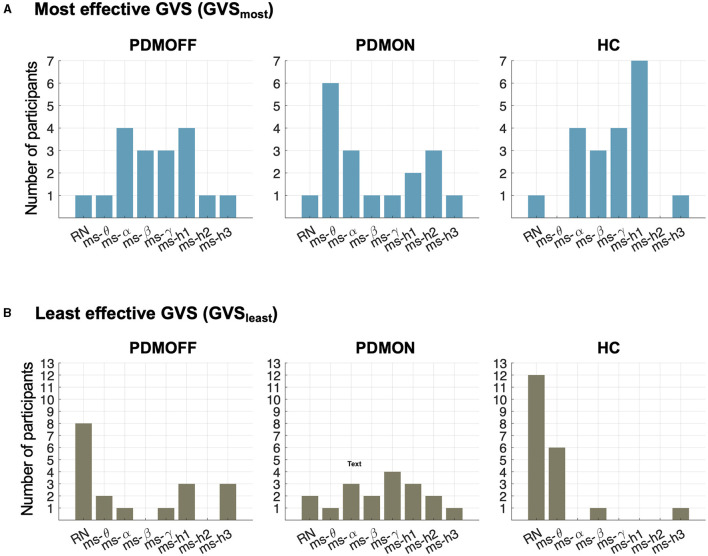
Galvanic vestibular stimulation (GVS) is being increasingly explored as a non-invasive brain stimulation technique to treat symptoms in Parkinson's disease (PD). To date, behavioral GVS effects in PD have been explored with only two stimulus types, direct current and random noise (RN). The interaction between GVS effects and anti-parkinsonian medication is unknown. In the present study, we designed multisine (ms) stimuli and investigated the effects of ms and RN GVS on motor response time. In comparison to the RN stimulus, the ms stimuli contained sinusoidal components only at a set of desired frequencies and the phases were optimized to improve participants' comfort. We hypothesized GVS motor effects were a function of stimulation frequency, and specifically, that band-limited ms-GVS would result in better motor performance than conventionally used broadband RN-GVS. Eighteen PD patients (PDMOFF/PDMON: off-/on-levodopa medication) and 20 healthy controls (HC) performed a simple reaction time task while receiving sub-threshold GVS. Each participant underwent nine stimulation conditions: , RN (4-200 Hz), ms-θ (4-8 Hz), ms-α (8-13 Hz), ms-β (13-30 Hz), ms-γ (30-50 Hz), ms-h1 (50-100 Hz), ms-h2 (100-150 Hz), and ms-h3 (150-200 Hz). The ms-γ resulted in shorter response time (RPT) in both PDMOFF and HC groups compared with the RN. In addition, the RPT of the PDMOFF group decreased during the ms-β while the RPT of the HC group decreased during the ms-α, ms-h1, ms-h2, and ms-h3. There was considerable inter-subject variability in the optimum stimulus type, although the frequency range tended to fall within 8-100 Hz. Levodopa medication significantly reduced the baseline RPT of the PD patients. In contrast to the off-medication state, GVS did not significantly change RPT of the PD patients in the on-medication state. Using band-limited ms-GVS, we demonstrated that the GVS frequency for the best RPT varied considerably across participants and was >30 Hz for half of the PDMOFF patients. Moreover, dopaminergic medication was found to influence GVS effects in PD patients. Our results indicate the common "one-size-fits-all" RN approach is suboptimal for PD, and therefore personalized stimuli aiming to address this variability is warranted to improve GVS effects.
作为一种治疗帕金森病(PD)症状的非侵入性脑刺激技术,电前庭刺激(GVS)正得到越来越多的研究。迄今为止,仅采用直流电和随机噪声(RN)这两种刺激类型对PD患者进行了GVS行为效应的研究。GVS效应与抗帕金森药物之间的相互作用尚不清楚。在本研究中,我们设计了多正弦(ms)刺激,并研究了ms和RN GVS对运动反应时间的影响。与RN刺激相比,ms刺激仅在一组期望频率上包含正弦成分,并且对相位进行了优化以提高参与者的舒适度。我们假设GVS的运动效应是刺激频率的函数,具体而言,带限ms-GVS将比传统使用的宽带RN-GVS产生更好的运动表现。18名PD患者(PD停药/服药:未服用/服用左旋多巴药物)和20名健康对照者(HC)在接受阈下GVS时执行简单反应时间任务。每位参与者接受九种刺激条件:RN(4 - 200 Hz)、ms-θ(4 - 8 Hz)、ms-α(8 - 13 Hz)、ms-β(13 - 30 Hz)、ms-γ(30 - 50 Hz)、ms-h1(50 - 100 Hz)、ms-h2(100 - 150 Hz)和ms-h3(150 - 200 Hz)。与RN相比,ms-γ在PD停药组和HC组中均导致反应时间(RPT)缩短。此外,PD停药组在ms-β期间RPT缩短,而HC组在ms-α、ms-h1、ms-h2和ms-h3期间RPT缩短。尽管最佳刺激类型的频率范围倾向于落在8 - 100 Hz内,但个体间在最佳刺激类型上存在相当大的变异性。左旋多巴药物显著降低了PD患者的基线RPT。与未服药状态相比,GVS在服药状态下并未显著改变PD患者的RPT。使用带限ms-GVS,我们证明最佳RPT的GVS频率在参与者之间差异很大,并且对于一半的PD停药患者大于30 Hz。此外,发现多巴胺能药物会影响PD患者的GVS效应。我们的结果表明,常见的“一刀切”RN方法对PD并不理想,因此需要个性化刺激来解决这种变异性,以改善GVS效应。