Zhou Yu, Gu Haitao, Xu Yan, Li Fan, Kuang Shaojing, Wang Zhigang, Zhou Xiyuan, Ma Huafeng, Li Pan, Zheng Yuanyi, Ran Haitao, Jian Jia, Zhao Yajing, Song Weixiang, Wang Qiushi, Wang Dong
1. Chongqing Key Laboratory of Ultrasound Molecular Imaging, Institute of Ultrasound Imaging, The Second Affiliated Hospital of Chongqing Medical University, Chongqing 400010, P. R. China.
3. Department of Gastrointestinal & Anorectal Surgery, The Second Affiliated Hospital of Chongqing Medical University, Chongqing 400010, P. R. China.
Theranostics. 2015 Feb 1;5(4):399-417. doi: 10.7150/thno.10351. eCollection 2015.
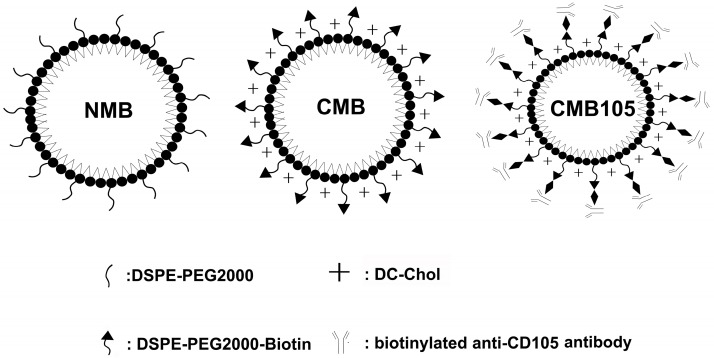
This study aimed to develop targeted cationic microbubbles conjugated with a CD105 antibody (CMB105) for use in targeted vascular endothelial cell gene therapy and ultrasound imaging. We compared the results with untargeted cationic microbubbles (CMB) and neutral microbubbles (NMB).
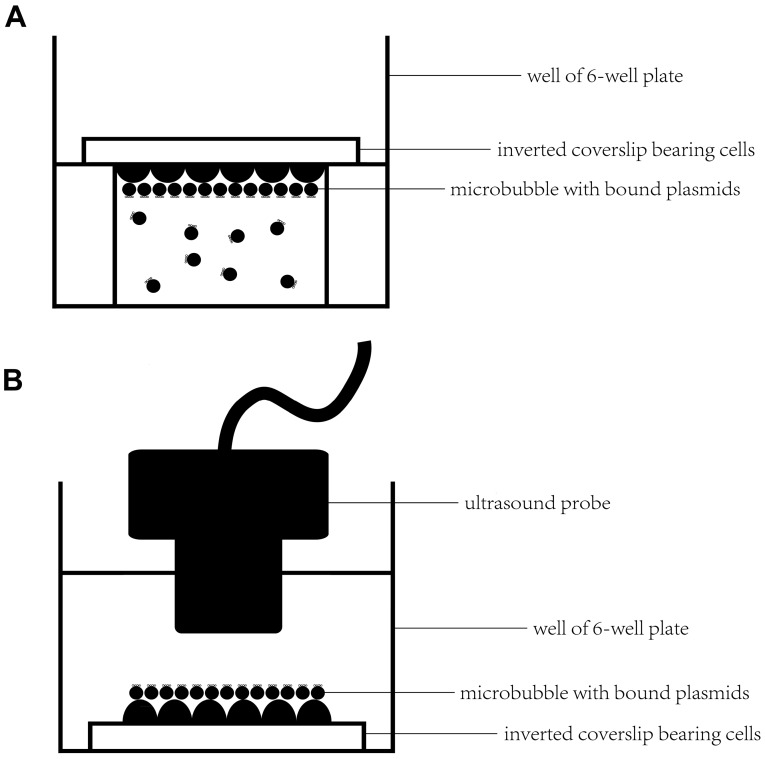
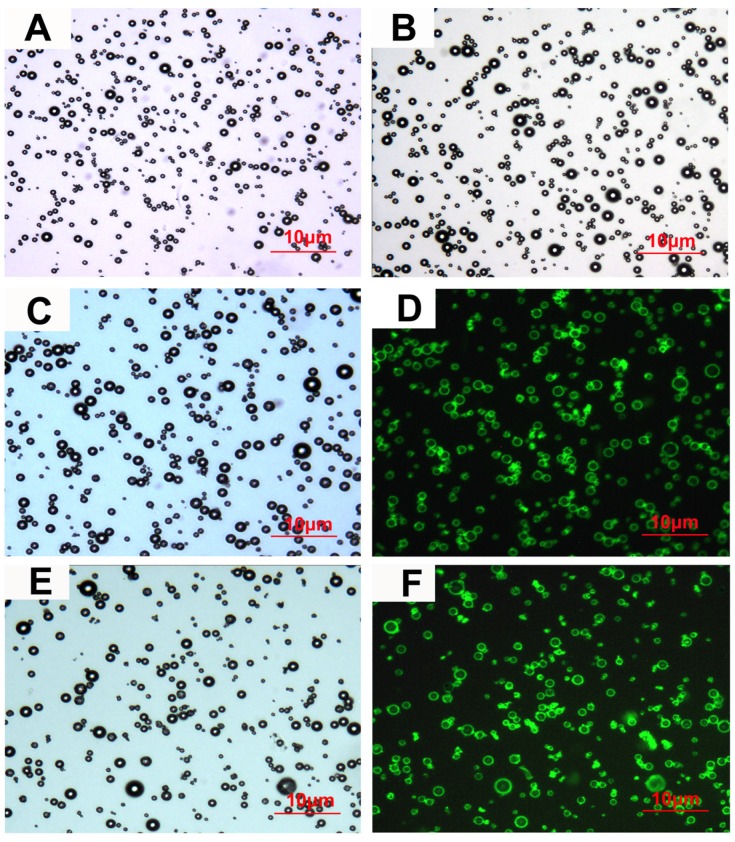
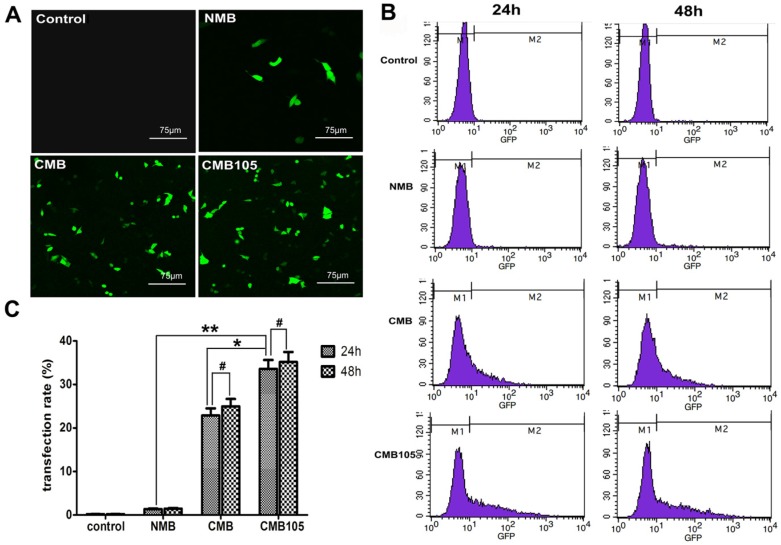
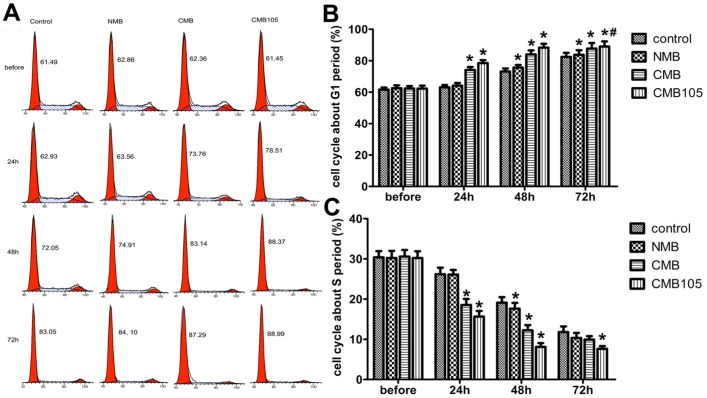
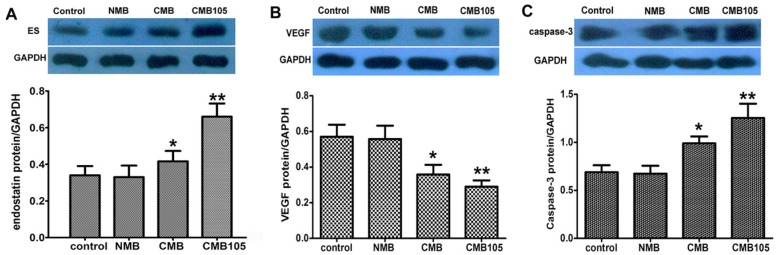
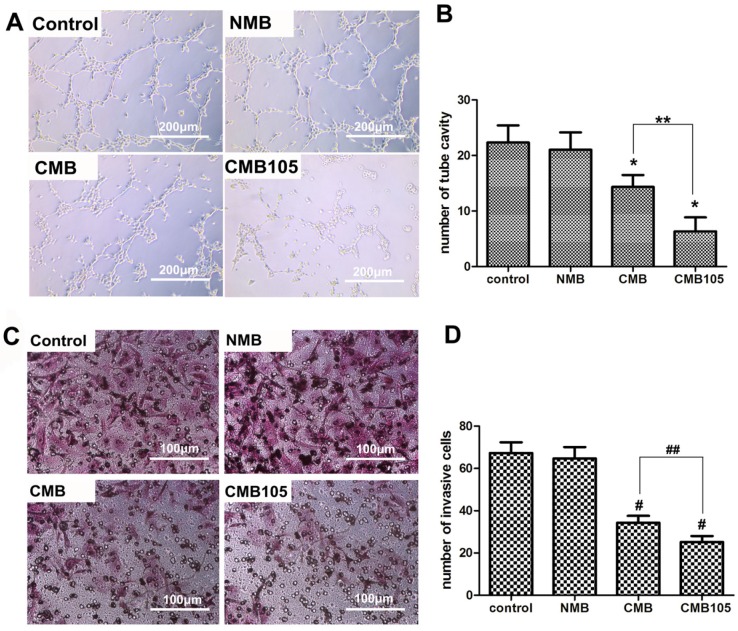
CMB105 were prepared and compared with untargeted CMB and NMB. First, the microbubbles were characterized in terms of size, zeta-potential, antibody binding ability and plasmid DNA loading capacity. A tumor model of subcutaneous breast cancer in nude mice was used for our experiments. The ability of different types of microbubbles to target HUVECs in vitro and tumor neovascularization in vivo was measured. The endostatin gene was selected for its outstanding antiangiogenesis effect. For in vitro experiments, the transfection efficiency and cell cycle were analyzed using flow cytometry, and the transcription and expression of endostatin were measured by qPCR and Western blotting, respectively. Vascular tube cavity formation and tumor cell invasion were used to evaluate the antiangiogenesis gene therapy efficiency in vitro. Tumors were exposed to ultrasound irradiation with different types of microbubbles, and the gene therapy effects were investigated by detecting apoptosis induction and changes in tumor volume.
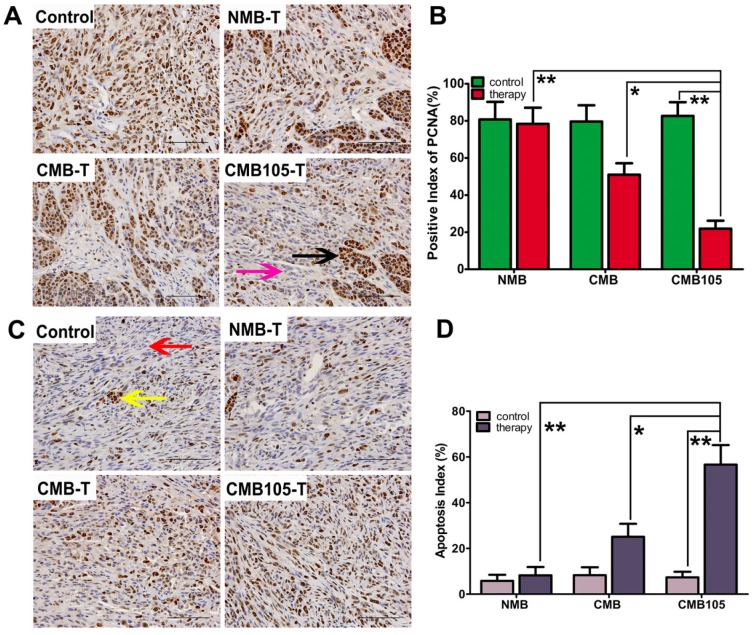
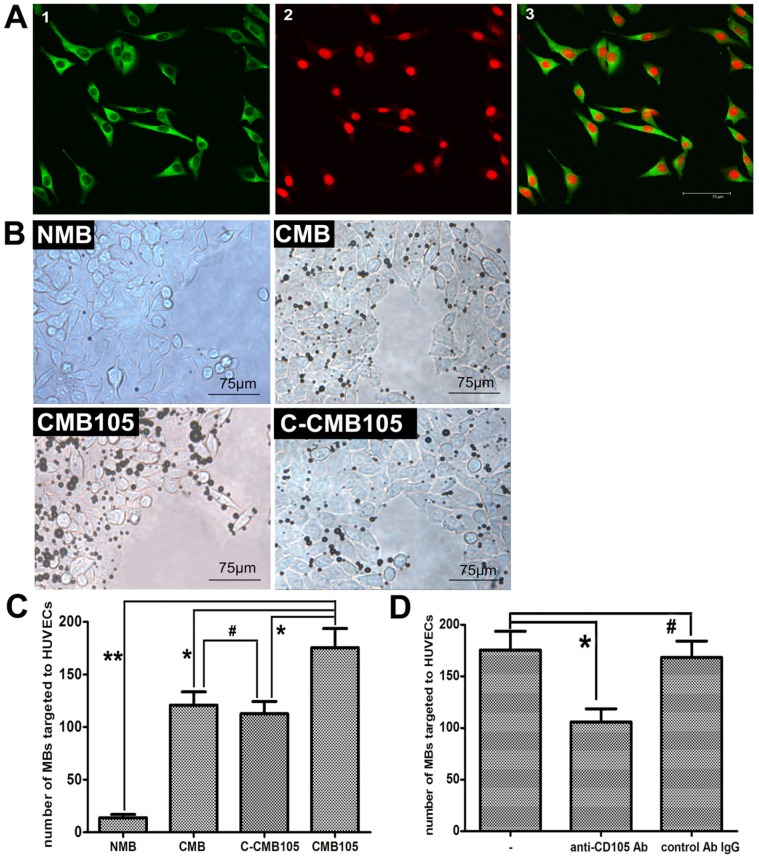
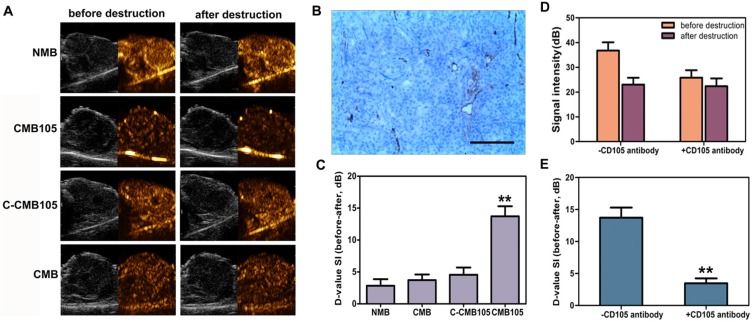
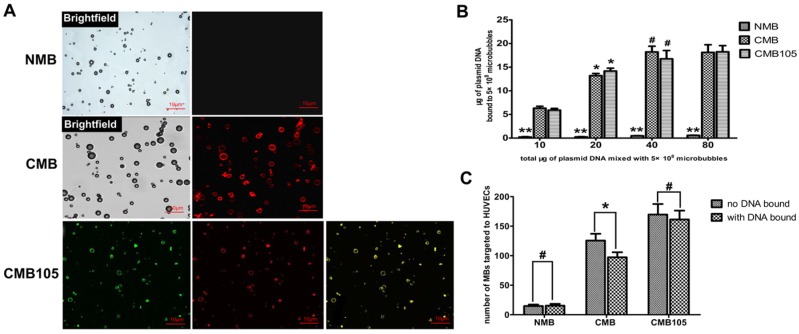
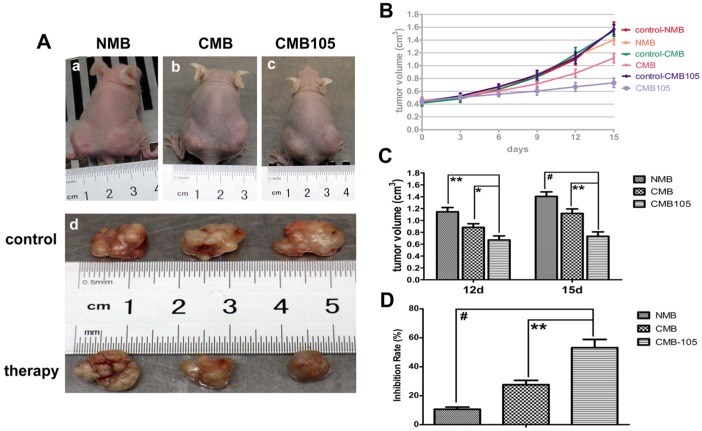
CMB105 and CMB differed significantly from NMB in terms of zeta-potential, and the DNA loading capacities were 16.76±1.75 μg, 18.21±1.22 μg, and 0.48±0.04 μg per 5×10(8) microbubbles, respectively. The charge coupling of plasmid DNA to CMB105 was not affected by the presence of the CD105 antibody. Both CMB105 and CMB could target to HUVECs in vitro, whereas only CMB105 could target to tumor neovascularization in vivo. In in vitro experiments, the transfection efficiency of CMB105 was 24.7-fold higher than the transfection efficiency of NMB and 1.47-fold higher than the transfection efficiency of CMB (P<0.05). With ultrasound-targeted microbubble destruction (UTMD)-mediated gene therapy, the transcription and expression of endostatin were the highest in the CMB105 group (P<0.001); the antiangiogenesis effect and inhibition of tumor cells invasion was better with CMB105 than CMB or NMB in vitro (P<0.01). After gene therapy, the tumor volumes of CMB105 group were significantly smaller than that of CMB and NMB, and many tumor cells had begun apoptosis in the CMB105 group, which had the highest apoptosis index (P<0.001).
As a contrast agent and plasmid carrier, CMB105 can be used not only for targeted ultrasound imaging but also for targeted gene therapy both in vitro and in vivo. The plasmid DNA binding ability of the CMB was not affected by conjugation of the CMB with the CD105 antibody, and because of its targeting ability, the gene transfection efficiency and therapeutic effect were better compared with the untargeted CMB and NMB. The advantages of targeted gene therapy with CMB105 in vivo were more prominent than with CMB or NMB because neither can target the endothelia in vivo.
本研究旨在研发与CD105抗体偶联的靶向阳离子微泡(CMB105),用于靶向血管内皮细胞基因治疗及超声成像。我们将结果与非靶向阳离子微泡(CMB)和中性微泡(NMB)进行了比较。
制备CMB105并与非靶向CMB和NMB进行比较。首先,对微泡的大小、zeta电位、抗体结合能力和质粒DNA负载能力进行了表征。使用裸鼠皮下乳腺癌肿瘤模型进行实验。测量了不同类型微泡在体外靶向人脐静脉内皮细胞(HUVECs)和在体内靶向肿瘤新生血管的能力。选择内皮抑素基因是因其具有出色的抗血管生成作用。对于体外实验,使用流式细胞术分析转染效率和细胞周期,分别通过qPCR和蛋白质免疫印迹法测量内皮抑素的转录和表达。利用血管管腔形成和肿瘤细胞侵袭来评估体外抗血管生成基因治疗效率。用不同类型微泡对肿瘤进行超声照射,通过检测凋亡诱导和肿瘤体积变化来研究基因治疗效果。
CMB105和CMB在zeta电位方面与NMB有显著差异,每5×10(8)个微泡的DNA负载量分别为16.76±1.75 μg、18.21±1.22 μg和0.48±0.04 μg。质粒DNA与CMB105的电荷偶联不受CD105抗体存在的影响。CMB105和CMB在体外均能靶向HUVECs,而在体内只有CMB105能靶向肿瘤新生血管。在体外实验中,CMB105的转染效率比NMB高24.7倍,比CMB高1.47倍(P<0.05)。在超声靶向微泡破坏(UTMD)介导的基因治疗中,CMB105组内皮抑素的转录和表达最高(P<0.001);在体外,CMB105的抗血管生成作用和对肿瘤细胞侵袭的抑制作用比CMB或NMB更好(P<0.01)。基因治疗后,CMB105组的肿瘤体积明显小于CMB和NMB组,且CMB105组许多肿瘤细胞已开始凋亡,其凋亡指数最高(P<0.001)。
作为造影剂和质粒载体,CMB105不仅可用于靶向超声成像,还可用于体外和体内的靶向基因治疗。CMB与CD105抗体偶联后其质粒DNA结合能力不受影响,且由于其靶向能力,与非靶向CMB和NMB相比,基因转染效率和治疗效果更好。CMB105在体内进行靶向基因治疗的优势比CMB或NMB更突出,因为两者在体内均不能靶向内皮细胞。