
由核骨架蛋白核纤层蛋白B1控制的细胞核中的淀粉样蛋白结构域揭示了汞神经毒性的新途径。
Amyloid domains in the cell nucleus controlled by nucleoskeletal protein lamin B1 reveal a new pathway of mercury neurotoxicity.
作者信息
Arnhold Florian, Gührs Karl-Heinz, von Mikecz Anna
机构信息
IUF-Leibniz Research Institute for Environmental Medicine at Heinrich-Heine-University Duesseldorf , Duesseldorf , Germany.
CF Proteomics, FLI-Leibniz-Institute for Age Research, Fritz-Lipman-Institute e.V. , Jena , Germany.
出版信息
PeerJ. 2015 Feb 5;3:e754. doi: 10.7717/peerj.754. eCollection 2015.
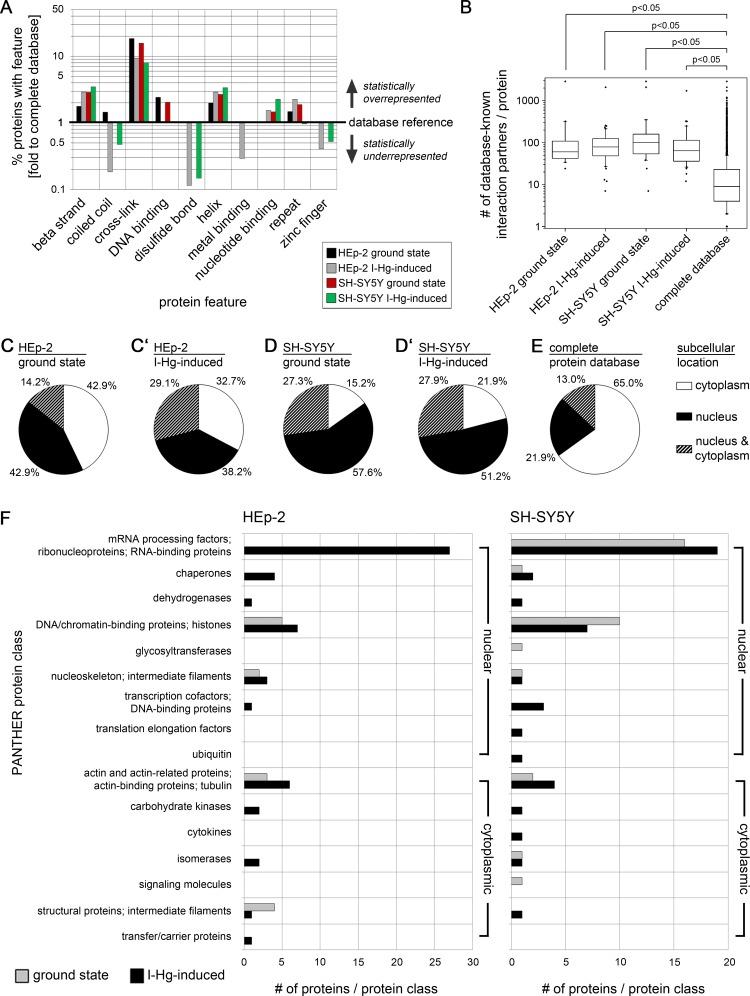
Mercury (Hg) is a bioaccumulating trace metal that globally circulates the atmosphere and waters in its elemental, inorganic and organic chemical forms. While Hg represents a notorious neurotoxicant, the underlying cellular pathways are insufficiently understood. We identify amyloid protein aggregation in the cell nucleus as a novel pathway of Hg-bio-interactions. By mass spectrometry of purified protein aggregates, a subset of spliceosomal components and nucleoskeletal protein lamin B1 were detected as constituent parts of an Hg-induced nuclear aggregome network. The aggregome network was located by confocal imaging of amyloid-specific antibodies and dyes to amyloid cores within splicing-speckles that additionally recruit components of the ubiquitin-proteasome system. Hg significantly enhances global proteasomal activity in the nucleus, suggesting that formation of amyloid speckles plays a role in maintenance of protein homeostasis. RNAi knock down showed that lamin B1 for its part regulates amyloid speckle formation and thus likewise participates in nuclear protein homeostasis. As the Hg-induced cascade of interactions between the nucleoskeleton and protein homeostasis reduces neuronal signalling, amyloid fibrillation in the cell nucleus is introduced as a feature of Hg-neurotoxicity that opens new avenues of future research. Similar to protein aggregation events in the cytoplasm that are controlled by the cytoskeleton, amyloid fibrillation of nuclear proteins may be driven by the nucleoskeleton.
汞(Hg)是一种具有生物累积性的痕量金属,以其元素、无机和有机化学形式在全球大气和水域中循环。虽然汞是一种臭名昭著的神经毒素,但其潜在的细胞途径尚未得到充分了解。我们将细胞核中的淀粉样蛋白聚集确定为汞与生物相互作用的一种新途径。通过对纯化的蛋白质聚集体进行质谱分析,检测到剪接体成分的一个子集和核骨架蛋白核纤层蛋白B1作为汞诱导的核聚集组网络的组成部分。通过对淀粉样特异性抗体和染料进行共聚焦成像,将聚集组网络定位到剪接斑点内的淀粉样核心,这些核心还募集泛素-蛋白酶体系统的成分。汞显著增强细胞核中的整体蛋白酶体活性,这表明淀粉样斑点的形成在维持蛋白质稳态中起作用。RNA干扰敲低实验表明,核纤层蛋白B1本身调节淀粉样斑点的形成,因此同样参与核蛋白稳态。由于汞诱导的核骨架与蛋白质稳态之间的相互作用级联降低了神经元信号传导,细胞核中的淀粉样纤维形成被引入作为汞神经毒性的一个特征,这为未来的研究开辟了新途径。类似于由细胞骨架控制的细胞质中的蛋白质聚集事件,核蛋白的淀粉样纤维形成可能由核骨架驱动。



 Zotero 插件