Mokaleng Botshelo B, Ebenhan Thomas, Ramesh Suhas, Govender Thavendran, Kruger Hendrik G, Parboosing Raveen, Hazari Puja P, Mishra Anil K, Marjanovic-Painter Biljana, Zeevaart Jan R, Sathekge Mike M
Department of Nuclear Medicine, University of Pretoria & Steve Biko Academic Hospital, Corner Malherbe and Steve Biko Road, Pretoria 0001, South Africa.
Department of Nuclear Medicine, University of Pretoria & Steve Biko Academic Hospital, Corner Malherbe and Steve Biko Road, Pretoria 0001, South Africa ; School of Chemistry and Physics, Westville Campus, University Road, Westville, Durban 3630, South Africa.
Biomed Res Int. 2015;2015:284354. doi: 10.1155/2015/284354. Epub 2015 Jan 28.
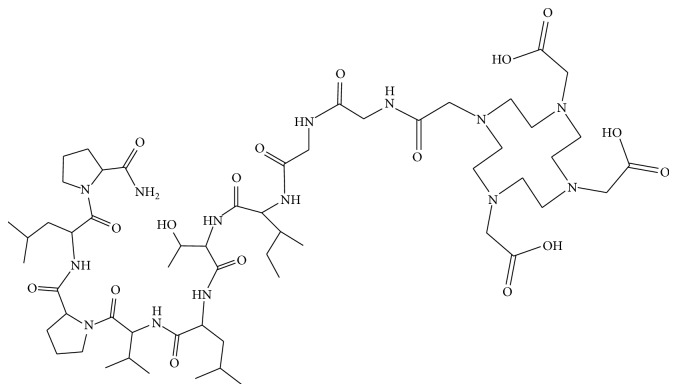
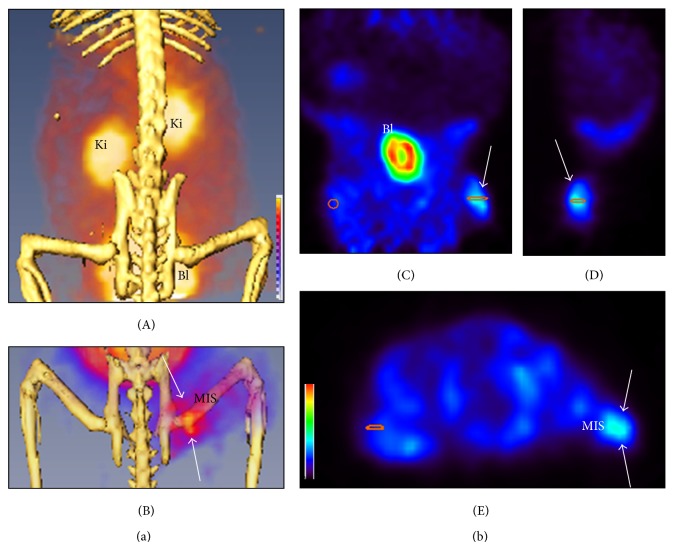
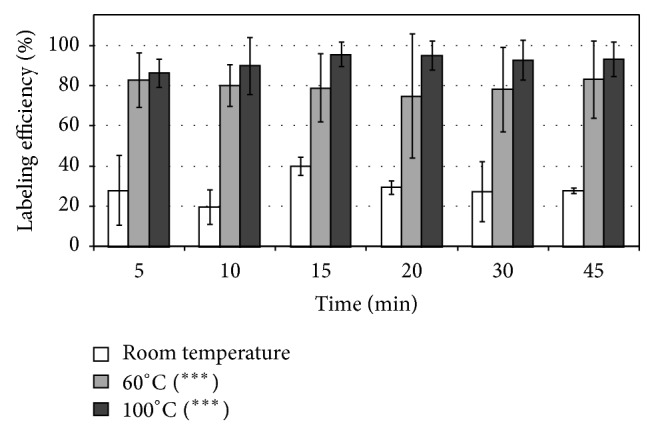
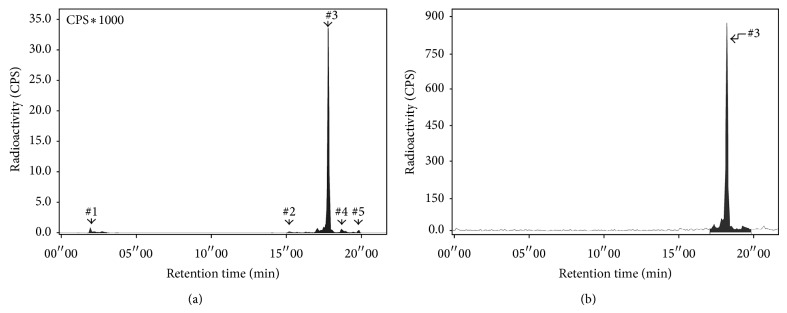
Noninvasive imaging is a powerful tool for early diagnosis and monitoring of various disease processes, such as infections. An alarming shortage of infection-selective radiopharmaceuticals exists for overcoming the diagnostic limitations with unspecific tracers such as (67/68)Ga-citrate or (18)F-FDG. We report here TBIA101, an antimicrobial peptide derivative that was conjugated to DOTA and radiolabeled with (68)Ga for a subsequent in vitro assessment and in vivo infection imaging using Escherichia coli-bearing mice by targeting bacterial lipopolysaccharides with PET/CT. Following DOTA-conjugation, the compound was verified for its cytotoxic and bacterial binding behaviour and compound stability, followed by (68)Gallium-radiolabeling. µPET/CT using (68)Ga-DOTA-TBIA101 was employed to detect muscular E. coli-infection in BALB/c mice, as warranted by the in vitro results. (68)Ga-DOTA-TBIA101-PET detected E. coli-infected muscle tissue (SUV = 1.3-2.4) > noninfected thighs (P = 0.322) > forearm muscles (P = 0.092) > background (P = 0.021) in the same animal. Normalization of the infected thigh muscle to reference tissue showed a ratio of 3.0 ± 0.8 and a ratio of 2.3 ± 0.6 compared to the identical healthy tissue. The majority of the activity was cleared by renal excretion. The latter findings warrant further preclinical imaging studies of greater depth, as the DOTA-conjugation did not compromise the TBIA101's capacity as targeting vector.
非侵入性成像技术是早期诊断和监测各种疾病进程(如感染)的有力工具。目前,用于克服诸如(67/68)Ga - 柠檬酸盐或(18)F - FDG等非特异性示踪剂诊断局限性的感染选择性放射性药物严重短缺。我们在此报告TBIA101,一种抗菌肽衍生物,其与DOTA偶联并用(68)Ga进行放射性标记,随后通过PET/CT靶向细菌脂多糖,对携带大肠杆菌的小鼠进行体外评估和体内感染成像。在与DOTA偶联后,对该化合物的细胞毒性、细菌结合行为和化合物稳定性进行了验证,随后进行(68)镓放射性标记。根据体外实验结果,采用(68)Ga - DOTA - TBIA101的μPET/CT检测BALB/c小鼠肌肉中的大肠杆菌感染。在同一只动物中,(68)Ga - DOTA - TBIA101 - PET检测到大肠杆菌感染的肌肉组织(SUV = 1.3 - 2.4)>未感染的大腿(P = 0.322)>前臂肌肉(P = 0.092)>背景(P = 0.021)。将感染的大腿肌肉与参考组织进行归一化处理后,与相同健康组织相比,其比值为3.0±0.8和2.3±0.6。大部分活性通过肾脏排泄清除。由于DOTA偶联并未损害TBIA101作为靶向载体的能力,后一项发现值得进行更深入的临床前成像研究。