Brambilla Elisa, Sclavi Bianca
LBPA, UMR 8113 du CNRS, Ecole Normale Supérieure de Cachan, Cachan, France School of Engineering and Science, Jacobs University Bremen, Bremen, Germany.
LBPA, UMR 8113 du CNRS, Ecole Normale Supérieure de Cachan, Cachan, France
G3 (Bethesda). 2015 Feb 19;5(4):605-14. doi: 10.1534/g3.114.016139.
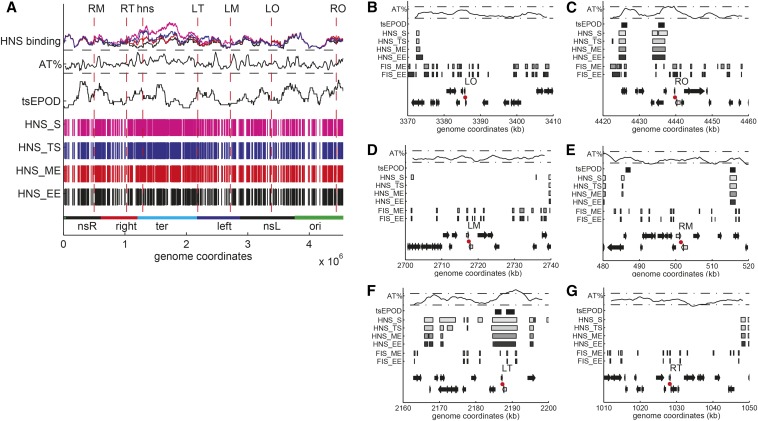
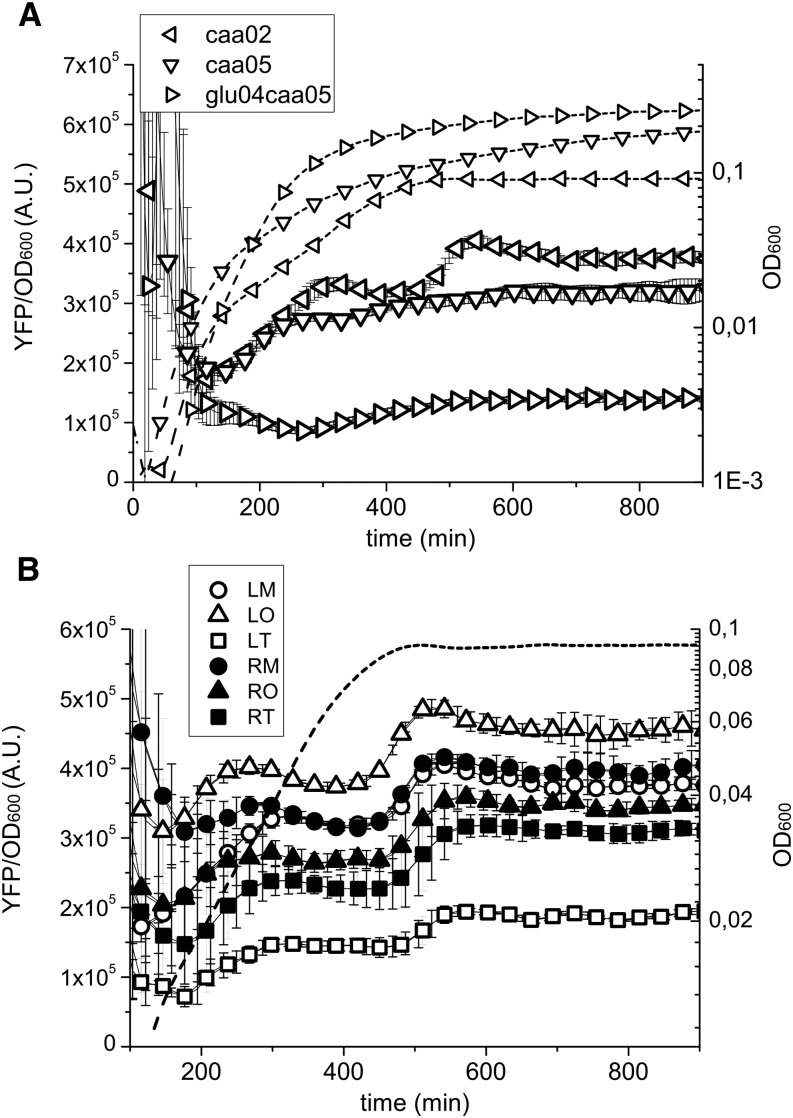
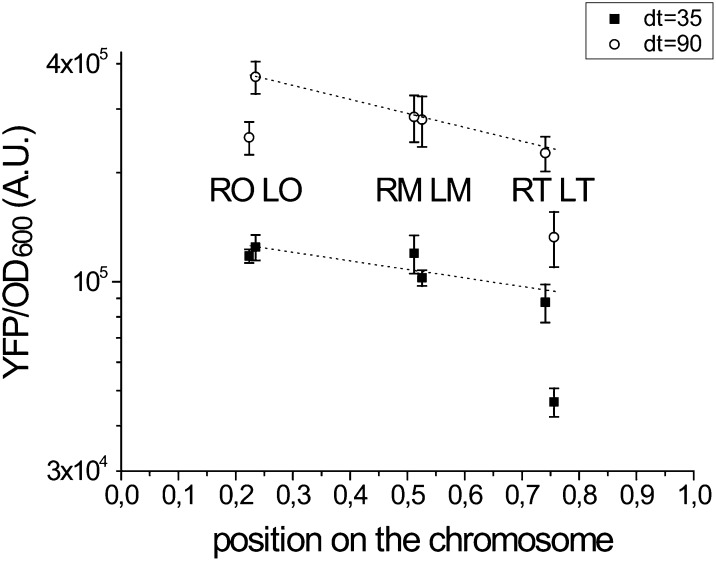
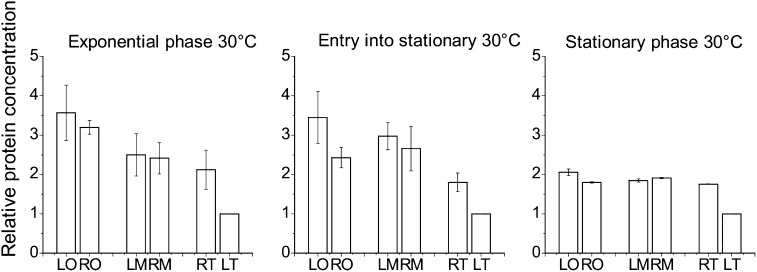
Cellular adaptation to changing environmental conditions requires the coordinated regulation of expression of large sets of genes by global regulatory factors such as nucleoid associated proteins. Although in eukaryotic cells genomic position is known to play an important role in regulation of gene expression, it remains to be established whether in bacterial cells there is an influence of chromosomal position on the efficiency of these global regulators. Here we show for the first time that genome position can affect transcription activity of a promoter regulated by the histone-like nucleoid-structuring protein (H-NS), a global regulator of bacterial transcription and genome organization. We have used as a local reporter of H-NS activity the level of expression of a fluorescent reporter protein under control of an H-NS-regulated promoter (Phns) at different sites along the genome. Our results show that the activity of the Phns promoter depends on whether it is placed within the AT-rich regions of the genome that are known to be bound preferentially by H-NS. This modulation of gene expression moreover depends on the growth phase and the growth rate of the cells, reflecting the changes taking place in the relative abundance of different nucleoid proteins and the inherent heterogeneous organization of the nucleoid. Genomic position can thus play a significant role in the adaptation of the cells to environmental changes, providing a fitness advantage that can explain the selection of a gene's position during evolution.
细胞对不断变化的环境条件的适应需要通过诸如类核相关蛋白等全局调节因子对大量基因的表达进行协调调节。虽然在真核细胞中已知基因组位置在基因表达调控中起重要作用,但细菌细胞中染色体位置是否会影响这些全局调节因子的效率仍有待确定。在这里,我们首次表明基因组位置可以影响由组蛋白样类核结构蛋白(H-NS)调控的启动子的转录活性,H-NS是细菌转录和基因组组织的全局调节因子。我们使用沿基因组不同位点的H-NS调控启动子(Phns)控制下的荧光报告蛋白的表达水平作为H-NS活性的局部报告。我们的结果表明,Phns启动子的活性取决于它是否位于已知优先被H-NS结合的基因组富含AT的区域内。此外,这种基因表达的调节取决于细胞的生长阶段和生长速率,反映了不同类核蛋白相对丰度的变化以及类核固有的异质组织。因此,基因组位置在细胞适应环境变化中可以发挥重要作用,提供一种适应性优势,这可以解释进化过程中基因位置的选择。