Itakura Go, Kobayashi Yoshiomi, Nishimura Soraya, Iwai Hiroki, Takano Morito, Iwanami Akio, Toyama Yoshiaki, Okano Hideyuki, Nakamura Masaya
Department of Orthopaedic Surgery, Keio University School of Medicine, 35 Shinanomachi, Shinjuku, Tokyo, 160-8582, Japan; Department of Physiology, Keio University School of Medicine, 35 Shinanomachi, Shinjuku, Tokyo, 160-8582, Japan.
Department of Orthopaedic Surgery, Keio University School of Medicine, 35 Shinanomachi, Shinjuku, Tokyo, 160-8582, Japan.
PLoS One. 2015 Feb 23;10(2):e0116413. doi: 10.1371/journal.pone.0116413. eCollection 2015.
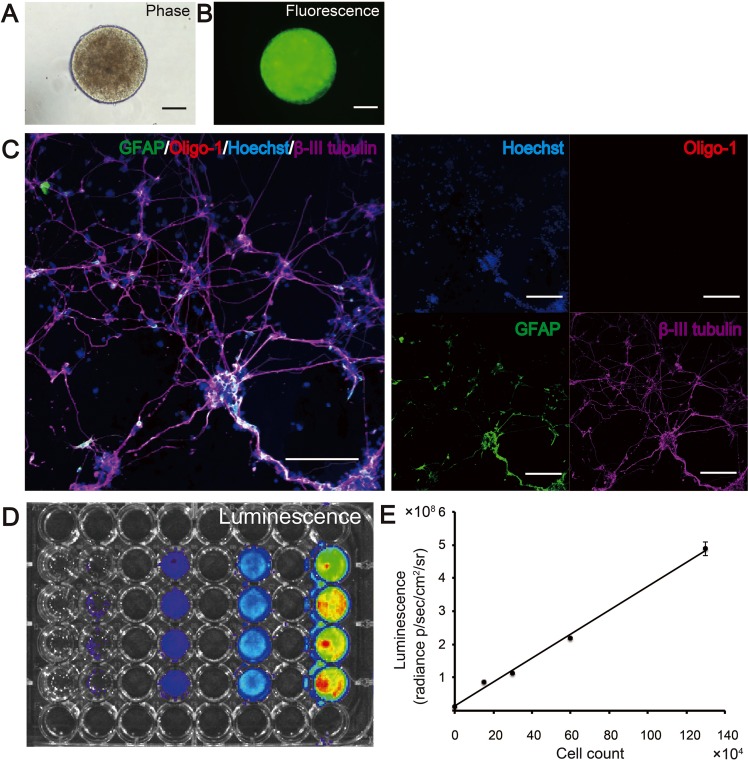
Our previous work reported functional recovery after transplantation of mouse and human induced pluripotent stem cell-derived neural stem/progenitor cells (hiPSC-NS/PCs) into rodent models of spinal cord injury (SCI). Although hiPSC-NS/PCs proved useful for the treatment of SCI, the tumorigenicity of the transplanted cells must be resolved before they can be used in clinical applications. The current study sought to determine the feasibility of ablation of the tumors formed after hiPSC-NS/PC transplantation through immunoregulation. Tumorigenic hiPSC-NS/PCs were transplanted into the intact spinal cords of immunocompetent BALB/cA mice with or without immunosuppressant treatment. In vivo bioluminescence imaging was used to evaluate the chronological survival and growth of the transplanted cells. The graft survival rate was 0% in the group without immunosuppressants versus 100% in the group with immunosuppressants. Most of the mice that received immunosuppressants exhibited hind-limb paralysis owing to tumor growth at 3 months after iPSC-NS/PC transplantation. Histological analysis showed that the tumors shared certain characteristics with low-grade gliomas rather than with teratomas. After confirming the progression of the tumors in immunosuppressed mice, the immunosuppressant agents were discontinued, resulting in the complete rejection of iPSC-NS/PC-derived masses within 42 days after drug cessation. In accordance with the tumor rejection, hind-limb motor function was recovered in all of the mice. Moreover, infiltration of microglia and lymphocytes was observed during the course of tumor rejection, along with apoptosis of iPSC-NS/PC-generated cells. Thus, immune rejection can be used as a fail-safe system against potential tumorigenicity after transplantation of iPSC-NS/PCs to treat SCI.
我们之前的研究报道了将小鼠和人诱导多能干细胞衍生的神经干细胞/祖细胞(hiPSC-NS/PCs)移植到脊髓损伤(SCI)啮齿动物模型后功能的恢复情况。尽管hiPSC-NS/PCs被证明对SCI治疗有用,但在将其用于临床应用之前,必须解决移植细胞的致瘤性问题。当前的研究旨在通过免疫调节来确定消融hiPSC-NS/PC移植后形成的肿瘤的可行性。将致瘤性hiPSC-NS/PCs移植到有免疫活性的BALB/cA小鼠的完整脊髓中,部分小鼠接受免疫抑制治疗。采用体内生物发光成像技术评估移植细胞的生存和生长情况。未使用免疫抑制剂组的移植物存活率为0%,而使用免疫抑制剂组为100%。大多数接受免疫抑制剂治疗的小鼠在iPSC-NS/PC移植后3个月时因肿瘤生长而出现后肢麻痹。组织学分析表明,这些肿瘤具有低级别胶质瘤的某些特征,而非畸胎瘤的特征。在确认免疫抑制小鼠体内肿瘤进展后,停止使用免疫抑制剂,结果在停药后42天内iPSC-NS/PC衍生的肿块被完全排斥。随着肿瘤被排斥,所有小鼠的后肢运动功能均得以恢复。此外,在肿瘤排斥过程中观察到小胶质细胞和淋巴细胞浸润,同时iPSC-NS/PC生成的细胞发生凋亡。因此,免疫排斥可作为一种安全保障系统,防止iPSC-NS/PCs移植治疗SCI后出现潜在的致瘤性。