Department of Neuroscience Rita Levi-Montalcini, University of Turin, Via Cherasco 15, Torino, Italy.
Neuroscience Institute Cavalieri Ottolenghi (NICO), 10043, Orbassano, Torino, Italy.
Sci Rep. 2021 Jan 12;11(1):651. doi: 10.1038/s41598-020-79502-9.
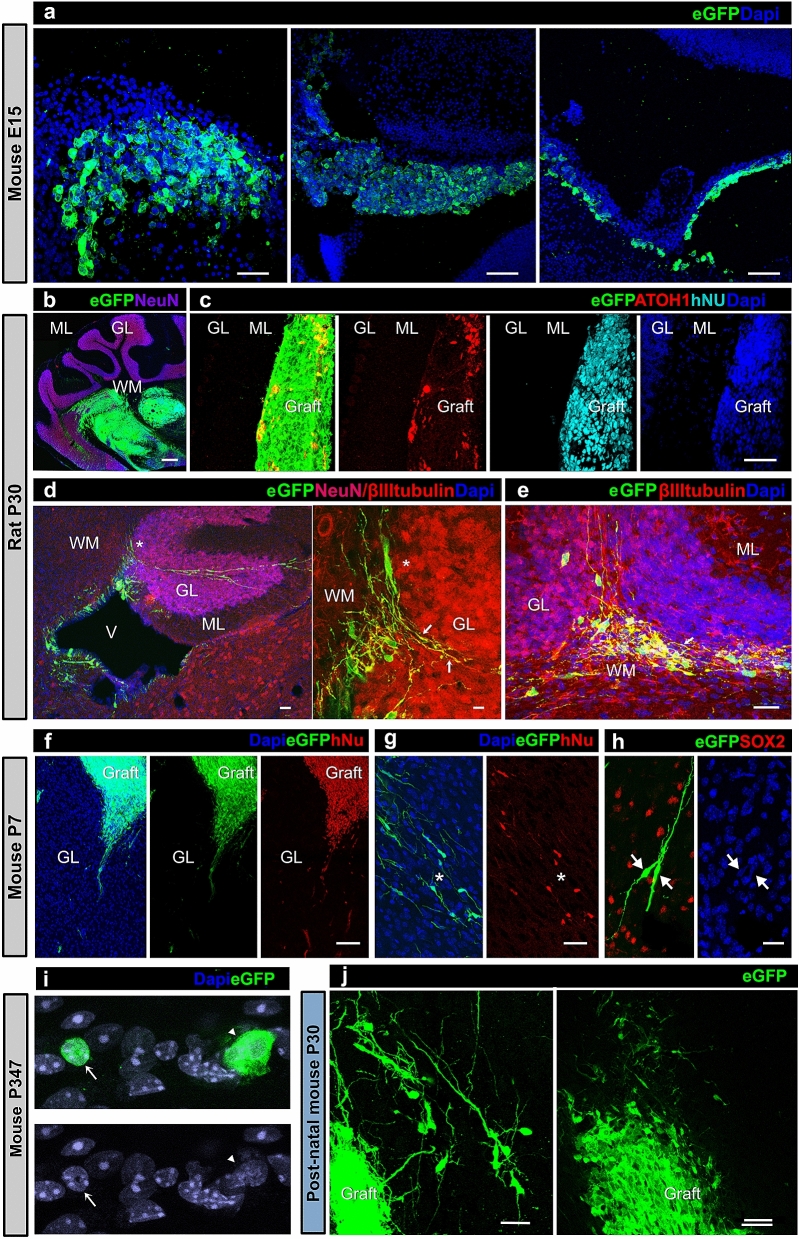
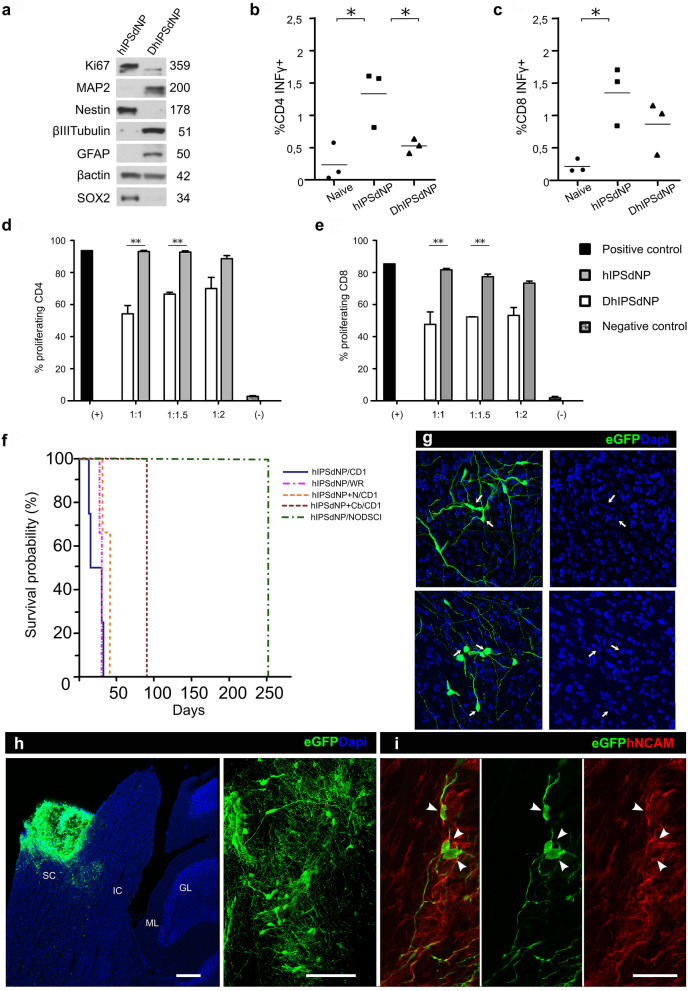
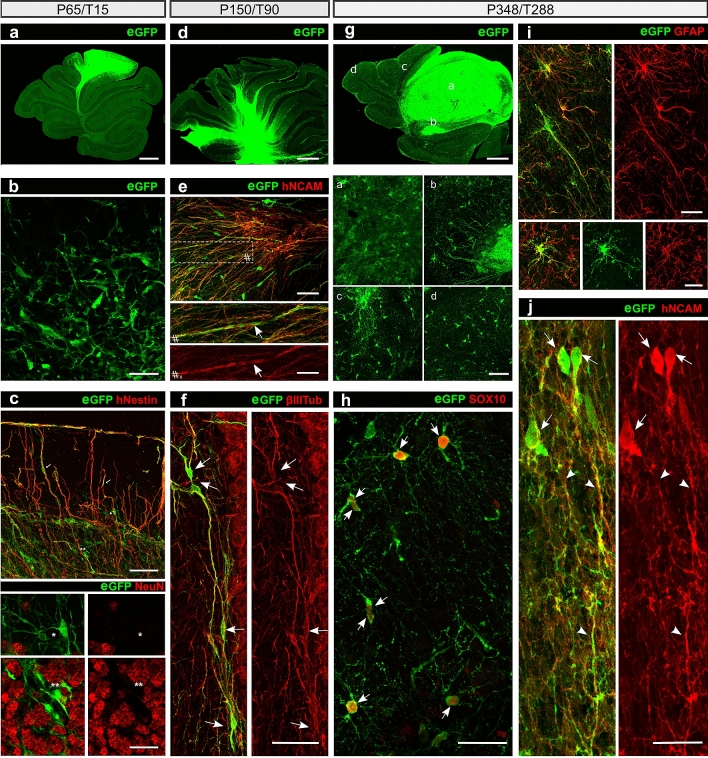
We xeno-transplanted human neural precursor cells derived from induced pluripotent stem cells into the cerebellum and brainstem of mice and rats during prenatal development or the first postnatal week. The transplants survived and started to differentiate up to 1 month after birth when they were rejected by both species. Extended survival and differentiation of the same cells were obtained only when they were transplanted in NOD-SCID mice. Transplants of human neural precursor cells mixed with the same cells after partial in vitro differentiation or with a cellular extract obtained from adult rat cerebellum increased survival of the xeno-graft beyond one month. These findings are consistent with the hypothesis that the slower pace of differentiation of human neural precursors compared to that of rodents restricts induction of immune-tolerance to human antigens expressed before completion of maturation of the immune system. With further maturation the transplanted neural precursors expressed more mature antigens before the graft were rejected. Supplementation of the immature cells suspensions with more mature antigens may help to induce immune-tolerance for those antigens expressed only later by the engrafted cells.
我们将源自诱导多能干细胞的人神经前体细胞异种移植到小鼠和大鼠的胚胎发育或出生后第一周的小脑和脑干中。这些移植细胞在出生后 1 个月时被两种物种排斥,但仍能存活并开始分化。只有当它们被移植到 NOD-SCID 小鼠中时,相同的细胞才能延长存活和分化。将人神经前体细胞与部分体外分化后的相同细胞或从成年大鼠小脑获得的细胞提取物混合,可以使异种移植物的存活时间超过 1 个月。这些发现与以下假设一致,即与啮齿动物相比,人神经前体细胞的分化速度较慢,限制了对免疫系统成熟前表达的人抗原的免疫耐受诱导。随着进一步成熟,在移植物被排斥之前,移植的神经前体细胞表达出更多成熟的抗原。在不成熟的细胞悬液中补充更多成熟的抗原可能有助于诱导对那些仅由移植细胞后期表达的抗原的免疫耐受。