Zhang Zhe, Ferretti Valentina, Güntan İlke, Moro Alessandro, Steinberg Eleonora A, Ye Zhiwen, Zecharia Anna Y, Yu Xiao, Vyssotski Alexei L, Brickley Stephen G, Yustos Raquel, Pillidge Zoe E, Harding Edward C, Wisden William, Franks Nicholas P
Department of Life Sciences Imperial College London, South Kensington, SW7 2AZ, U.K.
Institute of Neuroinformatics, University of Zürich/ETH Zürich, Winterthurerstrasse 190, CH-8057, Zürich, Switzerland.
Nat Neurosci. 2015 Apr;18(4):553-561. doi: 10.1038/nn.3957. Epub 2015 Feb 23.
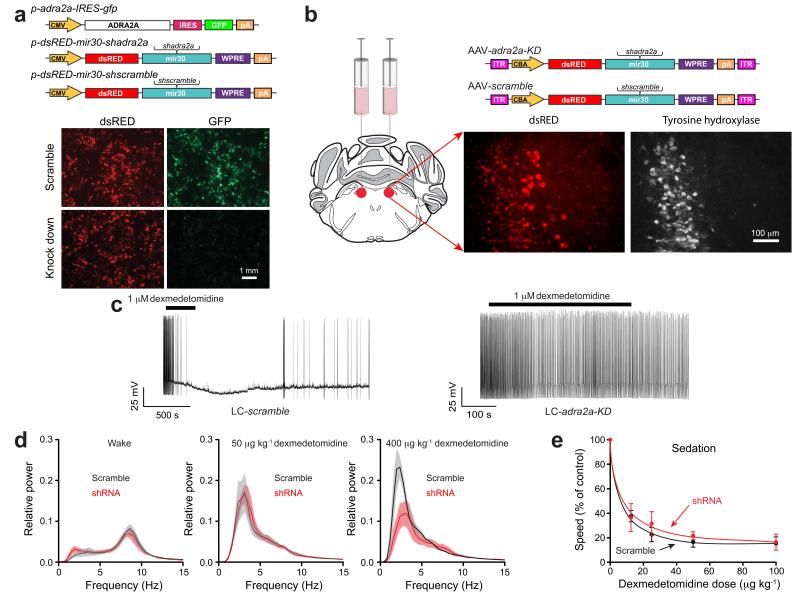
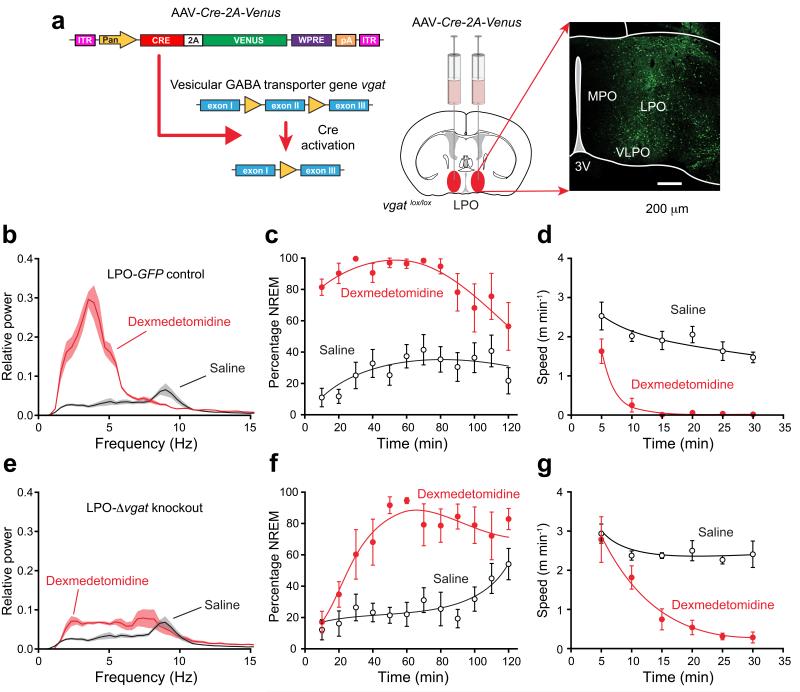
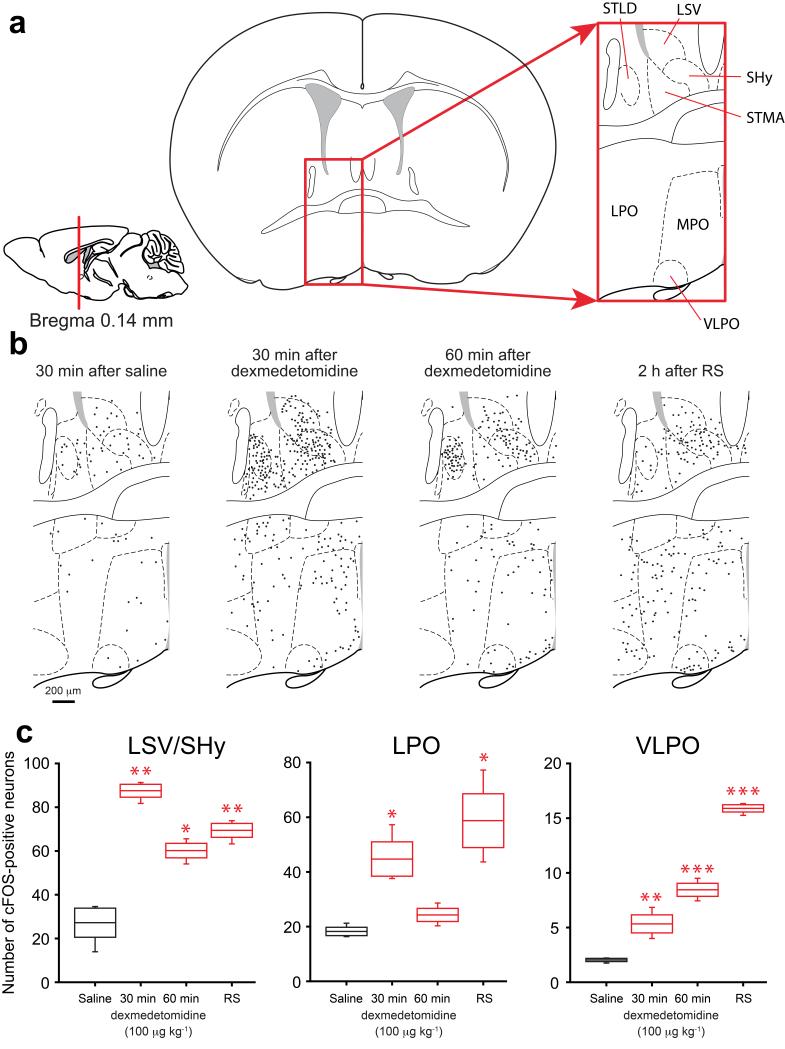
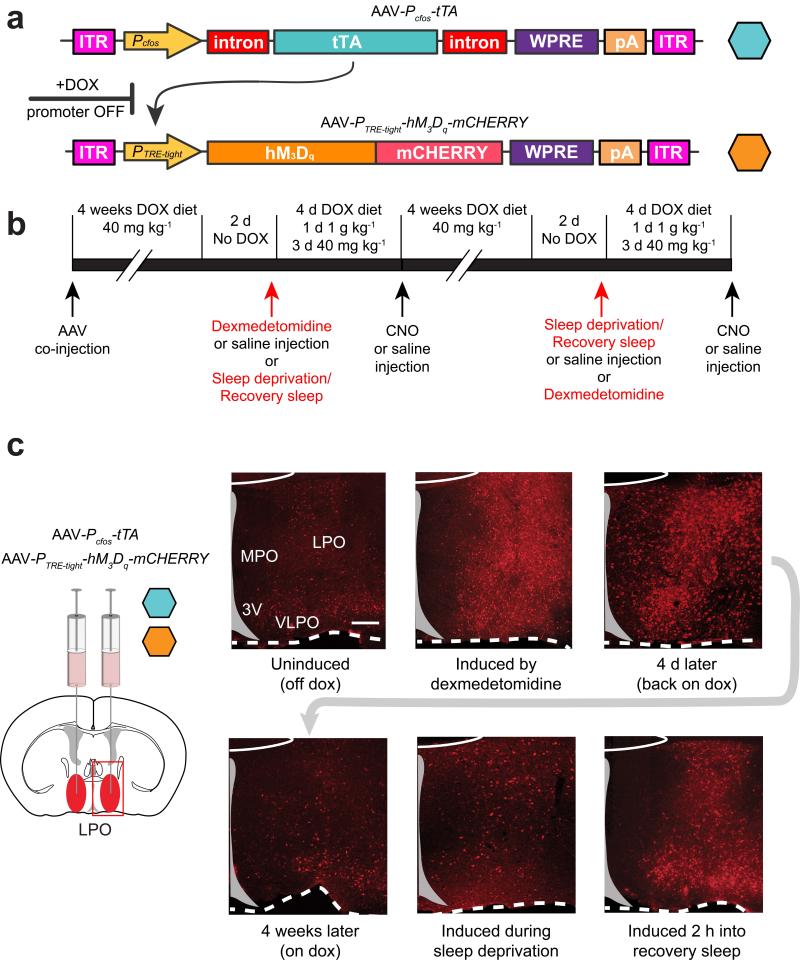
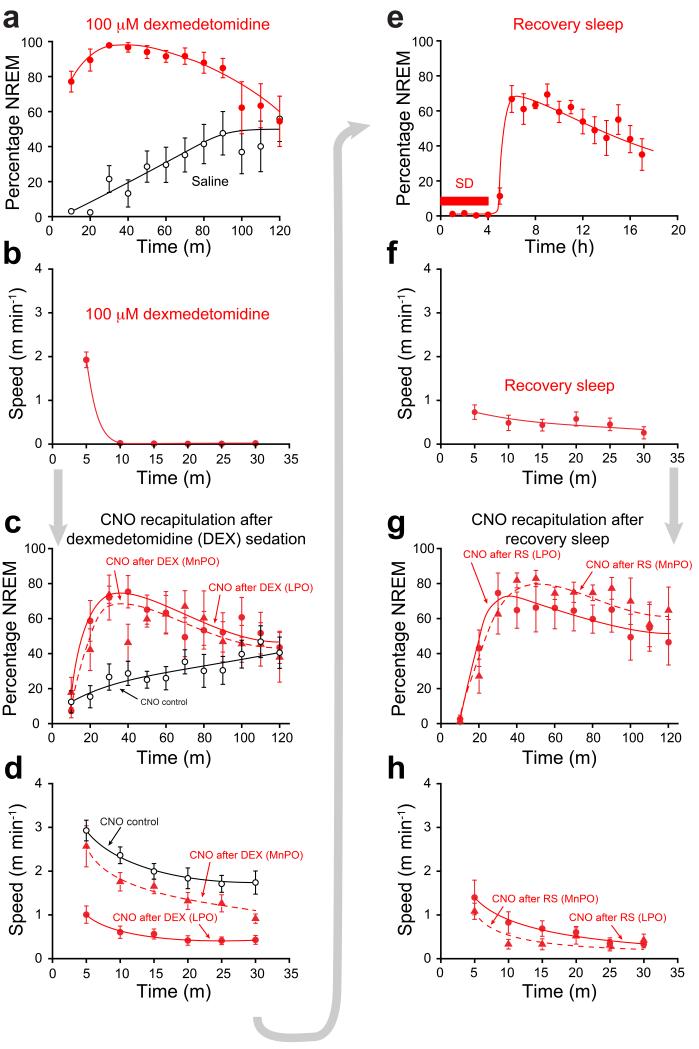
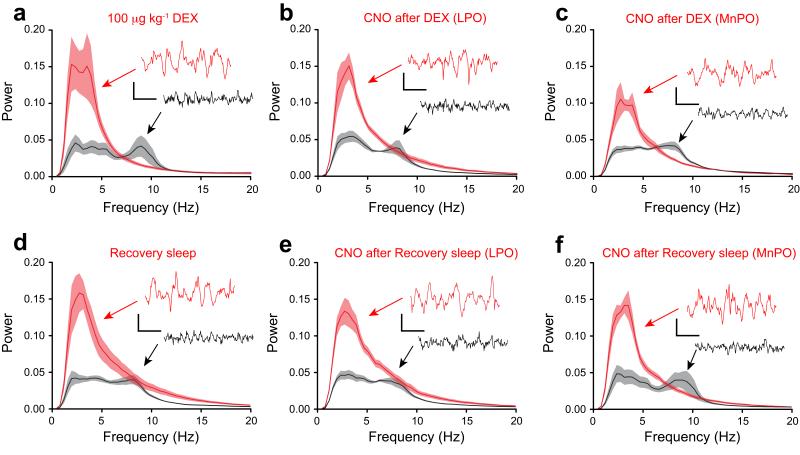
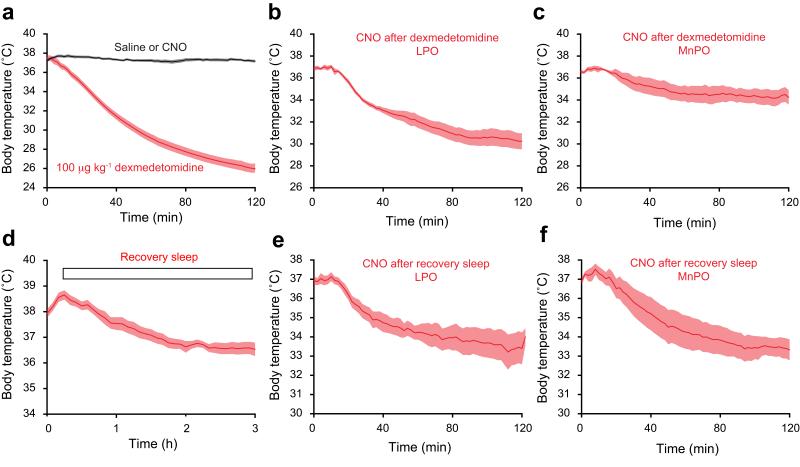
Do sedatives engage natural sleep pathways? It is usually assumed that anesthetic-induced sedation and loss of righting reflex (LORR) arise by influencing the same circuitry to lesser or greater extents. For the α2 adrenergic receptor agonist dexmedetomidine, we found that sedation and LORR were in fact distinct states, requiring different brain areas: the preoptic hypothalamic area and locus coeruleus (LC), respectively. Selective knockdown of α2A adrenergic receptors from the LC abolished dexmedetomidine-induced LORR, but not sedation. Instead, we found that dexmedetomidine-induced sedation resembled the deep recovery sleep that follows sleep deprivation. We used TetTag pharmacogenetics in mice to functionally mark neurons activated in the preoptic hypothalamus during dexmedetomidine-induced sedation or recovery sleep. The neuronal ensembles could then be selectively reactivated. In both cases, non-rapid eye movement sleep, with the accompanying drop in body temperature, was recapitulated. Thus, α2 adrenergic receptor-induced sedation and recovery sleep share hypothalamic circuitry sufficient for producing these behavioral states.
镇静剂会作用于自然睡眠通路吗?通常认为,麻醉诱导的镇静和翻正反射消失(LORR)是通过不同程度地影响相同的神经回路而产生的。对于α2肾上腺素能受体激动剂右美托咪定,我们发现镇静和LORR实际上是不同的状态,分别需要不同的脑区:视前下丘脑区和蓝斑(LC)。从LC选择性敲低α2A肾上腺素能受体会消除右美托咪定诱导的LORR,但不会消除镇静作用。相反,我们发现右美托咪定诱导的镇静类似于睡眠剥夺后的深度恢复睡眠。我们在小鼠中使用TetTag药物遗传学方法对右美托咪定诱导的镇静或恢复睡眠期间视前下丘脑激活的神经元进行功能标记。然后可以选择性地重新激活这些神经元群。在这两种情况下,都会重现非快速眼动睡眠以及随之而来的体温下降。因此,α2肾上腺素能受体诱导的镇静和恢复睡眠共享足以产生这些行为状态的下丘脑神经回路。