Major Diane, Chichester Jessica A, Pathirana Rishi D, Guilfoyle Kate, Shoji Yoko, Guzman Carlos A, Yusibov Vidadi, Cox Rebecca J
a National Institute for Biological Standards and Control; Medicines and Healthcare Products Regulatory Agency ; Potters Bar , UK.
Hum Vaccin Immunother. 2015;11(5):1235-43. doi: 10.4161/21645515.2014.988554.
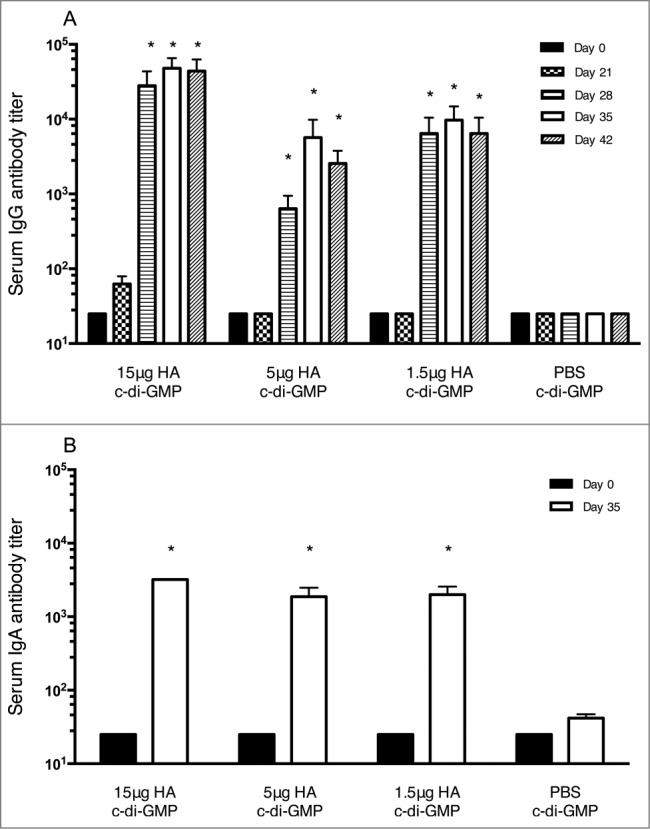
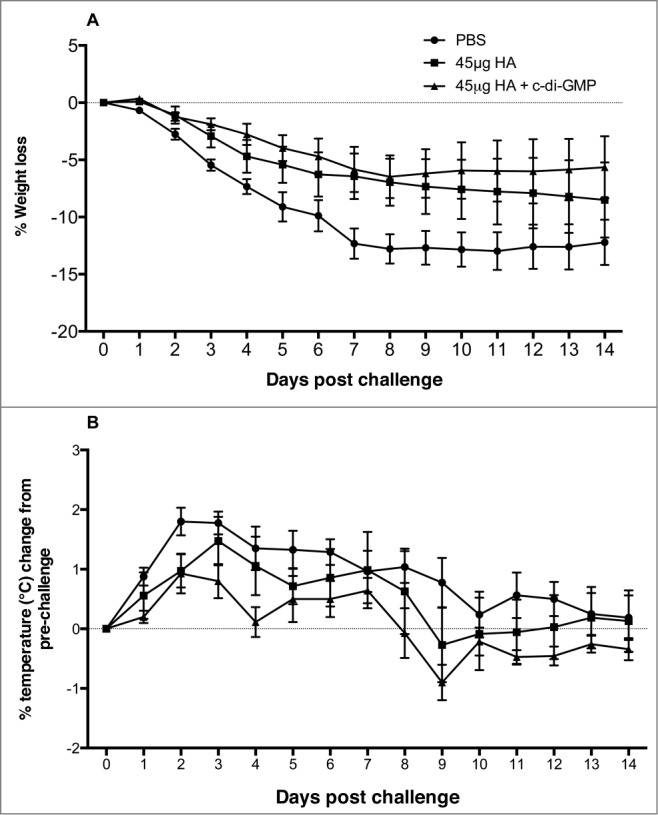
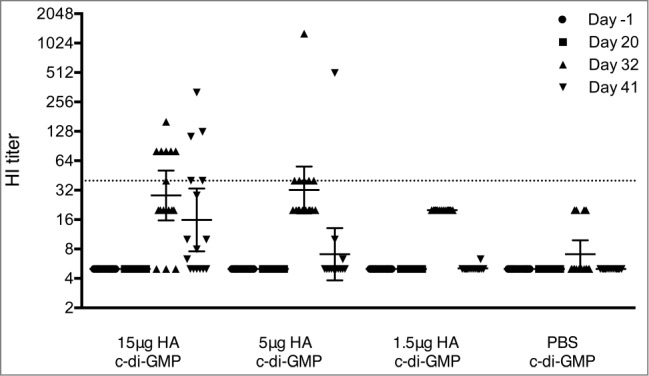
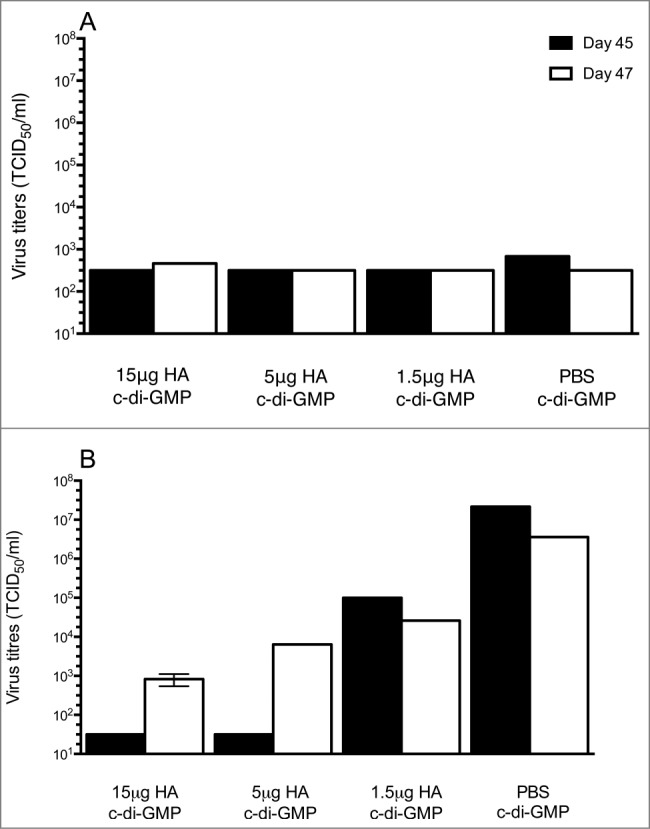
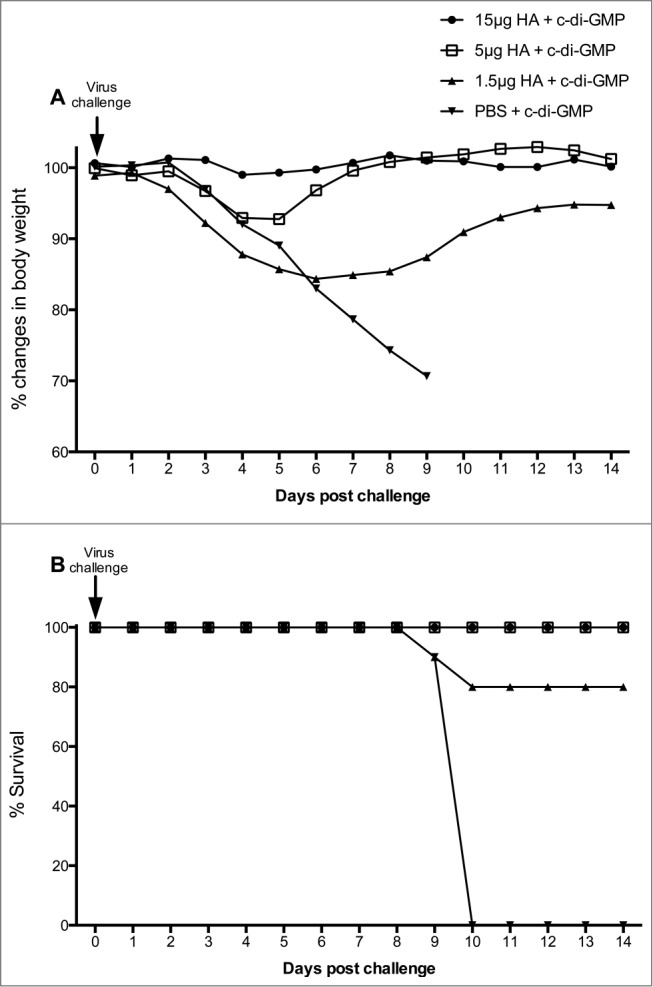
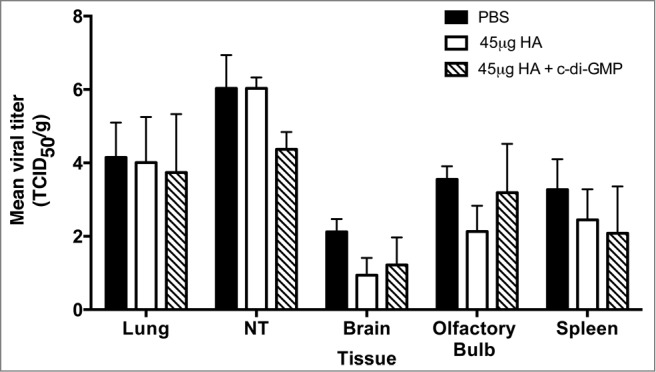
Highly pathogenic avian influenza H5N1 infection remains a public health threat and vaccination is the best measure of limiting the impact of a potential pandemic. Mucosal vaccines have the advantage of eliciting immune responses at the site of viral entry, thereby preventing infection as well as further viral transmission. In this study, we assessed the protective efficacy of hemagglutinin (HA) from the A/Indonesia/05/05 (H5N1) strain of influenza virus that was produced by transient expression in plants. The plant-derived vaccine, in combination with the mucosal adjuvant (3',5')-cyclic dimeric guanylic acid (c-di-GMP) was used for intranasal immunization of mice and ferrets, before challenge with a lethal dose of the A/Indonesia/05/05 (H5N1) virus. Mice vaccinated with 15 μg or 5 μg of adjuvanted HA survived the viral challenge, while all control mice died within 10 d of challenge. Vaccinated animals elicited serum hemagglutination inhibition, IgG and IgA antibody titers. In the ferret challenge study, all animals vaccinated with the adjuvanted plant vaccine survived the lethal viral challenge, while 50% of the control animals died. In both the mouse and ferret models, the vaccinated animals were better protected from weight loss and body temperature changes associated with H5N1 infection compared with the non-vaccinated controls. Furthermore, the systemic spread of the virus was lower in the vaccinated animals compared with the controls. Results presented here suggest that the plant-produced HA-based influenza vaccine adjuvanted with c-di-GMP is a promising vaccine/adjuvant combination for the development of new mucosal influenza vaccines.
高致病性H5N1禽流感感染仍然是一种公共卫生威胁,接种疫苗是限制潜在大流行影响的最佳措施。黏膜疫苗具有在病毒进入部位引发免疫反应的优势,从而预防感染以及进一步的病毒传播。在本研究中,我们评估了通过植物瞬时表达产生的来自A/印度尼西亚/05/05(H5N1)流感病毒株的血凝素(HA)的保护效力。在以致死剂量的A/印度尼西亚/05/05(H5N1)病毒攻击之前,将植物源疫苗与黏膜佐剂(3',5')-环二聚鸟苷酸(c-di-GMP)联合用于小鼠和雪貂的鼻内免疫。接种15μg或5μg佐剂化HA的小鼠在病毒攻击中存活下来,而所有对照小鼠在攻击后10天内死亡。接种疫苗的动物产生了血清血凝抑制、IgG和IgA抗体滴度。在雪貂攻击研究中,所有接种佐剂化植物疫苗的动物在致死性病毒攻击中存活下来,而50%的对照动物死亡。在小鼠和雪貂模型中,与未接种疫苗的对照相比,接种疫苗的动物在预防与H5N1感染相关的体重减轻和体温变化方面受到更好的保护。此外,与对照相比,接种疫苗的动物中病毒的全身传播较低。此处呈现的结果表明,用c-di-GMP佐剂的基于植物产生的HA的流感疫苗是开发新型黏膜流感疫苗的一种有前景的疫苗/佐剂组合。