Rydyznski Carolyn, Daniels Keith A, Karmele Erik P, Brooks Taylor R, Mahl Sarah E, Moran Michael T, Li Caimei, Sutiwisesak Rujapak, Welsh Raymond M, Waggoner Stephen N
1] Center for Autoimmune Genomics and Etiology, Cincinnati Children's Hospital Medical Center, 240 Albert Sabin Way, MLC 15012, Cincinnati, Ohio 45229, USA [2] Immunology Graduate Program, Cincinnati Children's Hospital Medical Center, 3333 Burnet Avenue, MLC 7038, Cincinnati, Ohio 45229, USA.
Department of Pathology, University of Massachusetts Medical School, 368 Plantation Street, ASC9-2014E, Worcester, Massachusetts, 01605, USA.
Nat Commun. 2015 Feb 27;6:6375. doi: 10.1038/ncomms7375.
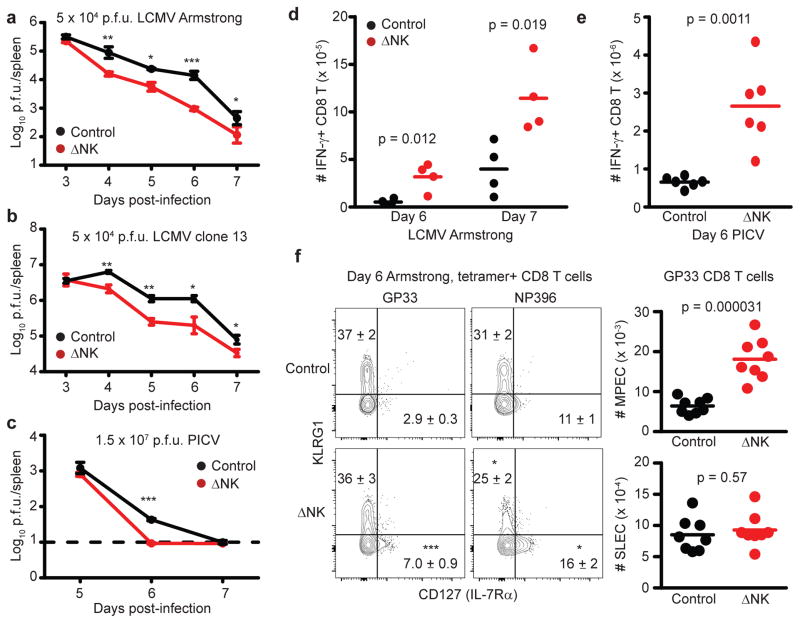
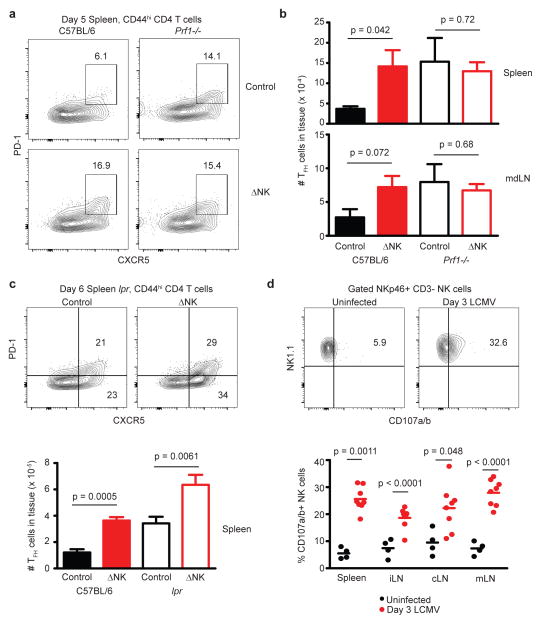
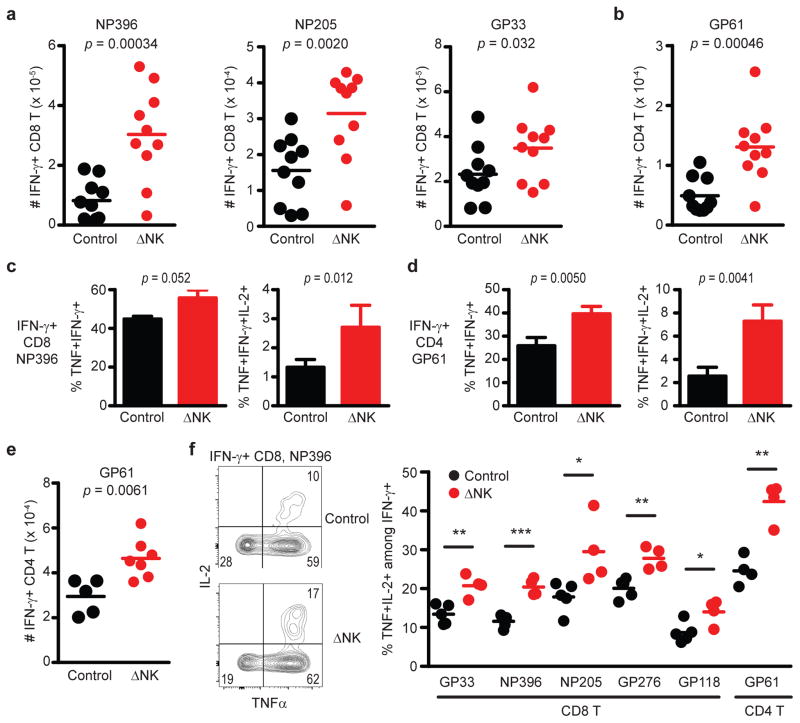
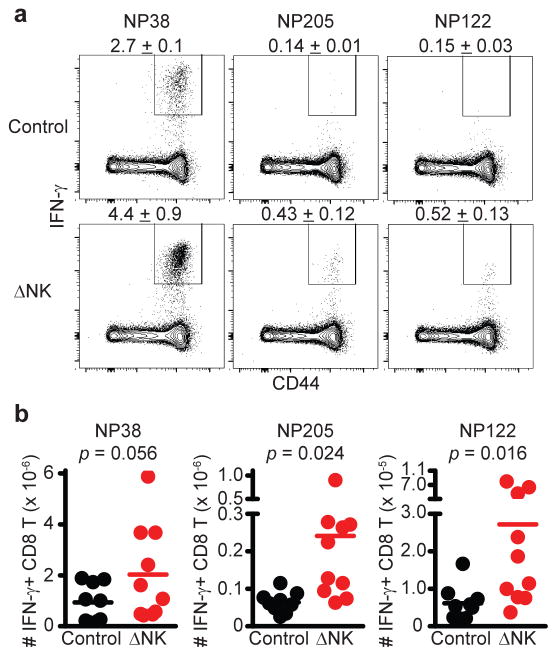
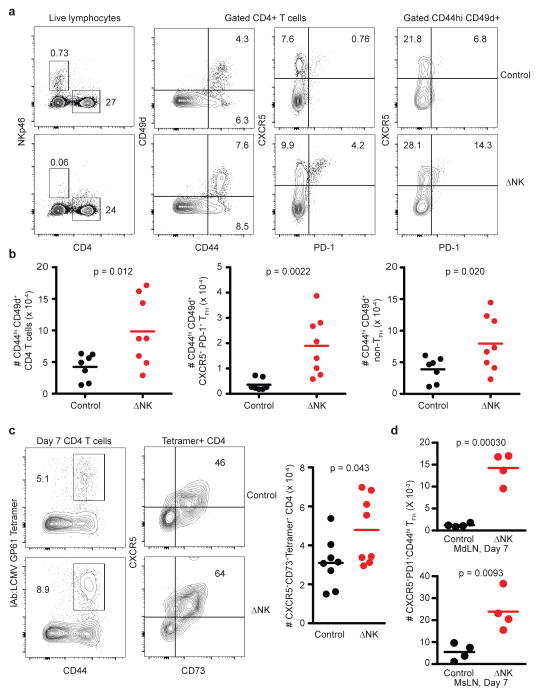
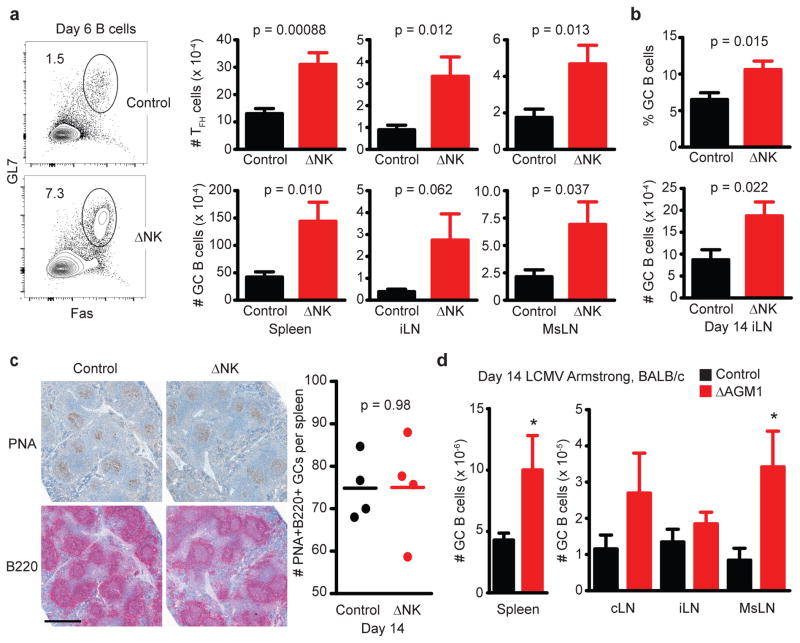
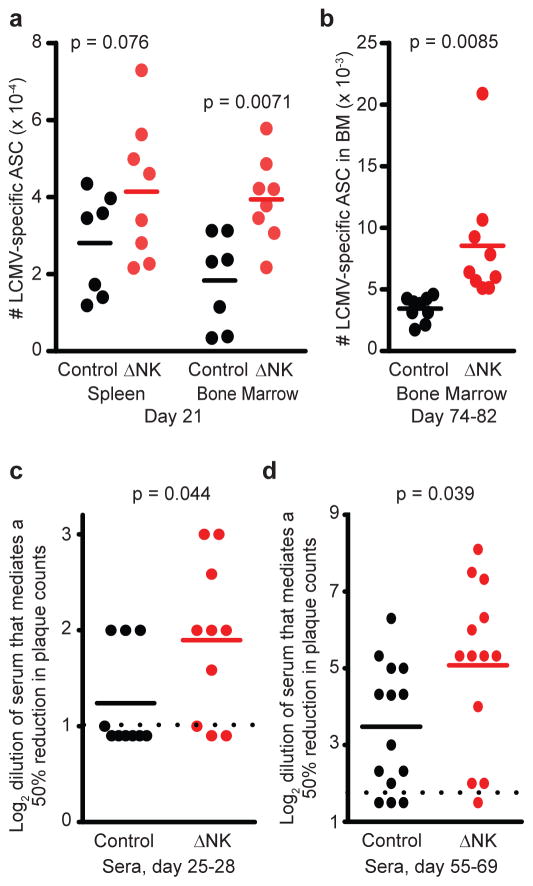
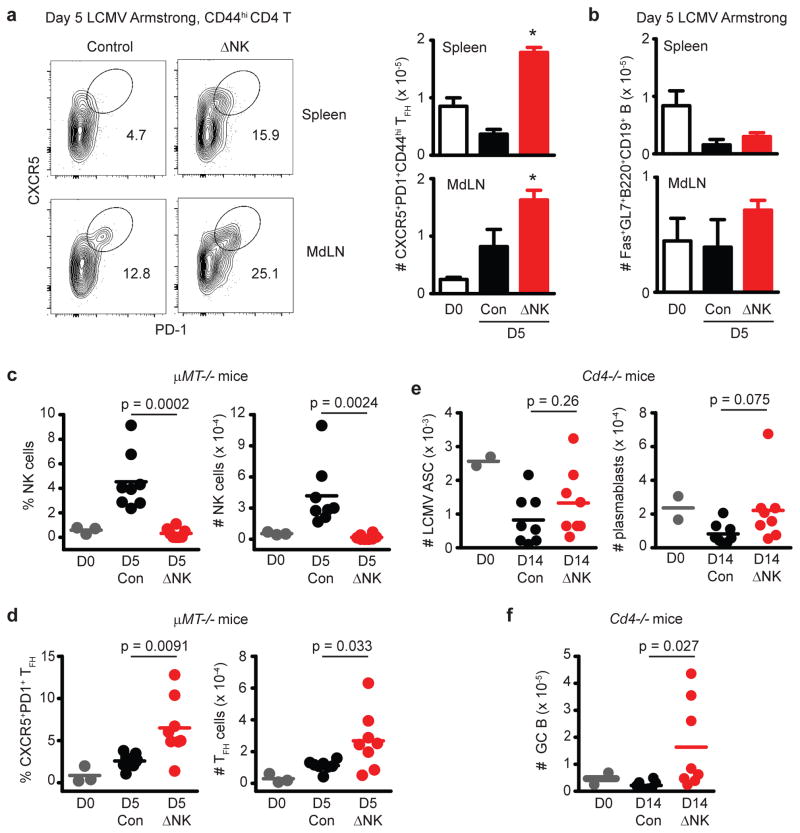
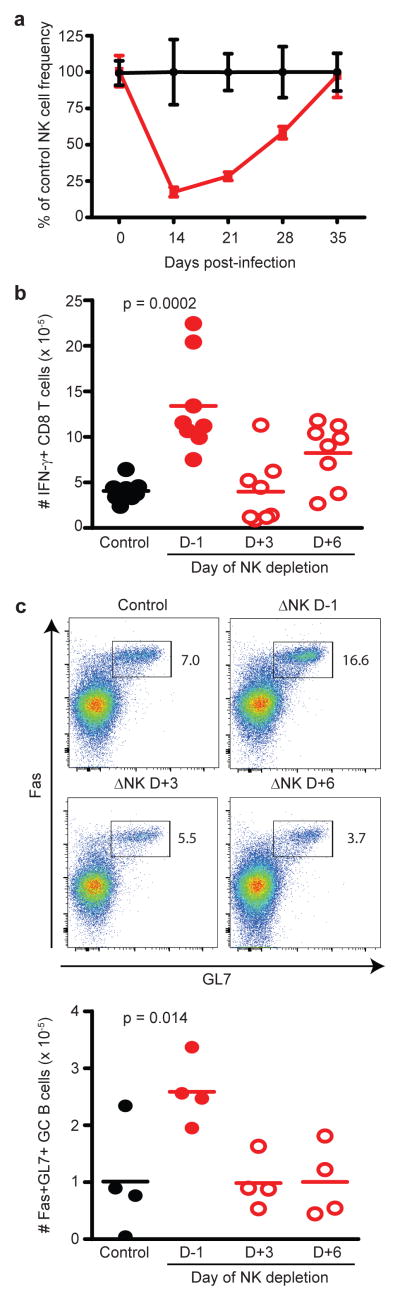
The goal of most vaccines is the induction of long-lived memory T and B cells capable of protecting the host from infection by cytotoxic mechanisms, cytokines and high-affinity antibodies. However, efforts to develop vaccines against major human pathogens such as HIV and HCV have not been successful, thereby highlighting the need for novel approaches to circumvent immunoregulatory mechanisms that limit the induction of protective immunity. Here, we show that mouse natural killer (NK) cells inhibit generation of long-lived virus-specific memory T- and B cells as well as virus-specific antibody production after acute infection. Mechanistically, NK cells suppressed CD4 T cells and follicular helper T cells (T(FH)) in a perforin-dependent manner during the first few days of infection, resulting in a weaker germinal centre (GC) response and diminished immune memory. We anticipate that innovative strategies to relieve NK cell-mediated suppression of immunity should facilitate development of efficacious new vaccines targeting difficult-to-prevent infections.
大多数疫苗的目标是诱导产生长寿的记忆性T细胞和B细胞,这些细胞能够通过细胞毒性机制、细胞因子和高亲和力抗体保护宿主免受感染。然而,研发针对HIV和HCV等主要人类病原体的疫苗的努力尚未成功,这凸显了需要采用新方法来规避限制保护性免疫诱导的免疫调节机制。在此,我们表明,小鼠自然杀伤(NK)细胞在急性感染后会抑制长寿病毒特异性记忆T细胞和B细胞的产生以及病毒特异性抗体的产生。从机制上讲,NK细胞在感染的最初几天以穿孔素依赖的方式抑制CD4 T细胞和滤泡辅助性T细胞(T(FH)),导致生发中心(GC)反应减弱和免疫记忆受损。我们预计,缓解NK细胞介导的免疫抑制的创新策略应有助于开发针对难以预防感染的有效新疫苗。