Roucourt Bart, Meeussen Sofie, Bao Jie, Zimmermann Pascale, David Guido
1] Laboratory for Glycobiology and Developmental Genetics, Department of Human Genetics, KU Leuven, Leuven, B-3000, Belgium [2] Laboratory for Signal Integration in Cell Fate Decision, Department of Human Genetics, KU Leuven, Leuven, B-3000, Belgium.
1] Laboratory for Signal Integration in Cell Fate Decision, Department of Human Genetics, KU Leuven, Leuven, B-3000, Belgium [2] Centre de Recherche en Cancérologie de Marseille (CRCM), Aix-Marseille Université, Marseille, F-13284, France; Inserm, U1068; Institut Paoli-Calmettes; CNRS, UMR7258, Marseille, F-13009, France.
Cell Res. 2015 Apr;25(4):412-28. doi: 10.1038/cr.2015.29. Epub 2015 Mar 3.
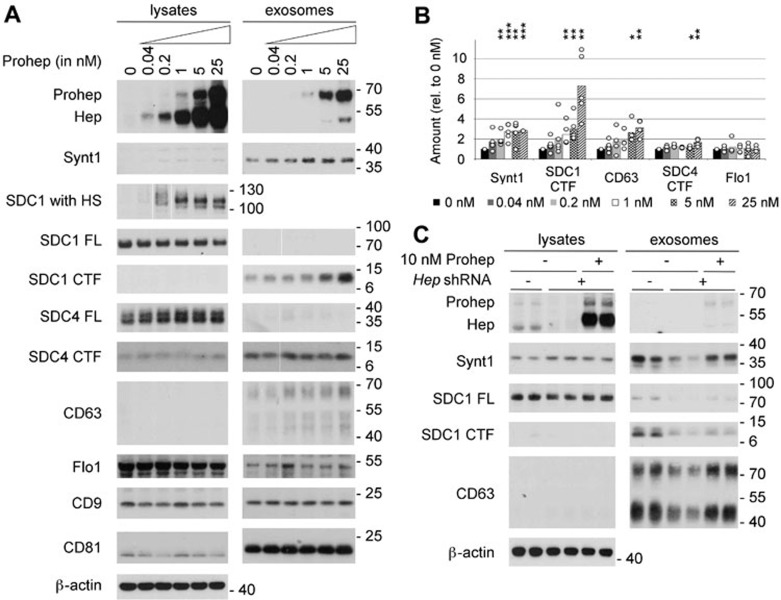
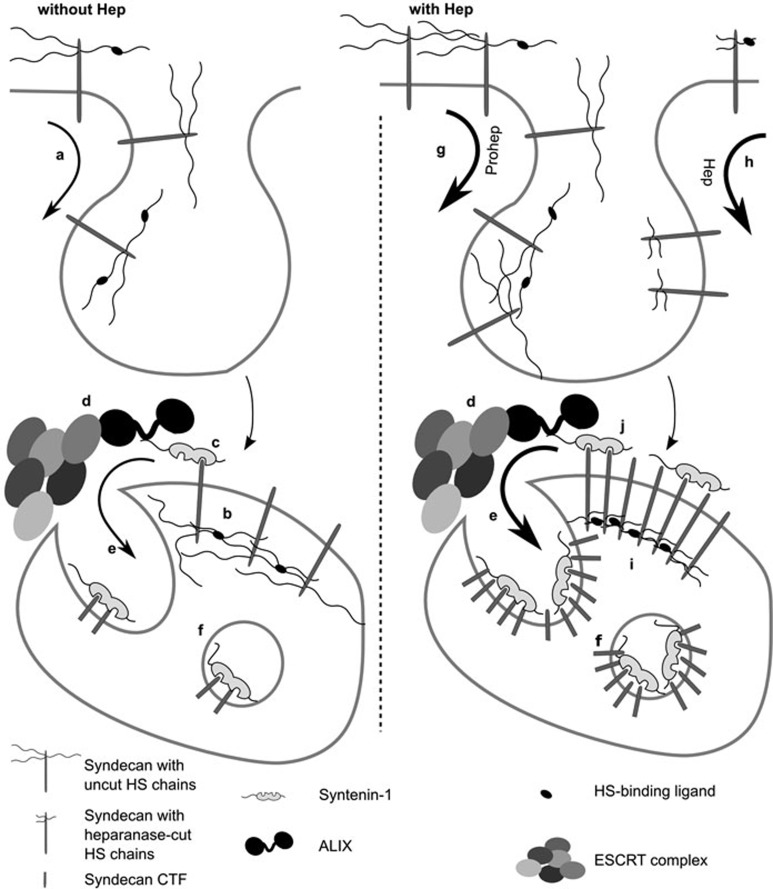
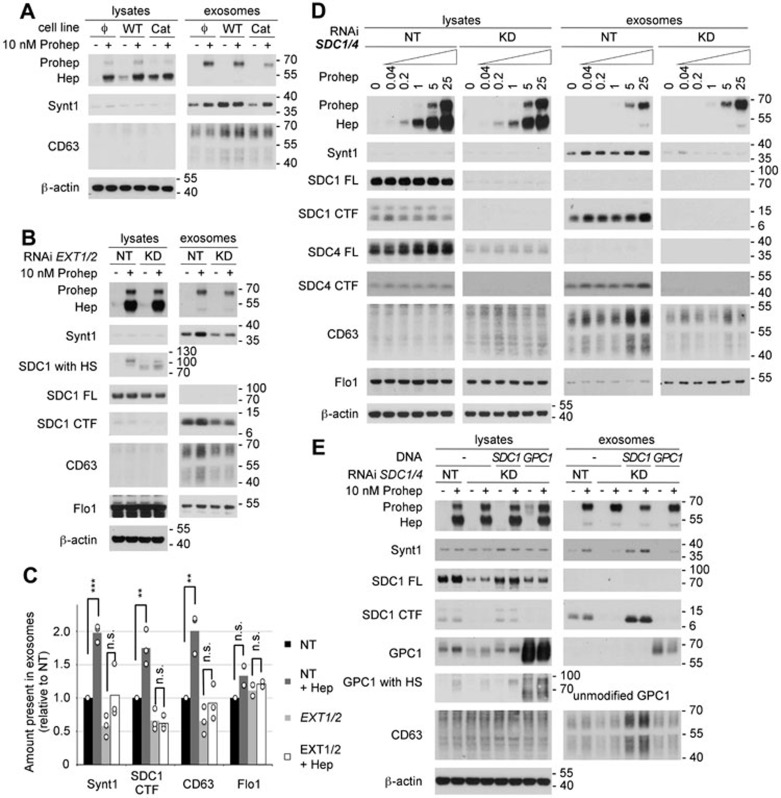
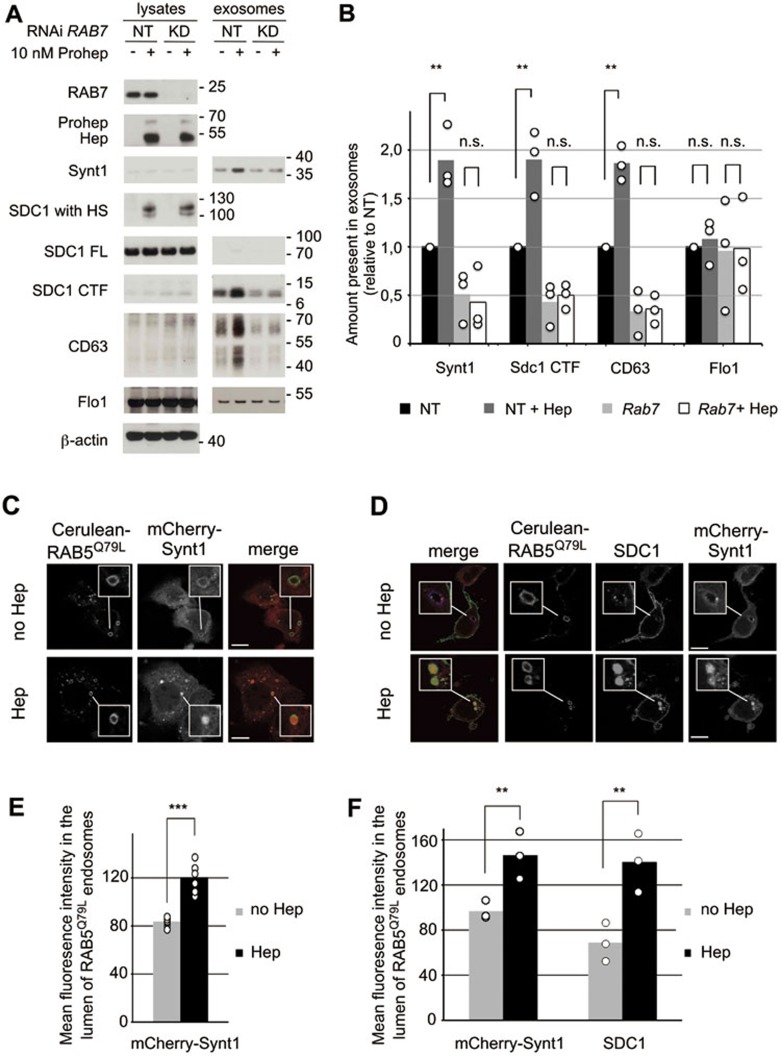
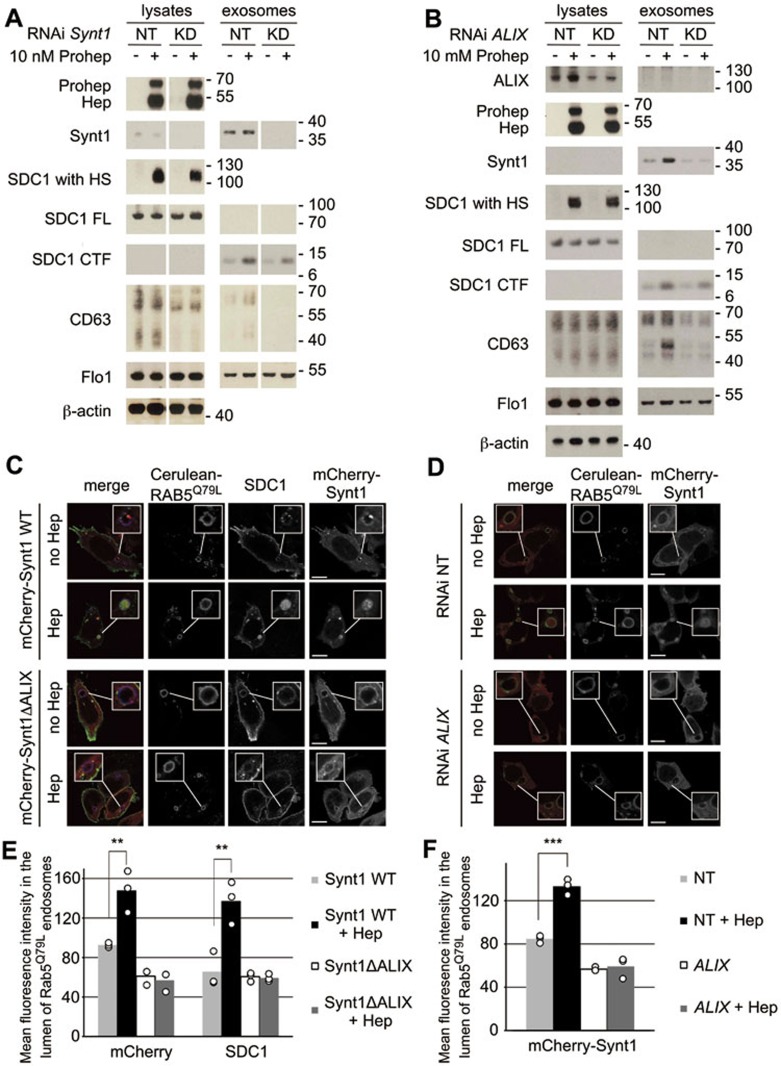
Exosomes are secreted vesicles of endosomal origin involved in signaling processes. We recently showed that the syndecan heparan sulfate proteoglycans control the biogenesis of exosomes through their interaction with syntenin-1 and the endosomal-sorting complex required for transport accessory component ALIX. Here we investigated the role of heparanase, the only mammalian enzyme able to cleave heparan sulfate internally, in the syndecan-syntenin-ALIX exosome biogenesis pathway. We show that heparanase stimulates the exosomal secretion of syntenin-1, syndecan and certain other exosomal cargo, such as CD63, in a concentration-dependent manner. In contrast, exosomal CD9, CD81 and flotillin-1 are not affected. Conversely, reduction of endogenous heparanase reduces the secretion of syntenin-1-containing exosomes. The ability of heparanase to stimulate exosome production depends on syntenin-1 and ALIX. Syndecans, but not glypicans, support exosome biogenesis in heparanase-exposed cells. Finally, heparanase stimulates intraluminal budding of syndecan and syntenin-1 in endosomes, depending on the syntenin-ALIX interaction. Taken together, our findings identify heparanase as a modulator of the syndecan-syntenin-ALIX pathway, fostering endosomal membrane budding and the biogenesis of exosomes by trimming the heparan sulfate chains on syndecans. In addition, our data suggest that this mechanism controls the selection of specific cargo to exosomes.
外泌体是参与信号传导过程的内体来源的分泌囊泡。我们最近发现,syndecan硫酸乙酰肝素蛋白聚糖通过与syntenin-1以及转运辅助成分ALIX所需的内体分选复合物相互作用来控制外泌体的生物发生。在此,我们研究了乙酰肝素酶(唯一能够在内部切割硫酸乙酰肝素的哺乳动物酶)在syndecan-syntenin-ALIX外泌体生物发生途径中的作用。我们发现,乙酰肝素酶以浓度依赖性方式刺激syntenin-1、syndecan和某些其他外泌体货物(如CD63)的外泌体分泌。相比之下,外泌体CD9、CD81和flotillin-1不受影响。相反,内源性乙酰肝素酶的减少会降低含syntenin-1的外泌体的分泌。乙酰肝素酶刺激外泌体产生的能力取决于syntenin-1和ALIX。Syndecan而非磷脂酰肌醇蛋白聚糖支持乙酰肝素酶暴露细胞中的外泌体生物发生。最后,乙酰肝素酶依赖于syntenin-ALIX相互作用刺激内体中syndecan和syntenin-1的腔内出芽。综上所述,我们的研究结果确定乙酰肝素酶是syndecan-syntenin-ALIX途径的调节剂,通过修剪syndecan上的硫酸乙酰肝素链促进内体膜出芽和外泌体的生物发生。此外,我们的数据表明,这种机制控制着外泌体特定货物的选择。