Lopez J, Tait S W G
Cancer Research UK Beatson Institute, Institute of Cancer Sciences, University of Glasgow, Garscube Estate, Switchback Road, Glasgow, G61 1BD, UK.
Br J Cancer. 2015 Mar 17;112(6):957-62. doi: 10.1038/bjc.2015.85.
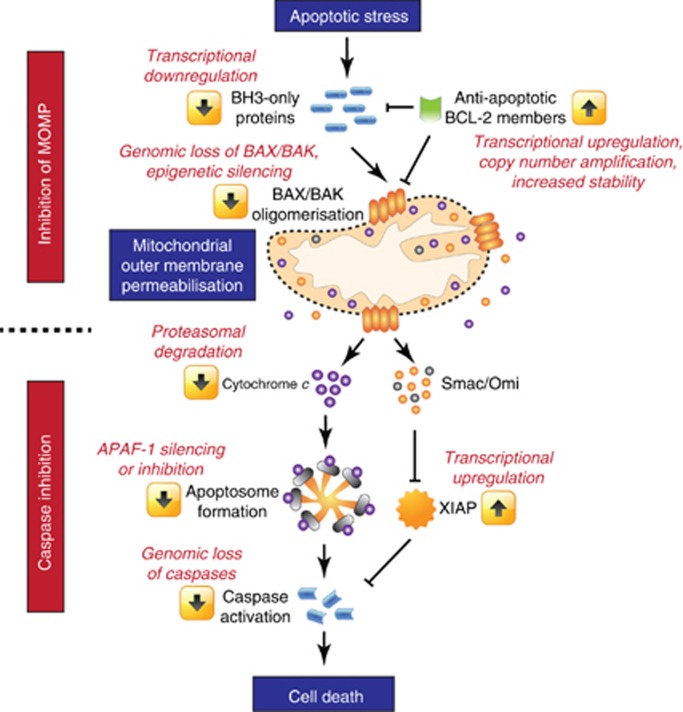
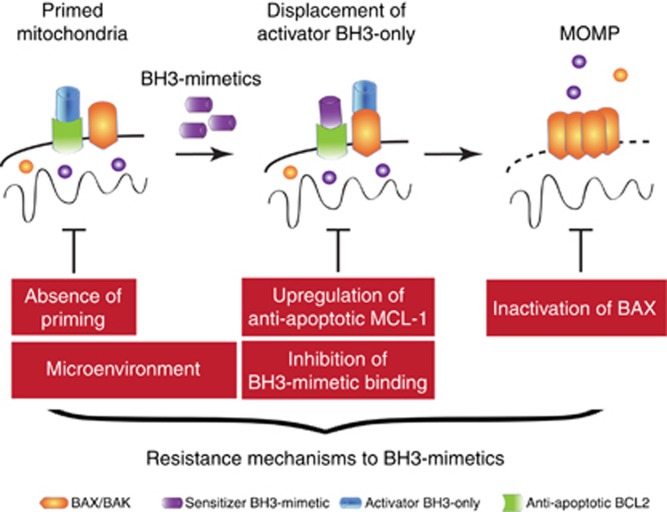
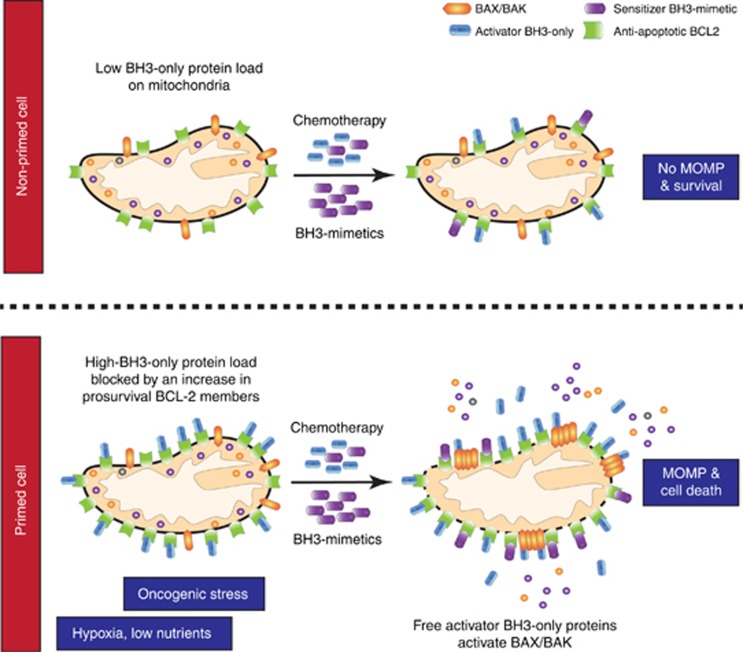
Apoptotic cell death inhibits oncogenesis at multiple stages, ranging from transformation to metastasis. Consequently, in order for cancer to develop and progress, apoptosis must be inhibited. Cell death also plays major roles in cancer treatment, serving as the main effector function of many anti-cancer therapies. In this review, we discuss the role of apoptosis in the development and treatment of cancer. Specifically, we focus upon the mitochondrial pathway of apoptosis-the most commonly deregulated form of cell death in cancer. In this process, mitochondrial outer membrane permeabilisation or MOMP represents the defining event that irrevocably commits a cell to die. We provide an overview of how this pathway is regulated by BCL-2 family proteins and describe ways in which cancer cells can block it. Finally, we discuss exciting new approaches aimed at specifically inducing mitochondrial apoptosis in cancer cells, outlining their potential pitfalls, while highlighting their considerable therapeutic promise.
凋亡性细胞死亡在从细胞转化到转移的多个阶段抑制肿瘤发生。因此,为了使癌症发生和进展,凋亡必须受到抑制。细胞死亡在癌症治疗中也起着主要作用,是许多抗癌疗法的主要效应功能。在这篇综述中,我们讨论凋亡在癌症发生和治疗中的作用。具体而言,我们聚焦于凋亡的线粒体途径——癌症中最常失调的细胞死亡形式。在这个过程中,线粒体外膜通透性改变(MOMP)代表了一个决定性事件,它不可逆转地使细胞走向死亡。我们概述了该途径如何受BCL-2家族蛋白调控,并描述癌细胞阻断它的方式。最后,我们讨论旨在特异性诱导癌细胞线粒体凋亡的令人兴奋的新方法,概述其潜在缺陷,同时突出其巨大的治疗前景。