Stacy Mitchel R, Paeng Jin Chul, Sinusas Albert J
Department of Internal Medicine, Section of Cardiovascular Medicine, Yale University School of Medicine, Dana-3, P.O. Box 208017, New Haven, CT, 06520, USA.
Ann Nucl Med. 2015 Apr;29(3):217-23. doi: 10.1007/s12149-015-0961-y. Epub 2015 Mar 8.
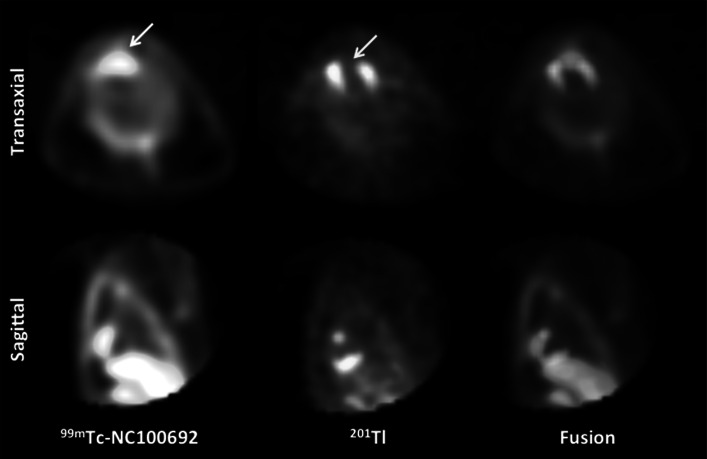
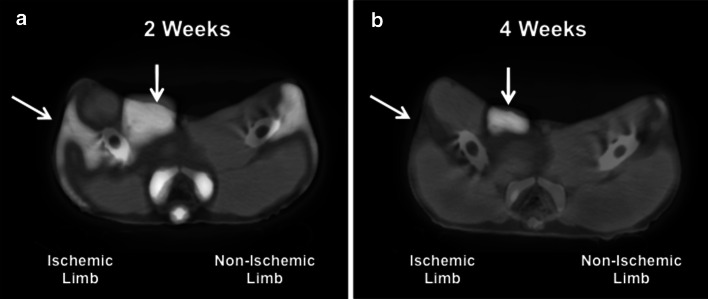
Angiogenesis, or the formation of new microvasculature, is a physiological process that may occur in the setting of chronic tissue ischemia and can play an important role in improving tissue perfusion and blood flow following myocardial infarction or in the presence of peripheral vascular disease (PVD). Molecular imaging of angiogenesis within the cardiovascular system is a developing field of study. Targeted imaging of angiogenesis has the potential for non-invasive assessment of the underlying molecular signaling events associated with the angiogenic process and, when applied in conjunction with physiological perfusion imaging, may be utilized to predict and evaluate clinical outcomes in the setting of ischemic heart disease or PVD. This review discusses the developing radiotracer-based imaging techniques and technology currently in use that possess potential for clinical translation, with specific focus on PET and SPECT imaging of myocardial and peripheral angiogenesis.
血管生成,即新微血管的形成,是一种生理过程,可能发生在慢性组织缺血的情况下,并且在改善心肌梗死后的组织灌注和血流或存在外周血管疾病(PVD)时可发挥重要作用。心血管系统内血管生成的分子成像研究领域正在不断发展。血管生成的靶向成像具有对与血管生成过程相关的潜在分子信号事件进行无创评估的潜力,并且当与生理灌注成像结合应用时,可用于预测和评估缺血性心脏病或外周血管疾病情况下的临床结果。本综述讨论了目前正在使用的基于放射性示踪剂的成像技术和技术,这些技术具有临床转化的潜力,特别关注心肌和外周血管生成的PET和SPECT成像。