Skrøvseth Stein Olav, Årsand Eirik, Godtliebsen Fred, Joakimsen Ragnar M
1 Norwegian Centre for Integrated Care and Telemedicine, University Hospital of North Norway , Tromsø, Norway .
2 Department of Mathematics and Statistics, University of Tromsø , Tromsø, Norway .
Diabetes Technol Ther. 2015 Jul;17(7):482-9. doi: 10.1089/dia.2014.0276. Epub 2015 Mar 9.
A mobile phone-based application can be useful for patients with type 1 diabetes in managing their disease. This results in large datasets accumulated on the patient's devices, which can be used for individualized feedback. The effect of such feedback is investigated in this article.
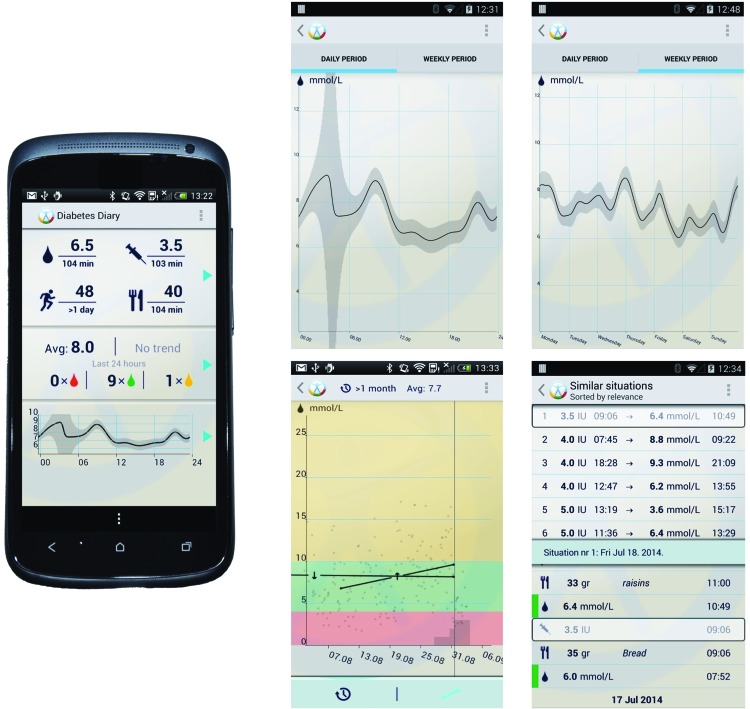
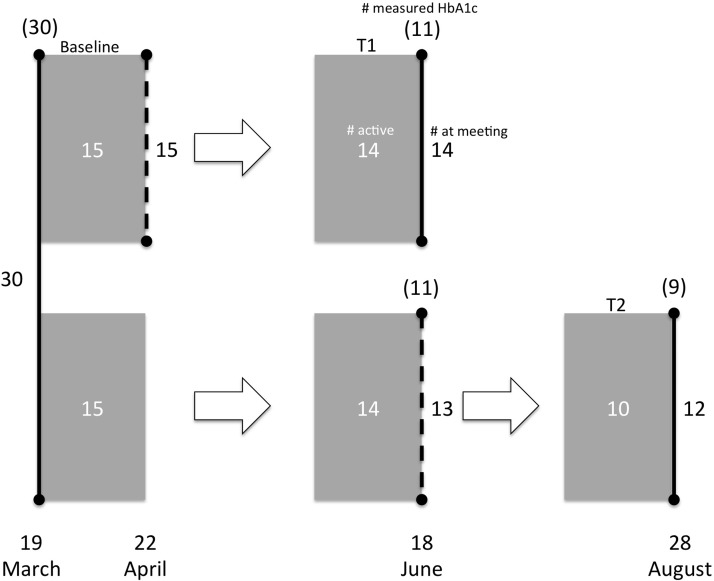
We developed an application that included a data-driven feedback module known as Diastat for patients on self-measured blood glucose regimens. Using a stepped-wedge design, both groups initially received an application without Diastat. Group 1 activated Diastat after 4 weeks, whereas Group 2 activated Diastat 12 weeks after startup (T1). End points were glycated hemoglobin (HbA1c) level and number of out-of-range (OOR) measurements (i.e., outside the range 72-270 mg/dL).
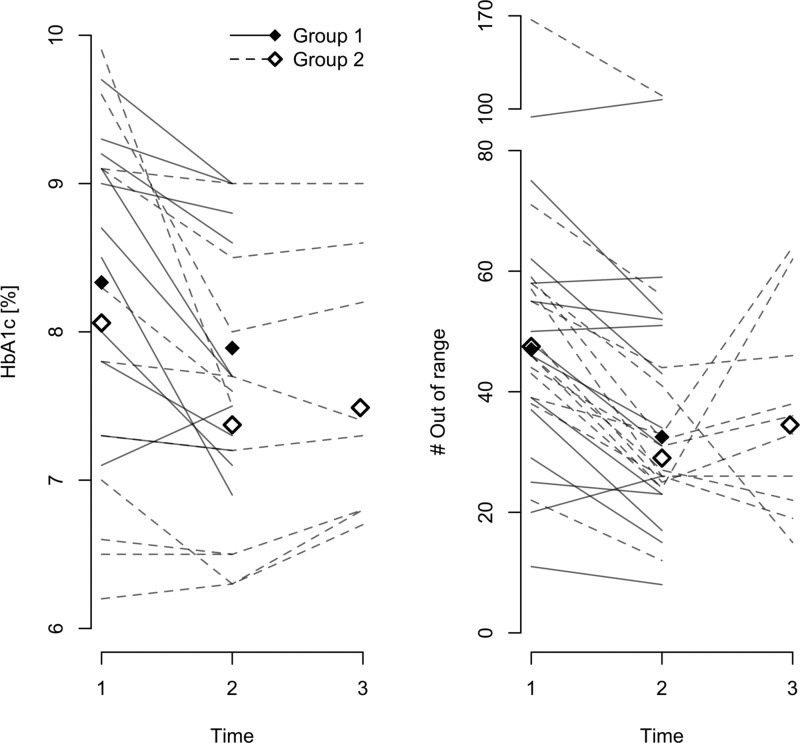
Thirty patients were recruited to the study, and 15 were assigned to each group after the initial meeting. There were no significant differences between groups at T1 in HbA1c or OOR events. Overall, all patients had a decrease of 0.6 percentage points in mean HbA1c (P < 0.001) and 14.5 in median OOR events over 2 weeks (P < 0.001).
The study does not provide evidence that data-driven feedback improves glycemic control. The decrease in HbA1c was sizeable and significant, even though the study was not powered to detect this. The overall improvement in glycemic control suggests that, in general, mobile phone-based interventions can be useful in diabetes self-management.
基于手机的应用程序对1型糖尿病患者管理疾病可能有用。这会在患者设备上积累大量数据集,可用于个性化反馈。本文研究了这种反馈的效果。
我们开发了一款应用程序,其中包括一个名为Diastat的数据驱动反馈模块,用于接受自我血糖监测方案的患者。采用阶梯楔形设计,两组最初均收到一个不含Diastat的应用程序。第1组在4周后激活Diastat,而第2组在启动后12周(T1)激活Diastat。终点指标为糖化血红蛋白(HbA1c)水平和超出范围(OOR)的测量次数(即超出72 - 270mg/dL范围)。
30名患者被招募到该研究中,初次会面后每组分配15名。在T1时,两组在HbA1c或OOR事件方面无显著差异。总体而言,所有患者在2周内平均HbA1c下降了0.6个百分点(P < 0.001),中位数OOR事件减少了14.5次(P < 0.001)。
该研究未提供数据驱动反馈可改善血糖控制的证据。尽管该研究没有足够的效力检测到这一点,但HbA1c的下降幅度较大且具有统计学意义。血糖控制的总体改善表明,一般来说,基于手机的干预措施在糖尿病自我管理中可能有用。