Cotney Justin, Muhle Rebecca A, Sanders Stephan J, Liu Li, Willsey A Jeremy, Niu Wei, Liu Wenzhong, Klei Lambertus, Lei Jing, Yin Jun, Reilly Steven K, Tebbenkamp Andrew T, Bichsel Candace, Pletikos Mihovil, Sestan Nenad, Roeder Kathryn, State Matthew W, Devlin Bernie, Noonan James P
1] Department of Genetics, Yale School of Medicine, 333 Cedar Street, New Haven, Connecticut 06510, USA [2] Kavli Institute for Neuroscience, Yale School of Medicine, PO Box 208001, New Haven, Connecticut 06520, USA.
1] Department of Genetics, Yale School of Medicine, 333 Cedar Street, New Haven, Connecticut 06510, USA [2] Kavli Institute for Neuroscience, Yale School of Medicine, PO Box 208001, New Haven, Connecticut 06520, USA [3] Child Study Center, Yale School of Medicine, 230S. Frontage Road, New Haven, Connecticut 06519, USA.
Nat Commun. 2015 Mar 10;6:6404. doi: 10.1038/ncomms7404.
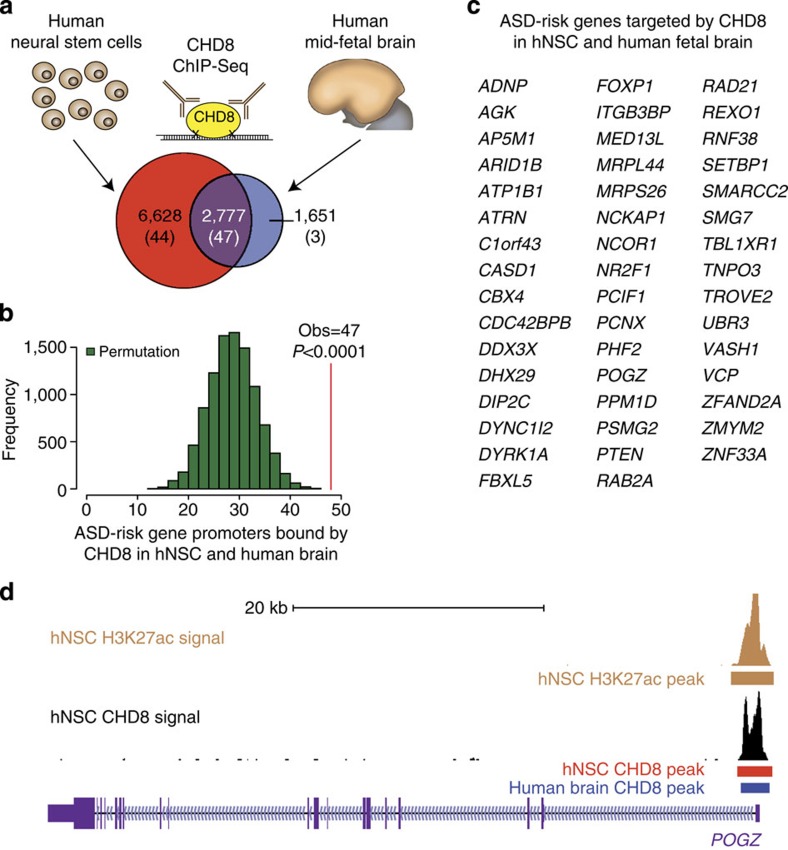
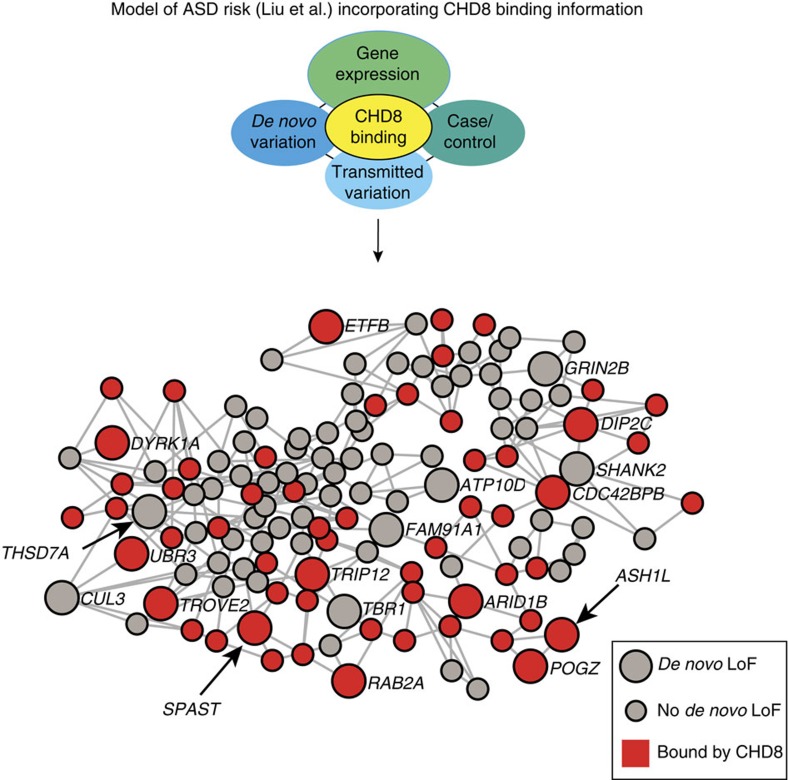
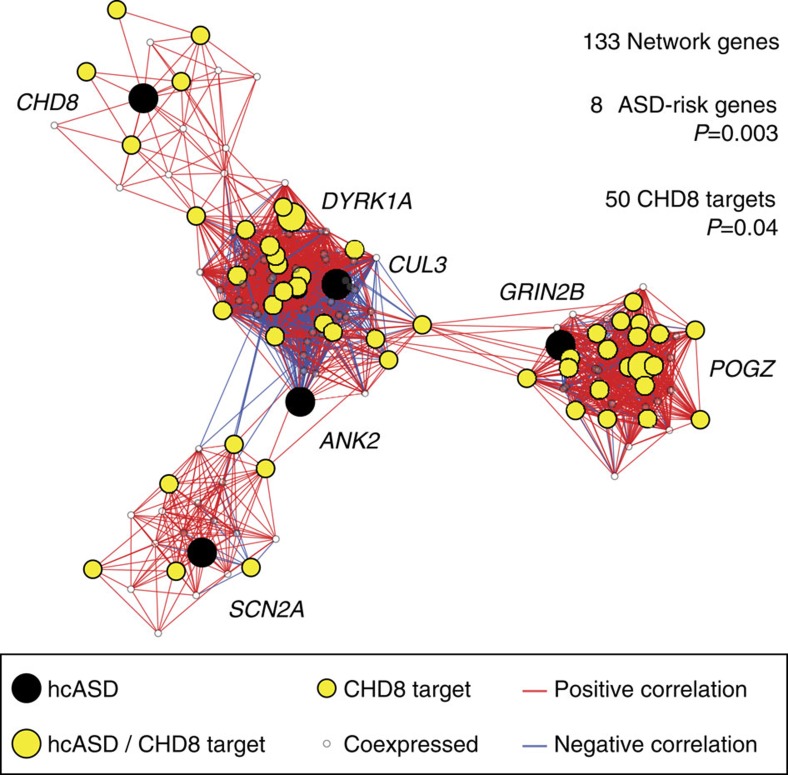
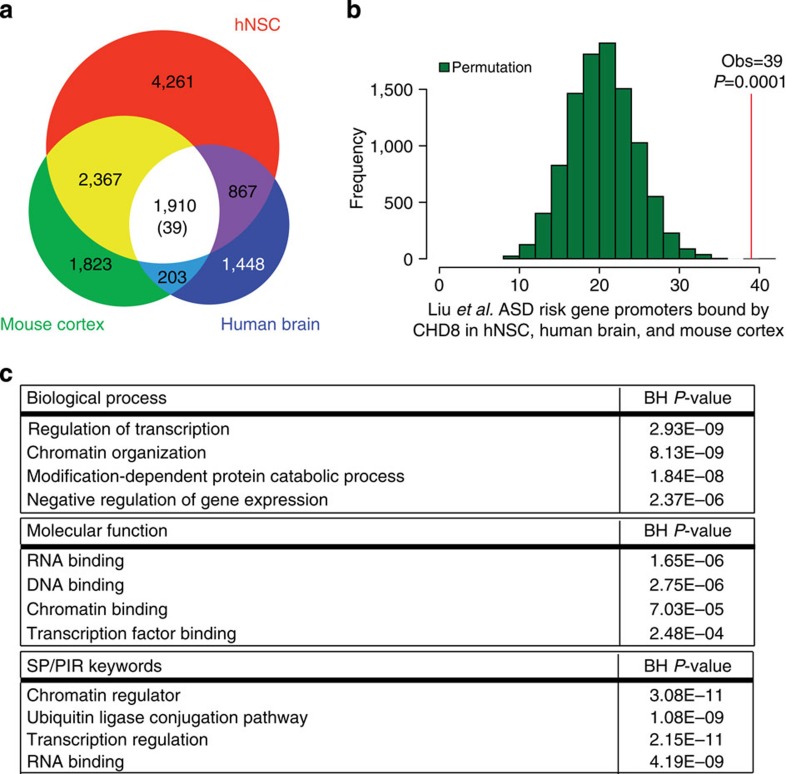
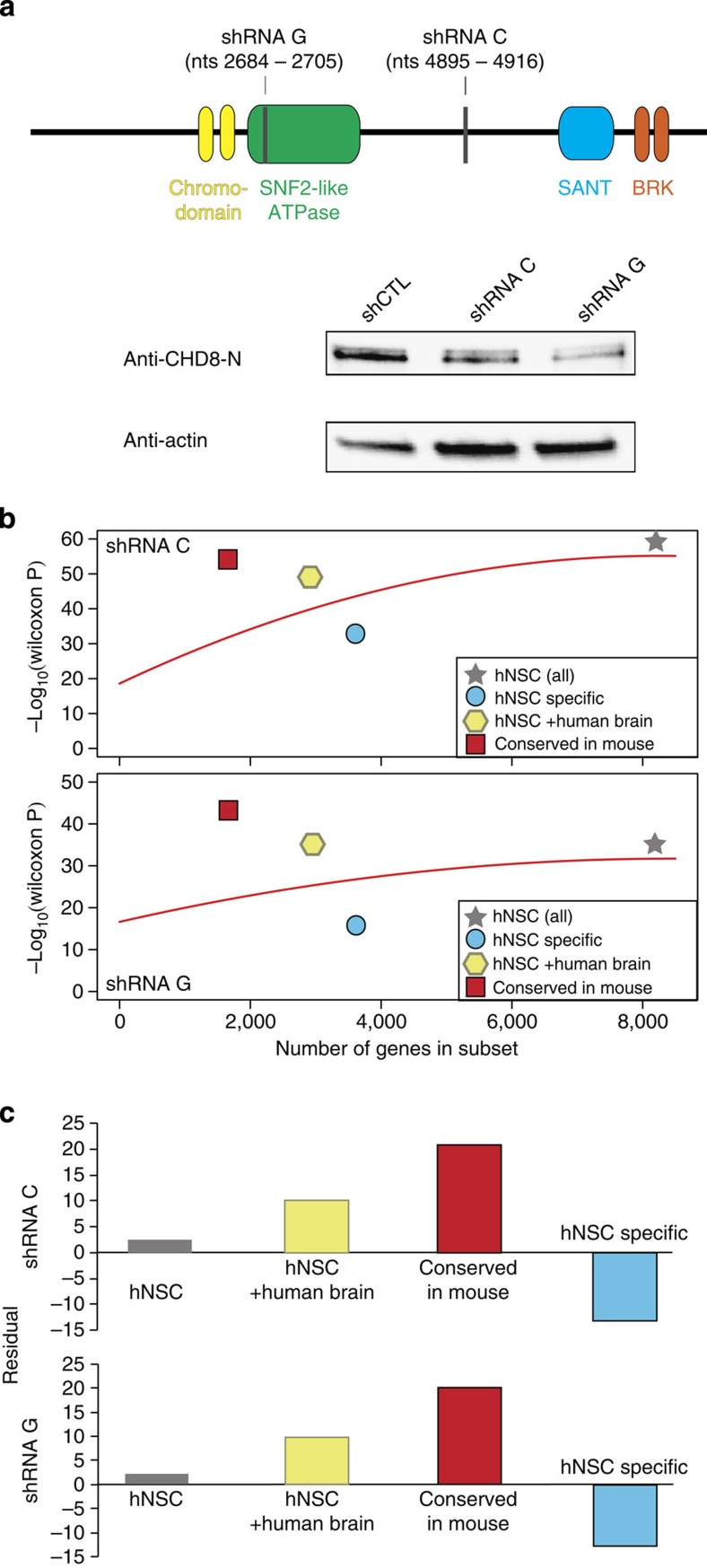
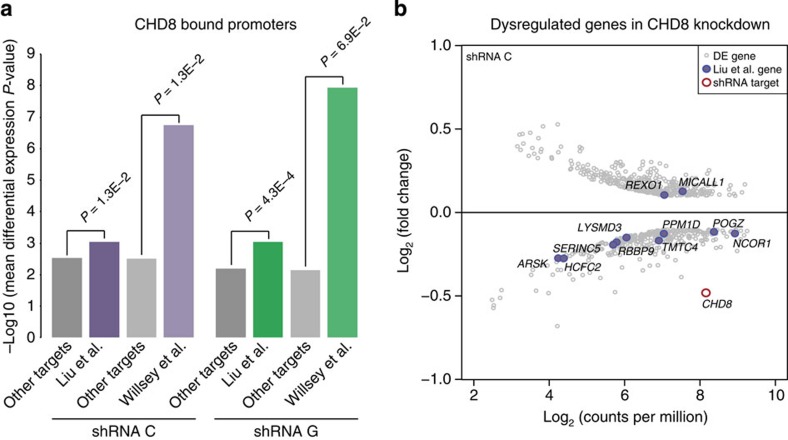
Recent studies implicate chromatin modifiers in autism spectrum disorder (ASD) through the identification of recurrent de novo loss of function mutations in affected individuals. ASD risk genes are co-expressed in human midfetal cortex, suggesting that ASD risk genes converge in specific regulatory networks during neurodevelopment. To elucidate such networks, we identify genes targeted by CHD8, a chromodomain helicase strongly associated with ASD, in human midfetal brain, human neural stem cells (hNSCs) and embryonic mouse cortex. CHD8 targets are strongly enriched for other ASD risk genes in both human and mouse neurodevelopment, and converge in ASD-associated co-expression networks in human midfetal cortex. CHD8 knockdown in hNSCs results in dysregulation of ASD risk genes directly targeted by CHD8. Integration of CHD8-binding data into ASD risk models improves detection of risk genes. These results suggest loss of CHD8 contributes to ASD by perturbing an ancient gene regulatory network during human brain development.
最近的研究通过在受影响个体中鉴定出反复出现的新生功能丧失突变,表明染色质修饰因子与自闭症谱系障碍(ASD)有关。ASD风险基因在人类胎儿中期皮质中共表达,这表明ASD风险基因在神经发育过程中汇聚于特定的调控网络。为了阐明此类网络,我们在人类胎儿中期大脑、人类神经干细胞(hNSCs)和胚胎小鼠皮质中鉴定了与ASD密切相关的染色质结构域解旋酶CHD8的靶基因。在人类和小鼠神经发育过程中,CHD8的靶基因在其他ASD风险基因中高度富集,并汇聚于人类胎儿中期皮质中与ASD相关的共表达网络。hNSCs中CHD8的敲低导致CHD8直接靶向的ASD风险基因失调。将CHD8结合数据整合到ASD风险模型中可改善对风险基因的检测。这些结果表明,CHD8的缺失通过扰乱人类大脑发育过程中的一个古老基因调控网络而导致ASD。