Hohsfield Lindsay A, Humpel Christian
Laboratory of Psychiatry and Experimental Alzheimer's Research, Department of Psychiatry and Psychotherapy, Medical University of Innsbruck, Anichstrasse 35, A-6020 Innsbruck, Austria.
Laboratory of Psychiatry and Experimental Alzheimer's Research, Department of Psychiatry and Psychotherapy, Medical University of Innsbruck, Anichstrasse 35, A-6020 Innsbruck, Austria.
Exp Gerontol. 2015 May;65:8-15. doi: 10.1016/j.exger.2015.03.002. Epub 2015 Mar 6.
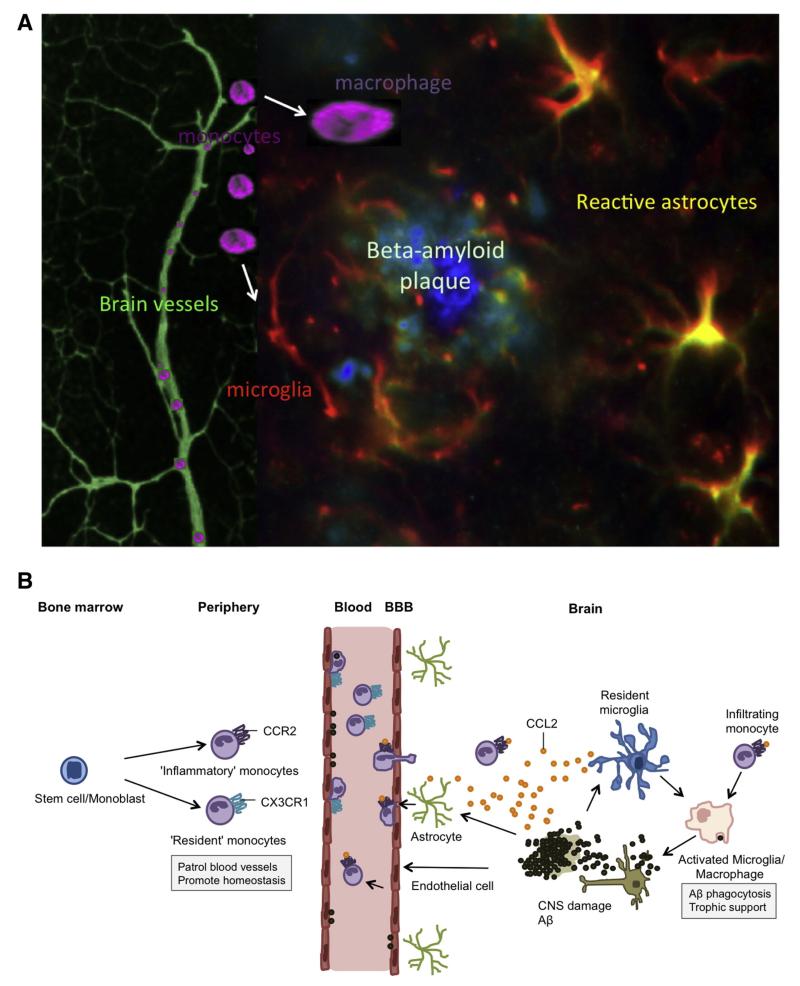
Alzheimer's disease (AD) is a neurodegenerative disease that leads to the progressive deterioration of cognitive and memory functions. The deposition of extracellular beta-amyloid (Aβ) senile plaques and intracellular tau neurofibrillary tangles are considered the cardinal pathological hallmarks of AD, however, accumulating evidence indicates that immune cells may also play an important role in disease pathogenesis. Among these immune cells, blood-derived cells and their infiltration into the CNS towards Aβ plaques have been implicated in therapeutic strategies against AD. Here, we review the current literature on blood cell migration into the AD brain and the important players involved in this selective migration towards Aβ plaques.
阿尔茨海默病(AD)是一种神经退行性疾病,会导致认知和记忆功能逐渐衰退。细胞外β-淀粉样蛋白(Aβ)老年斑的沉积和细胞内tau神经原纤维缠结被认为是AD的主要病理标志,然而,越来越多的证据表明免疫细胞在疾病发病机制中也可能起重要作用。在这些免疫细胞中,源自血液的细胞及其向中枢神经系统(CNS)中Aβ斑块的浸润已被纳入针对AD的治疗策略中。在此,我们综述了目前关于血细胞向AD脑内迁移以及参与这种向Aβ斑块选择性迁移的重要因素的文献。