Yang Jian, Chi Chi, Liu Zhen, Yang Gang, Shen Zong-Ji, Yang Xiao-Jun
Department of Obstetrics and Gynecology, The First Affiliated Hospital of Soochow University, Suzhou, China.
Lab Center, Medical College of Soochow University, Suzhou, China.
J Cell Mol Med. 2015 Jul;19(7):1720-8. doi: 10.1111/jcmm.12548. Epub 2015 Mar 6.
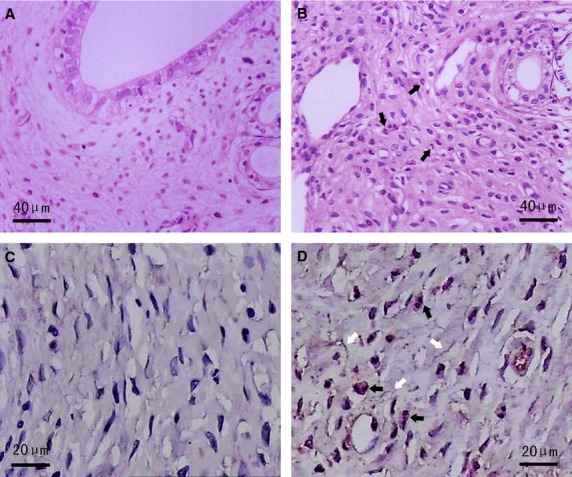
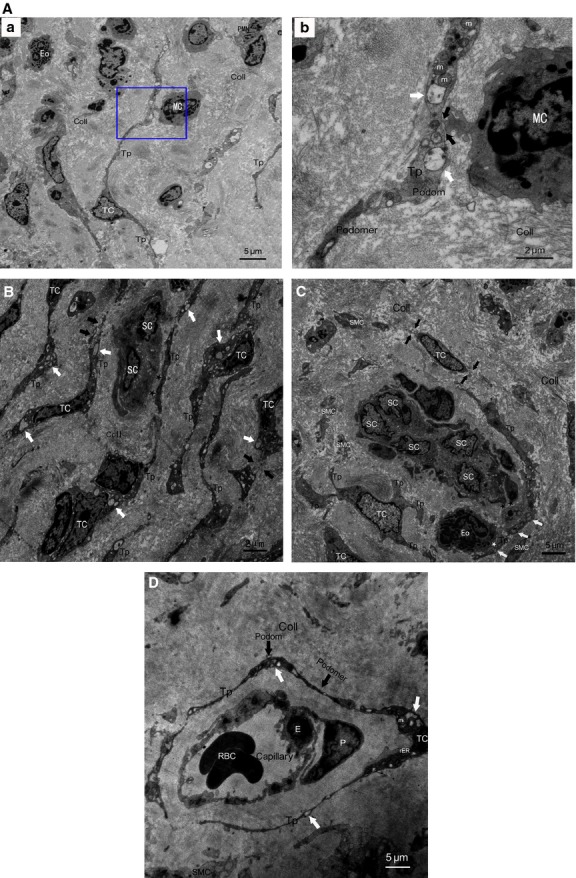
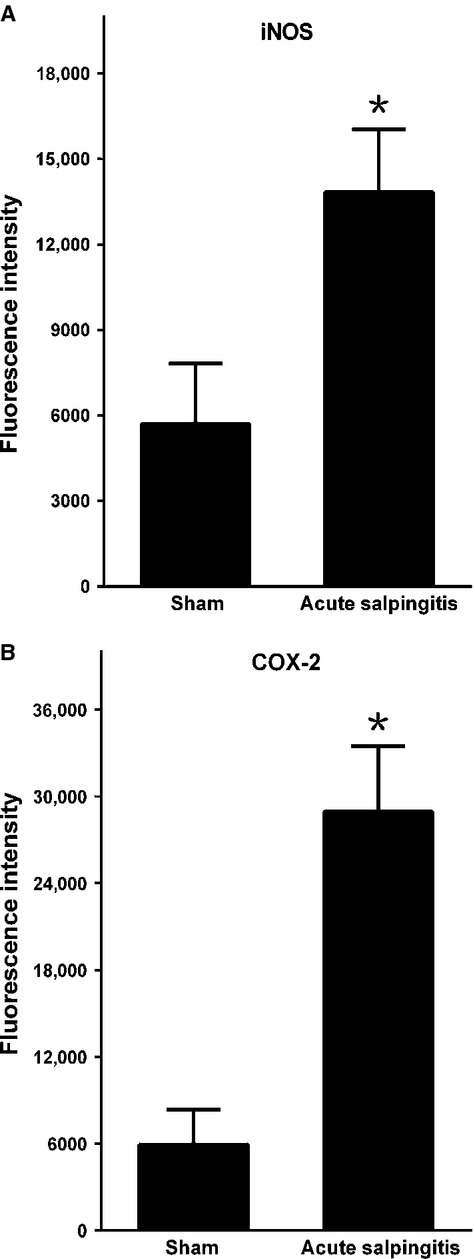
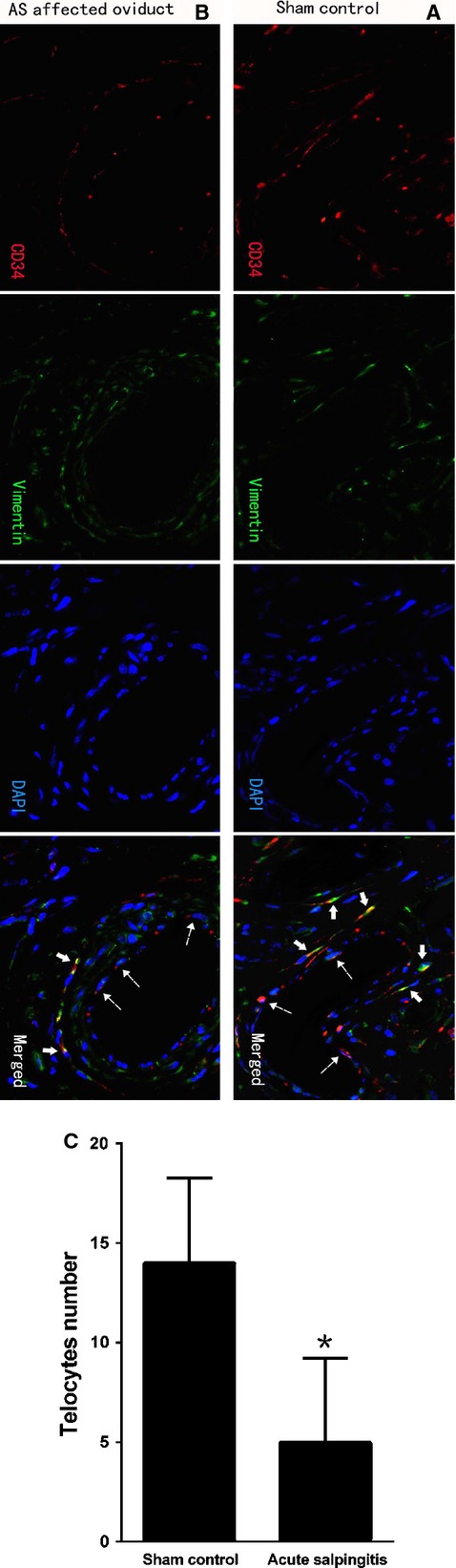
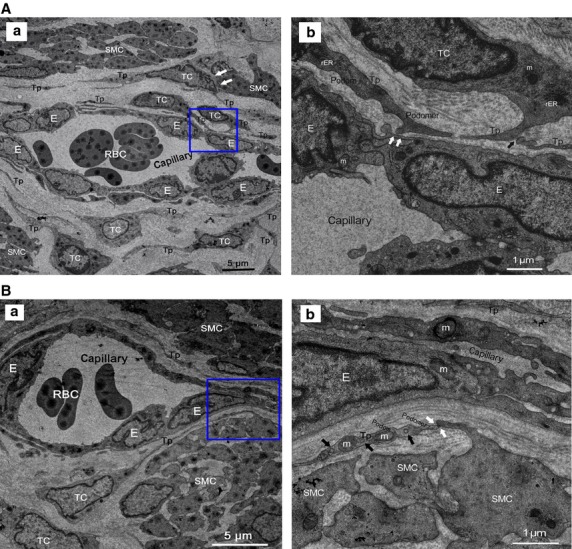
Acute salpingitis (AS) is an inflammatory disease which causes severe damage to a subset of classically described cells lining in oviduct wall and contributes to interstitial fibrosis and fertility problems. Telocytes (TCs), a newly discovered peculiar type of stromal cells, have been identified in many organs, including oviduct, with proposed multiple potential bio-functions. However, with recent increasing reports regarding TCs alterations in disease-affected tissues, there is still lack of evidence about TCs involvement in AS-affected oviduct tissues and potential pathophysiological roles. We presently identified normal TCs by their characteristic ultrastructural features and immunophenotype. However, in AS-affected oviduct tissues, TCs displayed multiple ultrastructural damage both in cellular body and prolongations, with obvious loss of TCs and development of tissue fibrosis. Furthermore, TCs lose their interstitial 3-D network connected by homocellular or heterocellular junctions between TCs and adjacent cells. And especially, TCs connected to the activated immunocytes (mononuclear cells, eosinophils) and affected local immune state (repression or activation). Meanwhile, massive neutrophils infiltration and overproduced Inducible Nitric Oxide Synthase (iNOS), COX-2, suggested mechanism of inflammatory-induced TCs damage. Consequently, TCs damage might contribute to AS-induced structural and reproductive functional abnormalities of oviduct, probably via: (i) substances, energy and functional insufficiency, presumably, e.g. TC-specific genetic material profiles, ion channels, cytoskeletal elements, Tps dynamics, etc., (ii) impaired TCs-mediated multicellular signalling, such as homeostasis/angiogenesis, tissue repair/regeneration, neurotransmission, (iii) derangement of 3-D network and impaired mechanical support for TCs-mediated multicellular signals within the stromal compartment, consequently induced interstitial fibrosis, (iv) involvement in local inflammatory process/ immunoregulation and possibly immune-mediated early pregnancy failure.
急性输卵管炎(AS)是一种炎症性疾病,会对输卵管壁内衬的一类经典描述细胞造成严重损害,并导致间质纤维化和生育问题。端细胞(TCs)是一种新发现的特殊类型的基质细胞,已在包括输卵管在内的许多器官中被识别,具有多种潜在的生物学功能。然而,随着近期关于疾病影响组织中端细胞改变的报道不断增加,仍缺乏端细胞参与AS影响的输卵管组织及潜在病理生理作用的证据。我们目前通过其特征性超微结构特征和免疫表型鉴定了正常端细胞。然而,在AS影响的输卵管组织中,端细胞在细胞体和延长部分均表现出多种超微结构损伤,端细胞明显减少且组织纤维化发展。此外,端细胞失去了通过端细胞与相邻细胞之间的同型或异型细胞连接形成的间质三维网络。特别是,端细胞与活化的免疫细胞(单核细胞、嗜酸性粒细胞)相连并影响局部免疫状态(抑制或激活)。同时,大量中性粒细胞浸润以及诱导型一氧化氮合酶(iNOS)、环氧化酶-2(COX-2)过度产生,提示了炎症诱导端细胞损伤的机制。因此,端细胞损伤可能导致AS引起的输卵管结构和生殖功能异常,可能通过以下途径:(i)物质、能量和功能不足,推测例如端细胞特异性遗传物质谱、离子通道、细胞骨架成分、端粒蛋白动力学等;(ii)端细胞介导的多细胞信号传导受损,如稳态/血管生成、组织修复/再生、神经传递;(iii)三维网络紊乱以及间质隔室内端细胞介导的多细胞信号的机械支持受损,从而导致间质纤维化;(iv)参与局部炎症过程/免疫调节,并可能导致免疫介导的早期妊娠失败。