Kumar Bhat Nowneet, Dhar Minakshi, Mittal Garima, Shirazi Nadia, Rawat Anil, Prakash Kalra Bram, Chandar Vipan, Ahmad Sohaib
Department of Pediartics.
Department of Medicine.
Iran J Pediatr. 2014 Aug;24(4):387-92. Epub 2014 Jul 19.
To study the clinical profile and complications of childhood scrub typhus.
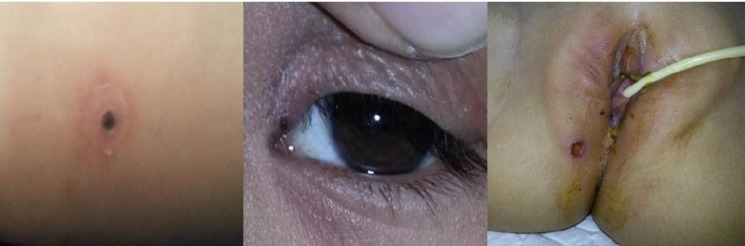
Prospective observational study of 66 children with scrub typhus, admitted to a tertiary hospital in north India, during the period between January 2011 and December 2012. The diagnosis was confirmed by serology. Findings : All children presented with fever. Other common symptoms were vomiting (56%), facial swelling (52%), cough (35%), abdominal pain (33%), breathlessness (29%) and decreased urine output (29%). High grade fever (>101 (o)F) was recorded in 91% of children. Other common signs were hepatomegaly, splenomegaly, edema, tender lymphadenopathy and hypotension, observed in 82%, 59%, 39%, 38% and 36% of cases, respectively. An eschar and a maculopapular rash each were observed in 20% of patients. Meningoencephalitis (30.3%), severe thrombocytopenia (27.2%), shock (25.8%), acute kidney injury (16.7%) and hepatitis (13.6%) were the most common complications observed in these children. Other common complications were acute respiratory distress syndrome, respiratory failure requiring ventilation, bronchopneumonia and myocarditis. Ninety percent of children became afebrile within 48 hours of initiating an appropriate antibiotic. Median time to defervescence was 22 hours. The overall mortality rate was 7.5%. Causes of death were refractory shock, meningoencephalitis, acute respiratory distress syndrome, bronchopneumonia, acute kidney injury and myocarditis.
Pediatricians should keep a high index of suspicion for scrub typhus in any febrile child having a maculopapular rash, hepatosplenomegaly, tender lymphadenopathy, thrombocytopenia and features suggestive of capillary leak. Pending serological confirmation, empirical therapy with doxycycline or azithromycin should be started, as delay in treatment would result in life threatening complications.
研究儿童恙虫病的临床特征及并发症。
对2011年1月至2012年12月期间入住印度北部一家三级医院的66例恙虫病患儿进行前瞻性观察研究。诊断通过血清学确诊。研究结果:所有患儿均有发热。其他常见症状包括呕吐(56%)、面部肿胀(52%)、咳嗽(35%)、腹痛(33%)、呼吸急促(29%)和尿量减少(29%)。91%的患儿体温高于101华氏度(>38.3摄氏度)。其他常见体征分别在82%、59%、39%、38%和36%的病例中观察到,包括肝肿大、脾肿大、水肿、压痛性淋巴结病和低血压。20%的患者观察到焦痂和斑丘疹。这些患儿中最常见的并发症是脑膜脑炎(30.3%)、严重血小板减少症(27.2%)、休克(25.8%)、急性肾损伤(16.7%)和肝炎(13.6%)。其他常见并发症包括急性呼吸窘迫综合征、需要通气的呼吸衰竭、支气管肺炎和心肌炎。90%的患儿在开始使用适当抗生素后48小时内退热。退热的中位时间为22小时。总死亡率为7.5%。死亡原因包括难治性休克、脑膜脑炎、急性呼吸窘迫综合征、支气管肺炎、急性肾损伤和心肌炎。
对于任何有斑丘疹、肝脾肿大、压痛性淋巴结病、血小板减少症以及提示毛细血管渗漏特征的发热儿童,儿科医生应高度怀疑恙虫病。在血清学确诊之前,应开始使用多西环素或阿奇霉素进行经验性治疗,因为治疗延迟会导致危及生命的并发症。