Lin Ann E, Beasley Federico C, Keller Nadia, Hollands Andrew, Urbano Rodolfo, Troemel Emily R, Hoffman Hal M, Nizet Victor
Department of Pediatrics, University of California, San Diego, La Jolla, California, USA.
Division of Biological Sciences, University of California, San Diego, La Jolla, California, USA.
mBio. 2015 Mar 10;6(2):e00133. doi: 10.1128/mBio.00133-15.
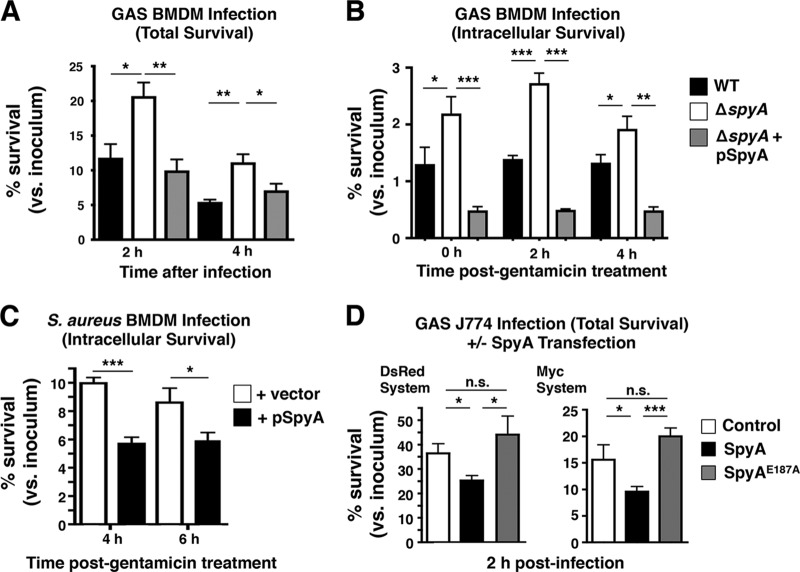
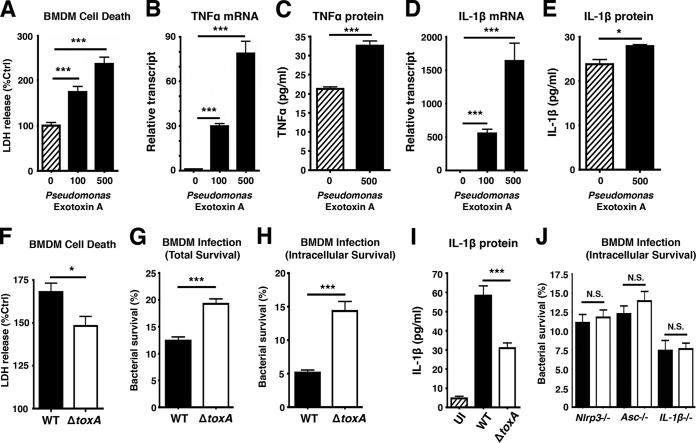
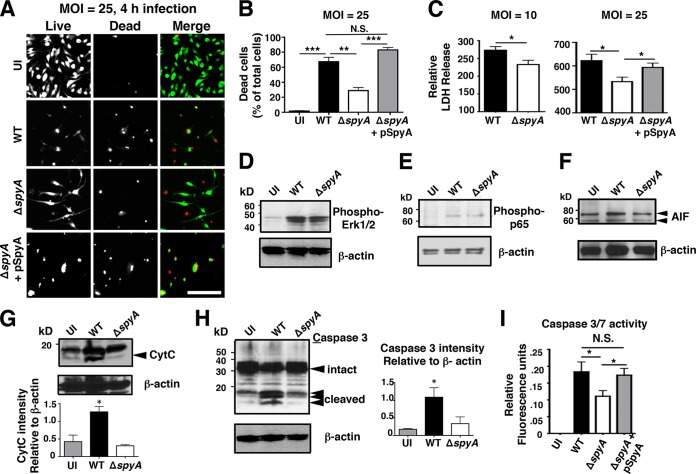
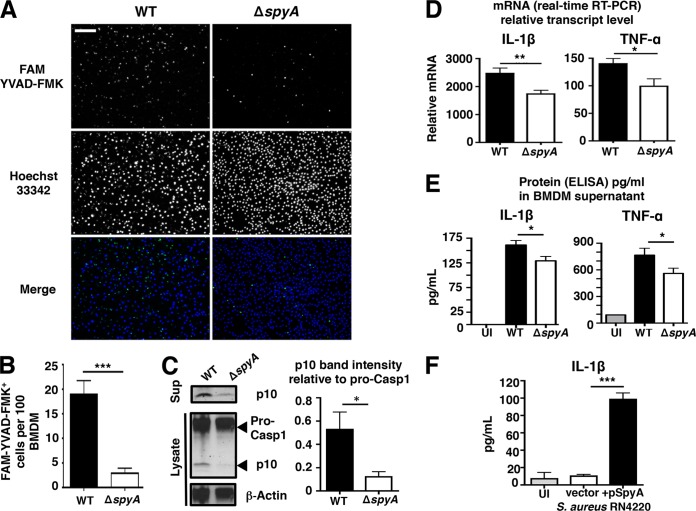
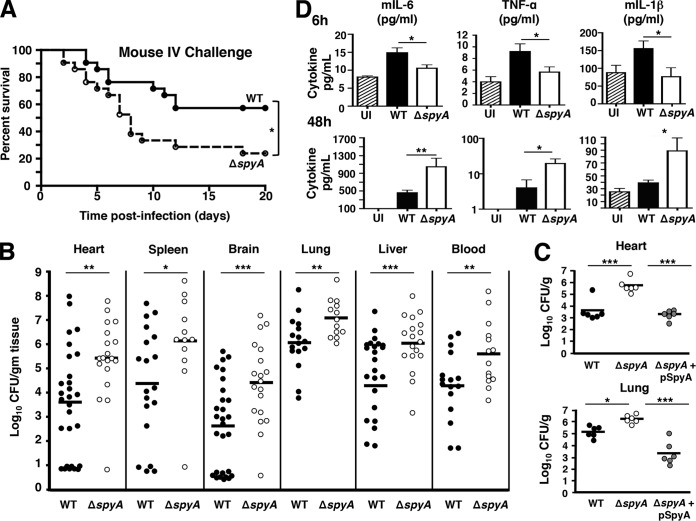
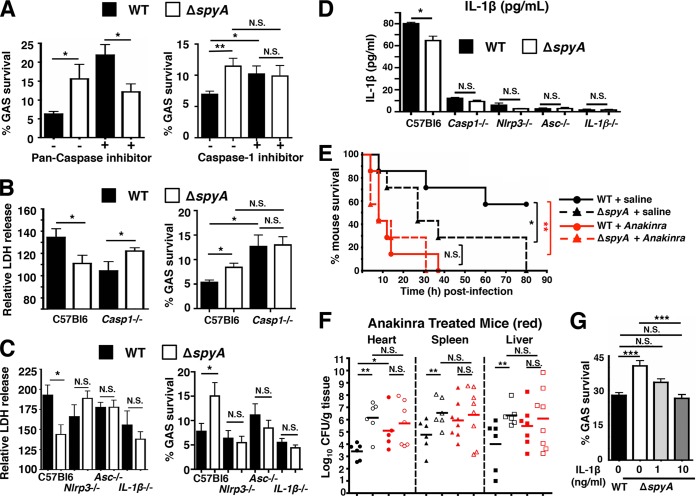
The M1T1 clone of group A Streptococcus (GAS) is associated with severe invasive infections, including necrotizing fasciitis and septicemia. During invasive M1T1 GAS disease, mutations in the covRS regulatory system led to upregulation of an ADP-ribosyltransferase, SpyA. Surprisingly, a GAS ΔspyA mutant was resistant to killing by macrophages and caused higher mortality with impaired bacterial clearance in a mouse intravenous challenge model. GAS expression of SpyA triggered macrophage cell death in association with caspase-1-dependent interleukin 1β (IL-1β) production, and differences between wild-type (WT) and ΔspyA GAS macrophage survival levels were lost in cells lacking caspase-1, NOD-like receptor protein 3 (NLRP3), apoptosis-associated speck-like protein (ASC), or pro-IL-1β. Similar in vitro findings were identified in macrophage studies performed with pseudomonal exotoxin A, another ADP-ribosylating toxin. Thus, SpyA triggers caspase-1-dependent inflammatory cell death in macrophages, revealing a toxin-triggered IL-1β-dependent innate immune response pathway critical in defense against invasive bacterial infection.
Group A Streptococcus (GAS) is a leading human pathogen capable of producing invasive infections even in healthy individuals. GAS bacteria produce a toxin called SpyA that modifies host proteins through a process called ADP ribosylation. We describe how macrophages, frontline defenders of the host innate immune system, respond to SpyA by undergoing a specialized form of cell death in which they are activated to release the proinflammatory cytokine molecule interleukin 1β (IL-1β). Release of IL-1β activates host immune cell clearance of GAS, as we demonstrated in tissue culture models of macrophage bacterial killing and in vivo mouse infectious-challenge experiments. Similar macrophage responses to a related toxin of Pseudomonas bacteria were also shown. Thus, macrophages recognize certain bacterial toxins to activate a protective immune response in the host.
A 组链球菌(GAS)的 M1T1 克隆与严重的侵袭性感染有关,包括坏死性筋膜炎和败血症。在侵袭性 M1T1 GAS 疾病期间,covRS 调节系统中的突变导致一种 ADP 核糖基转移酶 SpyA 的上调。令人惊讶的是,GAS ΔspyA 突变体对巨噬细胞的杀伤具有抗性,并且在小鼠静脉内攻击模型中导致更高的死亡率以及细菌清除受损。SpyA 的 GAS 表达引发巨噬细胞死亡,并伴有半胱天冬酶 -1 依赖性白细胞介素 1β(IL-1β)的产生,并且在缺乏半胱天冬酶 -1、NOD 样受体蛋白 3(NLRP3)、凋亡相关斑点样蛋白(ASC)或前体 IL-1β 的细胞中,野生型(WT)和 ΔspyA GAS 巨噬细胞存活水平之间的差异消失。在用另一种 ADP 核糖基化毒素铜绿假单胞菌外毒素 A 进行的巨噬细胞研究中也发现了类似的体外结果。因此,SpyA 在巨噬细胞中触发半胱天冬酶 -1 依赖性炎性细胞死亡,揭示了一种毒素触发的 IL-1β 依赖性先天免疫反应途径,该途径对于抵御侵袭性细菌感染至关重要。
A 组链球菌(GAS)是一种主要的人类病原体,即使在健康个体中也能够引起侵袭性感染。GAS 细菌产生一种名为 SpyA 的毒素,该毒素通过一种称为 ADP 核糖基化的过程修饰宿主蛋白。我们描述了巨噬细胞(宿主先天免疫系统的一线防御者)如何通过经历一种特殊形式的细胞死亡来响应 SpyA,在这种细胞死亡过程中,它们被激活以释放促炎细胞因子分子白细胞介素 1β(IL-1β)。正如我们在巨噬细胞细菌杀伤的组织培养模型和体内小鼠感染攻击实验中所证明的,IL-1β 的释放激活了宿主免疫细胞对 GAS 的清除。对铜绿假单胞菌相关毒素的巨噬细胞反应也显示出类似情况。因此,巨噬细胞识别某些细菌毒素以激活宿主中的保护性免疫反应。