CHA Cancer Prevention Research Center, CHA University, 605 Yeoksam 1-dong, Gangnam-gu, Seoul 135-081, Korea.
Jeil pharmaceutical Co., Ltd., Seoul 137-041, Korea.
J Clin Biochem Nutr. 2015 Mar;56(2):132-42. doi: 10.3164/jcbn.14-76. Epub 2014 Nov 28.
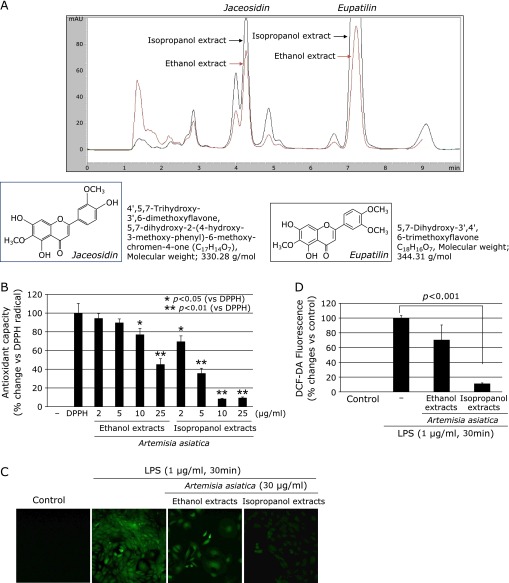
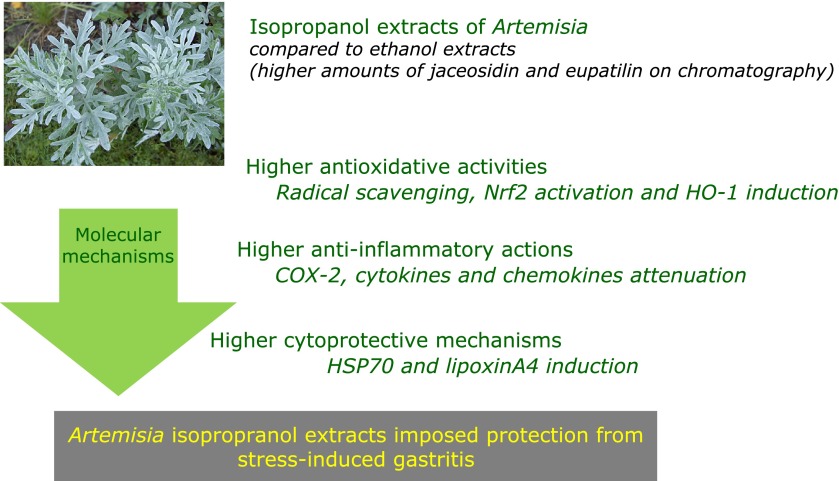
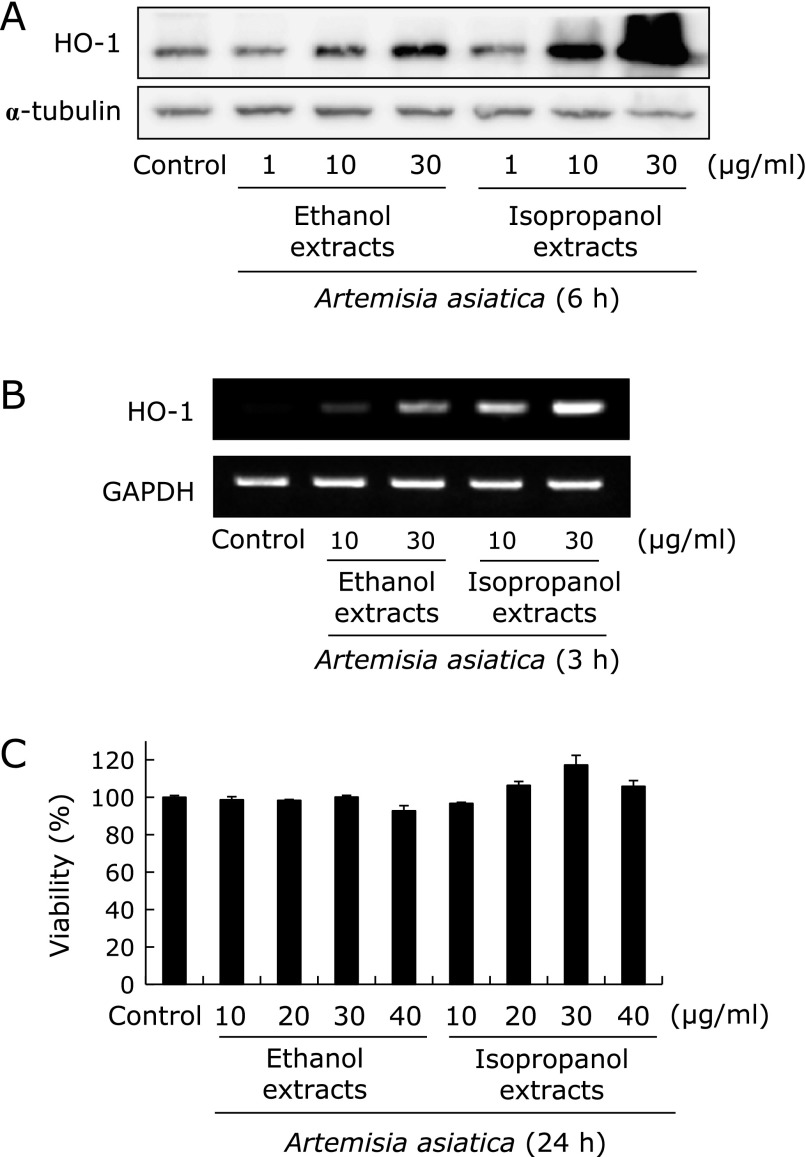
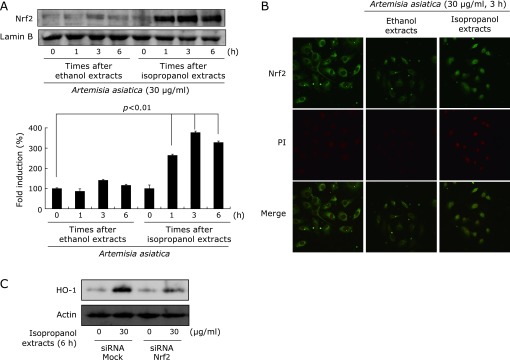
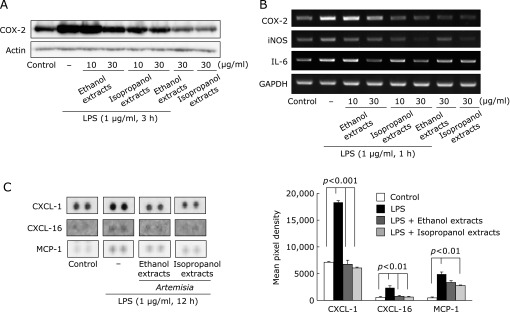
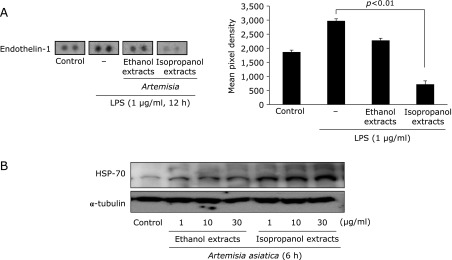
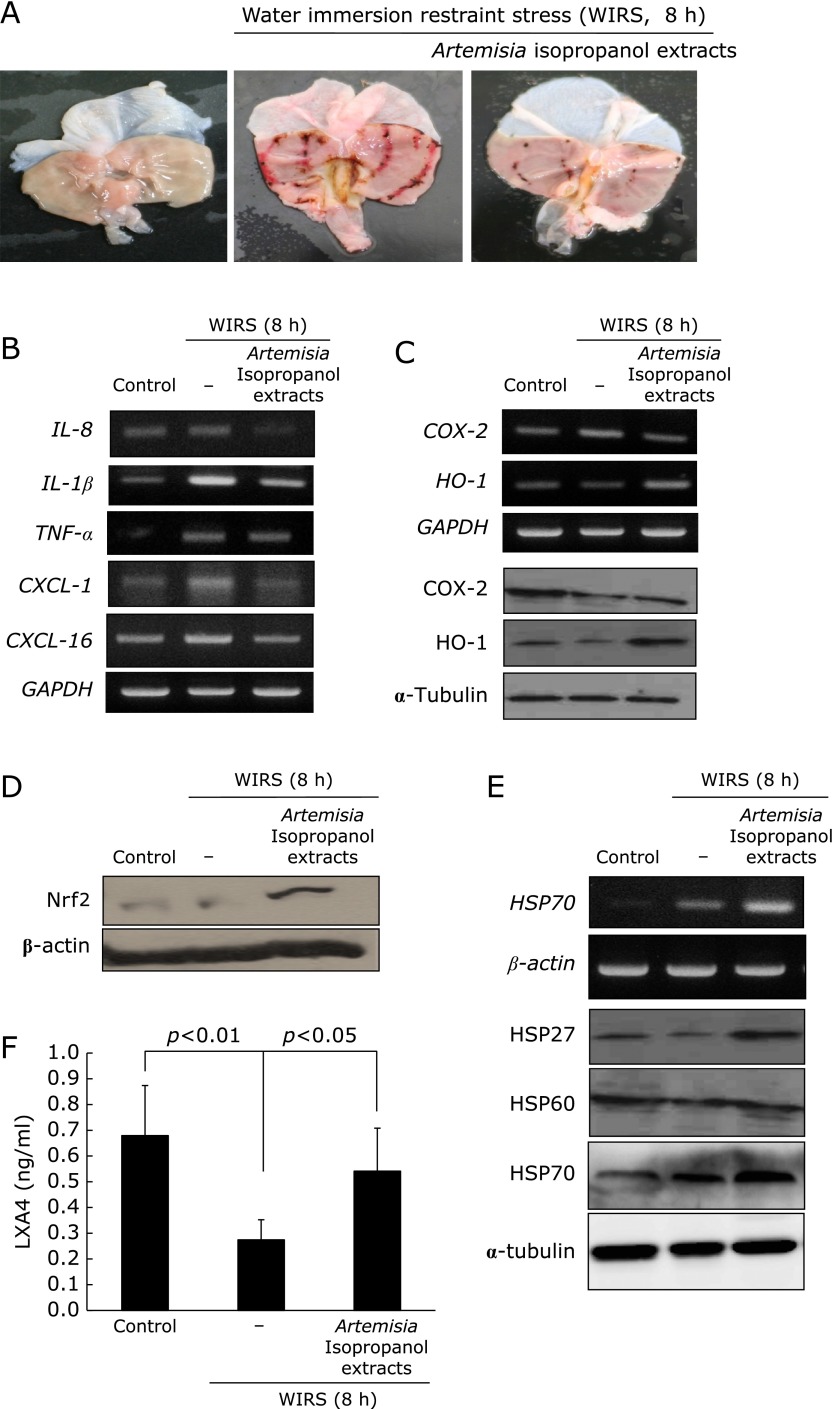
The aim of this study was to compare biological actions between isopropanol and ethanol extracts of Artemisia including antioxidant, anti-inflammatory, and cytoprotective actions. Antioxidant activities were evaluated using 2,2-diphenyl-1-picrylhydrazyl (DPPH) method and confocal microscopy on lipopolysaccharide-induced RGM1 cells, cytoprotection effects evaluated by detecting heme oxygenase-1 (HO-1), Nf-E2 related factor2 (Nrf2) and heat shock protein 70 (HSP70), and anti-inflammatory effects investigated by measuring inflammatory mediators. Water immersion restraint stress was imposed to provoke stress related mucosal damages (SRMD) in rats. Isopropanol extracts of Artemisia showed the higher DPPH radical scavenging activity and lesser LPS-induced reactive oxygen species productions and increased HO-1 expression through increased nuclear translocation of Nrf2 transcription factor compared to ethanol extracts. The increased expression of HSP70 and decreased expression of endothelin-1 were only increased with isopropanol extracts. A concentration-dependent inhibition of LPS-induced COX-2 and iNOS even at a rather lower concentration than ethanol extract was achieved with isopropanol extracts. Cytokine protein array revealed Artemisia extracts significantly attenuated the levels of CXCL-1, CXCL-16, and MCP-1. These orchestrated actions led to significant rescue from SRMD. Conclusively, Artemisia extracts imposed significant antioxidant and anti-inflammatory activity against SRMD and isopropanol extracts were superior to ethanol extracts in these beneficiary actions of Artemisia.
本研究旨在比较艾草的异丙醇和乙醇提取物的生物学作用,包括抗氧化、抗炎和细胞保护作用。抗氧化活性通过 2,2-二苯基-1-苦基肼(DPPH)法和脂多糖诱导的 RGM1 细胞共聚焦显微镜评估,细胞保护作用通过检测血红素加氧酶-1(HO-1)、核因子 E2 相关因子 2(Nrf2)和热休克蛋白 70(HSP70)来评估,抗炎作用通过测量炎症介质来研究。采用浸水束缚应激法诱导大鼠应激相关黏膜损伤(SRMD)。与乙醇提取物相比,艾草的异丙醇提取物表现出更高的 DPPH 自由基清除活性,更少的 LPS 诱导的活性氧产生,并通过增加 Nrf2 转录因子的核转位增加 HO-1 表达。仅异丙醇提取物增加 HSP70 的表达和减少内皮素-1 的表达。异丙醇提取物对 LPS 诱导的 COX-2 和 iNOS 的抑制呈浓度依赖性,甚至在比乙醇提取物更低的浓度下也能达到抑制效果。细胞因子蛋白阵列显示,艾草提取物显著降低了 CXCL-1、CXCL-16 和 MCP-1 的水平。这些协调作用导致 SRMD 得到显著缓解。总之,艾草提取物对 SRMD 具有显著的抗氧化和抗炎活性,并且异丙醇提取物在艾草的这些有益作用中优于乙醇提取物。