Institute of Paleobiology, Polish Academy of Sciences, Twarda 51/55, 00-818 Warsaw, Poland.
Marine Biological Laboratory, University of Copenhagen, Strandpromenaden 5, 3000 Helsingør, Denmark.
Life (Basel). 2015 Mar 9;5(1):744-69. doi: 10.3390/life5010744.
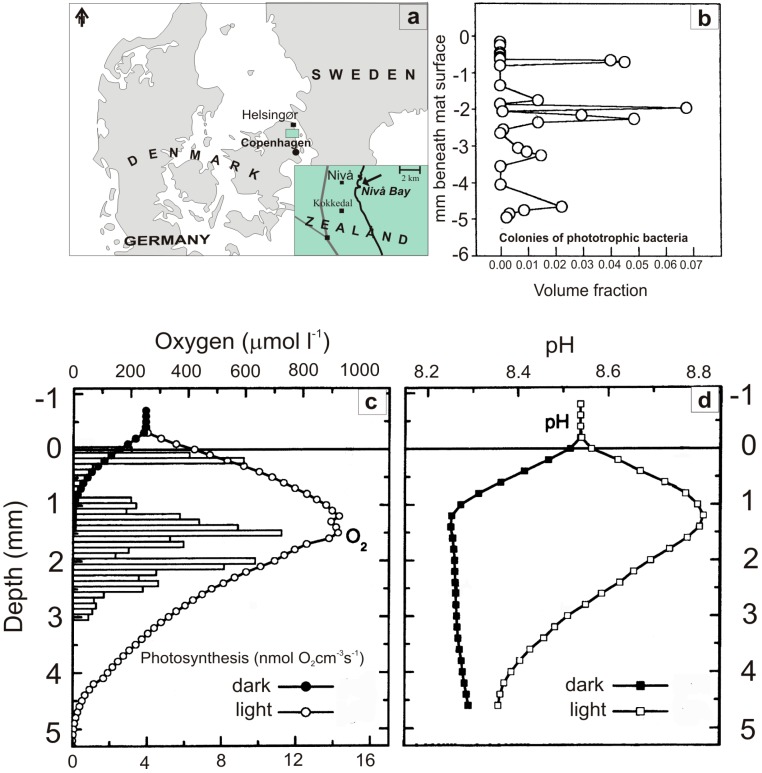
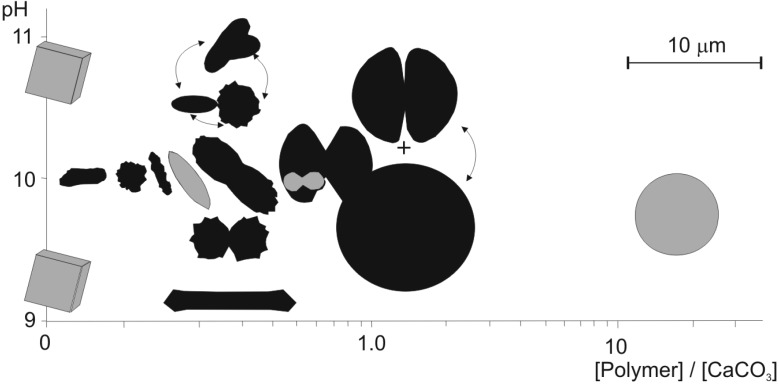
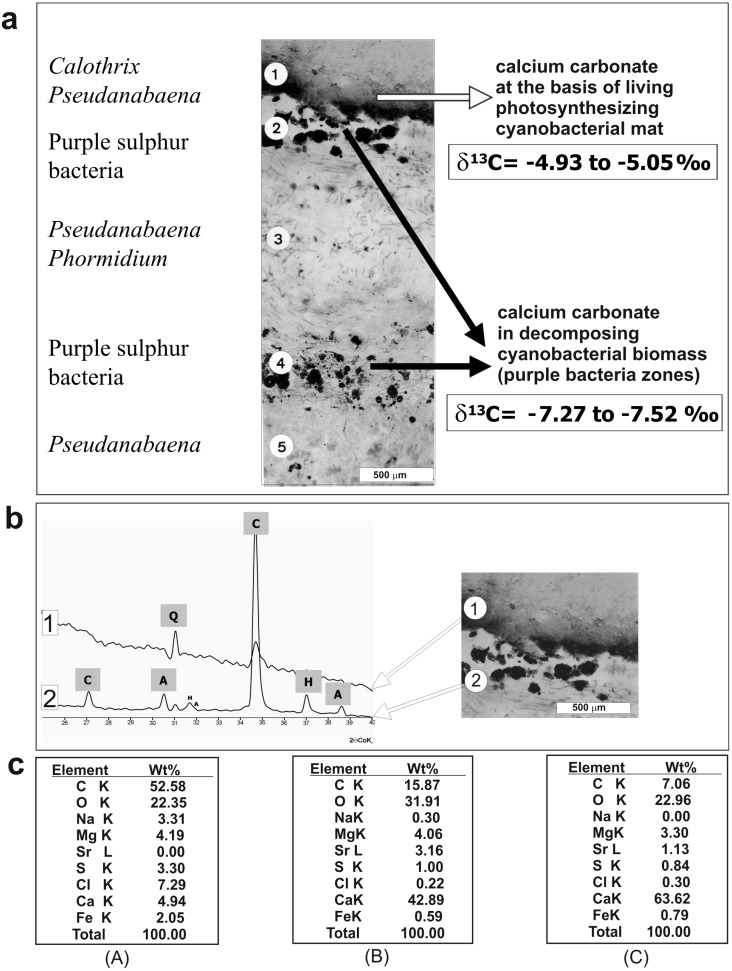
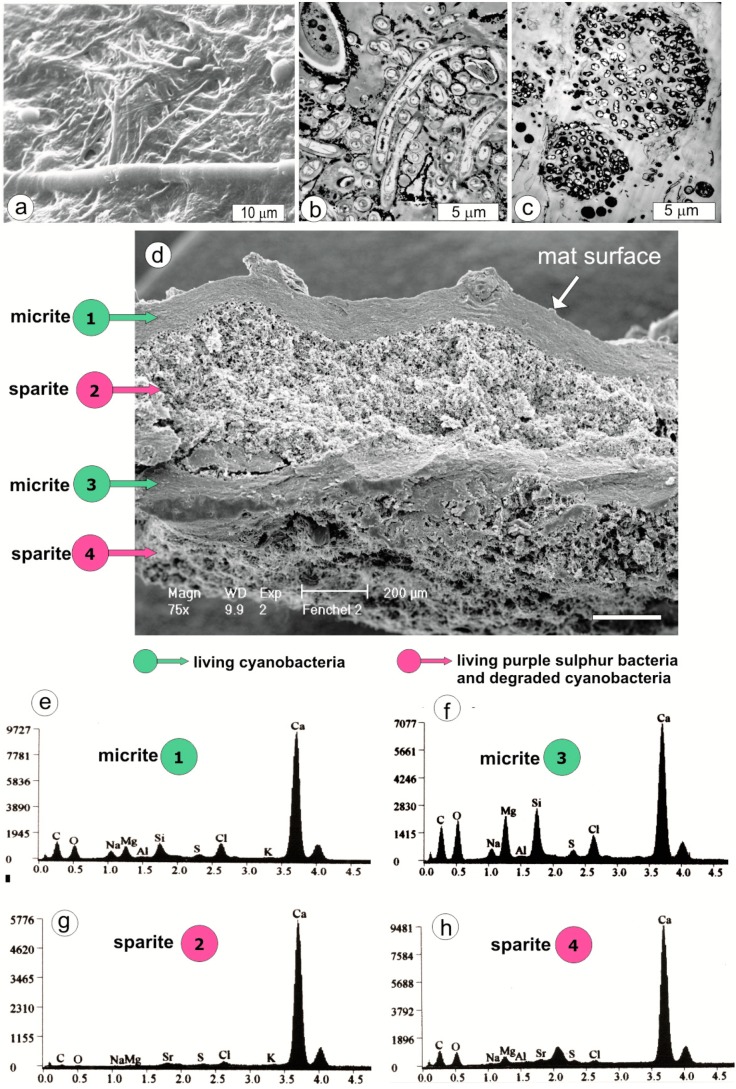
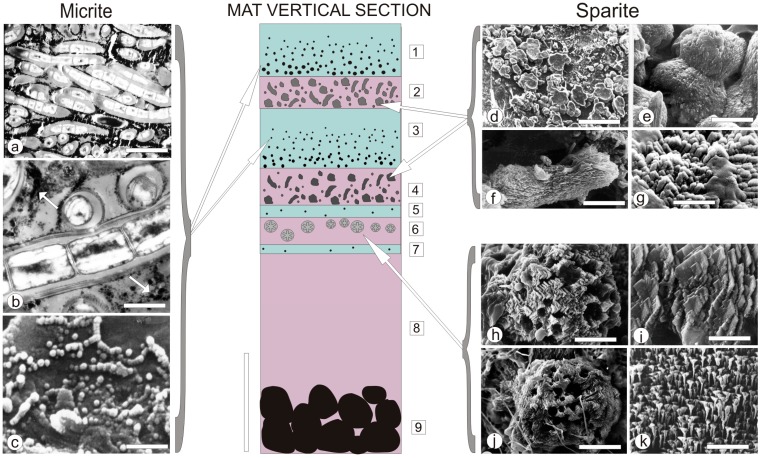
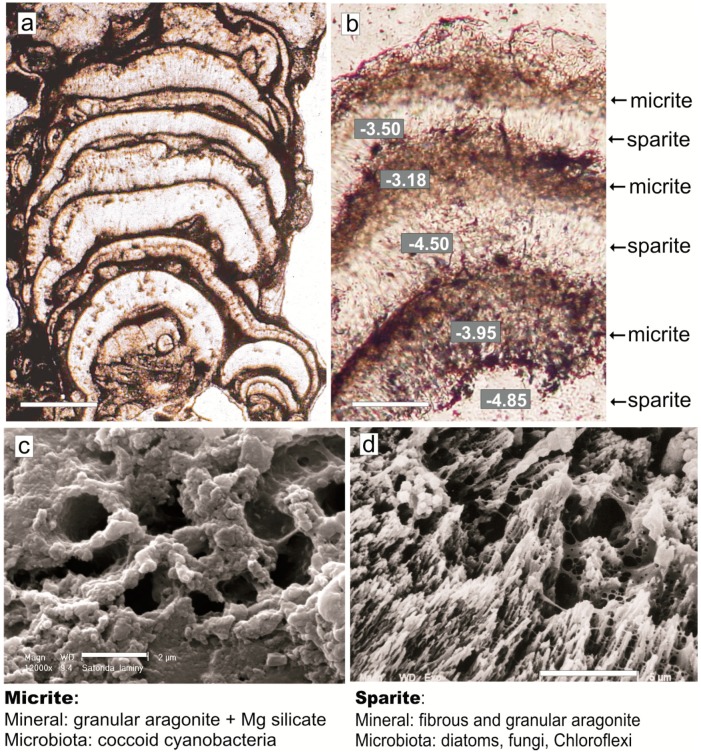
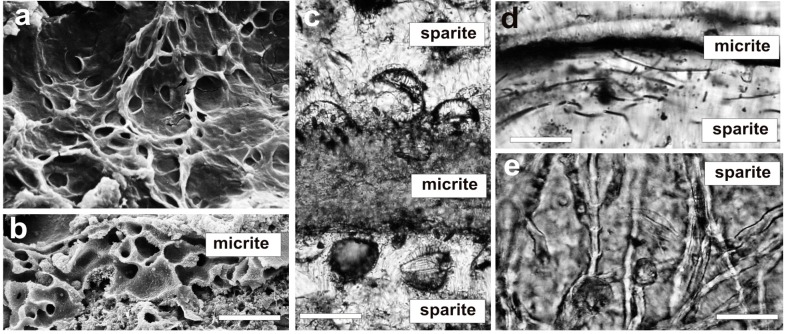
Marine cyanobacterial mats were cultured on coastal sediments (Nivå Bay, Øresund, Denmark) for over three years in a closed system. Carbonate particles formed in two different modes in the mat: (i) through precipitation of submicrometer-sized grains of Mg calcite within the mucilage near the base of living cyanobacterial layers, and (ii) through precipitation of a variety of mixed Mg calcite/aragonite morphs in layers of degraded cyanobacteria dominated by purple sulfur bacteria. The d13C values were about 2‰ heavier in carbonates from the living cyanobacterial zones as compared to those generated in the purple bacterial zones. Saturation indices calculated with respect to calcite, aragonite, and dolomite inside the mats showed extremely high values across the mat profile. Such high values were caused by high pH and high carbonate alkalinity generated within the mats in conjunction with increased concentrations of calcium and magnesium that were presumably stored in sheaths and extracellular polymer substances (EPS) of the living cyanobacteria and liberated during their post-mortem degradation. The generated CaCO3 morphs were highly similar to morphs reported from heterotrophic bacterial cultures, and from bacterially decomposed cyanobacterial biomass emplaced in Ca-rich media. They are also similar to CaCO3 morphs precipitated from purely inorganic solutions. No metabolically (enzymatically) controlled formation of particular CaCO3 morphs by heterotrophic bacteria was observed in the studied mats. The apparent alternation of in vivo and post-mortem generated calcareous layers in the studied cyanobacterial mats may explain the alternation of fine-grained (micritic) and coarse-grained (sparitic) laminae observed in modern and fossil calcareous cyanobacterial microbialites as the result of a probably similar multilayered mat organization.
海洋蓝藻垫在一个封闭系统中,在丹麦厄勒海峡的尼瓦湾沿海沉积物上进行了超过三年的培养。在垫中以两种不同的方式形成碳酸盐颗粒:(i)在靠近活蓝藻层底部的黏液内通过亚微米级的镁方解石颗粒的沉淀,和(ii)在以紫色硫细菌为主的退化蓝藻层中通过多种混合的镁方解石/霰石形态的沉淀。与在紫色细菌区生成的碳酸盐相比,来自活蓝藻区的碳酸盐的 d13C 值重约 2‰。在垫内相对于方解石、霰石和白云石计算的饱和度指数在整个垫剖面中显示出极高的值。这种高值是由垫内生成的高 pH 值和高碳酸盐碱度以及钙和镁浓度的增加引起的,这些钙和镁浓度据推测储存在活蓝藻的鞘和细胞外聚合物物质 (EPS) 中,并在其死后降解时释放出来。生成的 CaCO3 形态与异养细菌培养物以及在富钙介质中被细菌分解的蓝藻生物质中报告的形态高度相似。它们也与从纯无机溶液中沉淀的 CaCO3 形态相似。在所研究的垫中,没有观察到异养细菌通过代谢(酶促)控制特定 CaCO3 形态的形成。在研究的蓝藻垫中,活体内和死后生成的钙质层的明显交替可能解释了在现代和化石钙质蓝藻微生物岩中观察到的细粒(微亮晶)和粗粒(亮晶)层交替的原因,这可能是由于类似的多层垫组织。